Quick navigation
When you are preparing to sell your leasehold flat, you may be thinking about getting a Leasehold Property Enquiries form, also known as an LPE1, to provide many details about the home to buyers. Your lawyer will likely suggest you obtain an LPE1 but some owners may not want to, and this guide shows the issues involved with not having an LPE1 and also how to still find a buyer.
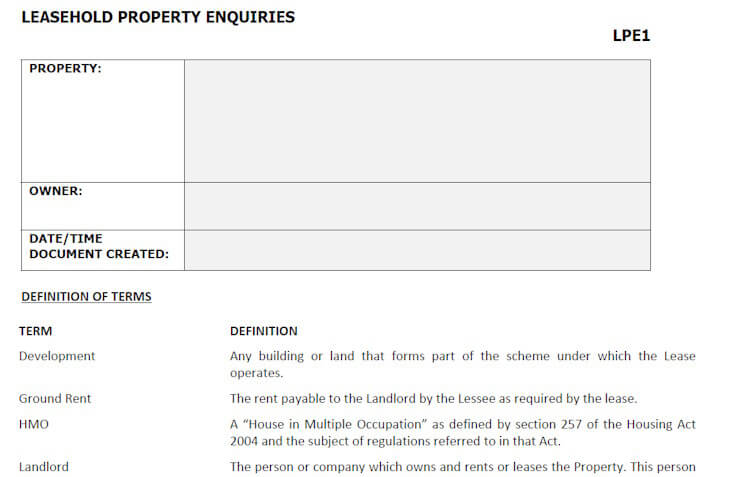
- What is a Leasehold Property Enquiries (LPE1) form?
- The process for obtaining an LPE1 when selling a flat
- Why owners may want to sell without an LPE1
- Can you sell your property without having an LPE1?
- Buyers may worry about the lack of an LPE1 for your flat
- Your choices for how to sell a flat without an LPE1
- Top questions and answers about selling a flat with no LPE1
What is a Leasehold Property Enquiries (LPE1) form?
If you are the owner of a leasehold flat and you’re thinking about selling soon, you might have heard about a Leasehold Property Enquiries form, also known simply as an LPE1 – this is a standard form that is often part of the selling process, but there’s more to learn than that.
Generally, the LPE1 is several pages long and is effectively a questionnaire that asks many questions about various aspects of the flat that you’re attempting to sell, including:
- Flat owner contact information
- Building insurance details
- Service charge totals
- Disputes affecting the property
- The amount of ground rent
- Property transfer and registration
- Required documents
In January 2023, an updated version of the form was released, as explained by the Institute of Residential Property Management on its website. The updated LPE1 added requests for more documents about a flat, including what is known as a landlord’s certificate.
The following sections of this guide provide important insight into the process behind obtaining an LPE1. But it also explains why some homeowners attempt to sell their flats without having this form in place, and the potential problems that that might create with finding a buyer.
But rest assured that even if you are struggling to sell your flat because of the lack of an LPE1, you still have options available for getting a buyer to make a fast and fair offer, and this guide also walks you through the steps to take to increase the odds of that happening.
The process for obtaining an LPE1 when selling a flat
If you are getting ready to sell your leasehold flat then it can be useful to know about the amount of time and money that may be required should you decide to get an LPE1 first.
Typically, a leaseholder that wants to get an LPE1 will approach the freeholder of the property in which their flat is situated – this can be an individual, a management company, or someone else. The freeholder owns the building outright as well as the land on which it stands, whereas the leaseholder only owns their flat for a set number of years. The exact duration will be listed in the lease agreement, which also notes how much ground rent you pay the freeholder.
There are several reasons why it can take a very long time to complete an LPE1, including the fact that there are dozens of questions, as shown by a template form on the Lease Advisory Service’s website.
And several of those questions might require the freeholder to look up supporting information or locate relevant documents that are hard to find, in order to fully and honestly answer the questions. So, the sheer number of questions combined with the potential work involved with answering them adequately may result in it taking many weeks or months to get an LPE1.
Depending on how the LPE1 is done, there can also be some expenses involved, particularly if the freeholder uses solicitors or other legal professionals to complete the form and then passes the cost on to the leaseholder. Expect to pay at least a few hundred pounds, which is not a great outcome for those owners who want to keep their expenses as low as possible when selling.
Why owners may want to sell without an LPE1
Whether or not to pursue an LPE1 ahead of trying to find a buyer for your flat is a decision that you will have to make, and the answer will be specific to your particular selling needs.
There are some flat owners that might want to avoid getting this form because they don’t want to disclose certain information about their property, and this can cover many aspects, such as an ongoing dispute with a neighbour, a high service charge and other factors.
Another explanation for why someone could opt for selling their flat without an LPE1 is that they are worried the process will take too long or cost too much, or both. It might be hard for you to get in touch with the freeholder, and even when you are able to contact them, they may still take many weeks or months to fill out the form, which would delay the sale of your flat.
That is why some owners prefer to try selling their flats as is in their current state without obtaining an LPE1 – and the next section of this guide explains whether taking that approach is something you’re allowed to do.
Can you sell your property without having an LPE1?
Because of the potentially large amounts of time and money that can sometimes be involved with contacting a freeholder to put together an LPE1, some leasehold flat owners will consider whether they are able to try and find a buyer without attempting to get this form.
There is no law or regulation that says you must have an LPE1 in place before you can sell your property, as the website Freehold Sale notes. Therefore you won’t face any penalties or other legal problems if you opt for trying to find a buyer without getting this form.
And skipping the step of seeking an LPE1 before selling can also be a wise move for those homeowners who want to either sell quickly or keep their expenses minimal, or both, because you won’t have to endure the possibly long wait and high cost involved with this form.
But, as the next section of this guide explains in greater detail, not having an LPE1 can create some additional hurdles to selling your property for a couple of reasons.
Buyers may worry about the lack of an LPE1 for your flat
Many buyers like to see an LPE1 when searching for a flat to buy because it will provide them with vital information about the property, including on how the building is managed and any associated charges, as explained on the MG Legal Solicitors website.
These potential buyers could find it problematic that you do not have an LPE1, as they may think that you are trying to withhold certain negative information about the property.
Or buyers might simply feel that they don’t have enough details about your flat to make an offer due to the lack of an LPE1, and that will be enough to make them lose interest in the home.
There is also the possibility that a buyer could find it hard to get approved a mortgage to fund the purchase of your flat if you don’t have an LPE1. That is because lenders may have concerns that you are trying to hide some significant problem with the property by not having the form.
This is a worry for home loan providers because they may need to repossess the flat and try to sell it to recoup an outstanding mortgage if the buyer takes one out to purchase your flat but then defaults on the repayments. The lender may fear that there’s an undisclosed flaw with the flat that they’re unaware of because there’s no LPE1, and that could make it harder to resell the property – potentially even doing so at a loss. As a result, the company would likely turn a buyer down for a mortgage
But that does not automatically mean your flat will never sell, as there are still methods available for finding a buyer that doesn’t need to get a mortgage. One such solution would be contacting a quick home buyer like LDN Properties that has the money available upfront to purchase a huge range of leasehold and freehold homes, including flats that don’t have an LPE1.
Your choices for how to sell a flat without an LPE1
Perhaps the most significant decision that you will make when selling your leasehold flat without an LPE1 is selecting that approach that you’ll use to find a buyer. The four usual choices are selling to a quick home buyer, selling with an estate agent, selling on your own or selling at an auction.
Review the details of the options below, as some of the selling selections have notable drawbacks, like having to pay commission if you choose the services of an auctioneer or an estate agent. Other methods come with clear advantages, such as not having to pay any commission when you sell your flat to a zero-fee quick home buyer like LDN Properties.
It might help you to write down your top priorities with the sale of your flat, such as your ideal selling price, how long you are willing to wait and whether you want to pay any fees to find a buyer. Then compare these factor against the specific information about all four methods in this section and it might assist in identifying which choice is the closest match for your needs.
Selling to a quick home buyer
One of the fastest ways to sell your flat is with a quick home buyer like LDN Properties, who has the funds available to buy the home immediately. This results in a selling timeline of just a few weeks, and this includes the time taken to exchange contracts and pay you the proceeds.
These companies often have a good reputation for making fair and speedy offers to purchase a wide range of properties regardless of any problems or their age, condition, location, shape, size or type – and that includes flats where the owner is trying to sell without having an LPE1.
Other purchases and offers made by LDN Properties across the UK since starting in 2003 include houses with a thatched roof, eco homes, uninsurable flats, properties where the owner cannot find crucial documents such as the title deeds, homes without a bathroom or kitchen, flats that have a high service charge, houses located on a private road, properties with an overgrown garden, homes that have equity release, flats with noisy neighbours, houses with structural issues, flats situated above commercial premises, and many other different scenarios.
A great advantage of selling this way is that you will not have to pay any commission if you find a legitimate no-fee quick buyer, which helps to lower your overall expenses. Compare that to selling through a property auction or with an estate agent, which are two methods that charge commission that will be subtracted right away from the proceeds when you sell your flat.
All these reasons mean that getting in touch can be a streamlined, straightforward and hassle-free way to sell your flat without an LPE1, whilst also helping you to keep your costs low.
Selling with an estate agent
An estate agent takes on most of the duties with selling your flat, which begins with putting together a listing that describes the property and includes photographs of it, and then they advertise this in their office, online and in local newspapers to generate interest from buyers. Estate agents also schedule viewings to give people tours of the home, and hear offers.
The usual timeline for selling this way can be many months and sometimes even more than a full year. And there is always the risk that someone could make a serious offer but then change their mind and withdraw it, causing the sale to collapse – and they are allowed to do this without facing any penalties so long as contracts have not yet been exchanged for the flat. This would delay a sale even further as you would need to restart the search for a buyer.
It’s also not the best choice for selling if you want to reduce your expenses, because an estate agent will charge commission if they manage to find a buyer for your flat, and this is taken immediately out of the sale proceeds. Usually, the fee is charged within a range of 1.15 percent to 1.40 percent of the flat’s sale price, but the exact rate could be higher or lower.
You may also discover that some estate agents have never sold a flat without an LPE1, which implies that they may struggle to generate interest in your property. Always ask individual estate agents about whether they’ve sold a flat like yours that does not have an LPE1, and don’t use the services of an estate agent that does not have this type of experience.
Selling on your own
Trying to sell your flat on your own means doing so without any help from an estate agent or an auctioneer, and this means you’ll be responsible for everything from the creation and advertising of a listing for your home through to organising viewings and hearing offers from buyers.
This is a major undertaking and not something that you will be able to only do in your spare time, so you should only choose this method if you have managed to sell a flat without an LPE1 before, or you have an experienced family member or friend that can help you out for free. Otherwise, you could be looking at more than a year before you manage to sell your property.
And selling without any assistance shares a problem with using an estate agent, in that you could get a genuine offer from a buyer but they later decide to withdraw it and collapse the sale. A buyer can do this without any penalty so long as contracts have not yet been exchanged, and you’ll need to start again with searching for a buyer, delaying the schedule much further.
One of the only benefits of selling without any help is that you will not have to pay commission to an estate agent or an auctioneer for finding a buyer for your flat, which reduces your costs. But the money you will have to spend on advertising your property and the other steps involve with selling may cancel out this saving, and possibly even result in you selling at a loss.
You could instead consider selling your flat to a no-fee quick buyer like LDN Properties, because this is an alternative way to avoid having to pay any commission that also has other benefits. In particular, it’s a much faster option for selling because the entire process – including paying you the full proceeds and the exchange of contracts – should only take a handful of weeks.
Selling at an auction
Yet another option to sell your flat is trying your luck with an auction, where you’ll select a reserve price – the lowest value at which you agree your home can sell – and then people will place bids of increasing value on the property. You might get just one bid at the reserve price, and this is a binding legal agreement to sell your home that the buyer could sue to enforce.
That’s why it’s vital for you to decide on a reserve price that is estimated to produce a profit from the sale, even after deducting the auctioneer’s commission. This is typically charged at 2.5 percent of a property’s auction sale price, and taken out of the proceeds instantly. This fee covers the work that the auctioneer does to advertise your flat and host the auction.
Some auctioneers might be open to reducing the rate of commission that they charge you, or making the winning top bidder pay some of your costs, and either of these outcomes could help with reducing your expenses so it’s always worth asking if they might be possible. But beware that other auctioneers could charge an even higher rate of commission than 2.5 percent.
If you want a rapid sale then you may want to think about other options because it can take a long time sell your flat at an auction. There will be a wait of several weeks or longer between when you choose this method and when the auction occurs. And if the property sells at the auction, the buyer then has about a month to complete their necessary tasks like signing the relevant legal documents, and some auctioneers may give them even more than a month.
It’s also worth inquiring with individual auctioneers about whether they could be open to setting a shorter deadline for the buyer to finish their tasks, as this can speed up your sale.
Top queries and answers about selling a flat without an LPE1 form
LDN Properties has been buying and making offers for flats sometimes without an LPE1 since 2003 and we often hear the same queries from buyers – below you can browse our typical responses to those questions.
Your top questions when selling a flat without an LPE1 form
Also referred to as just an LPE1, a Leasehold Property Enquiries form is effectively a lengthy questionnaire divided into several sections seeking a wide range of information about your flat. Some of the topics covered by this form include the fees you pay through service charges and ground rent, whether there are any disputes at the property and various other issues.
Some buyers might be put off from making an offer on your property if it doesn’t have an LPE1 form, because this can add significant uncertainty to the future costs of owning the flat in addition to whatever mortgage repayments, ground rent costs, utility bills and other costs they would have to pay if they buy your flat.
If you are the owner of a leasehold flat, the usual process for obtaining an LPE1 will be to approach your freeholder – this is the person, management company or someone else that owns the building in which your flat is situated. They will either fill out the form, or have a legal professional do it, and then they’ll pass the LPE1 on to you when it is completed.
There are some flat owners that do not want to go through the process of getting an LPE1 before they attempt to find a buyer for their property, and there are a few reasons why. One explanation is that obtaining the form may take too long and cost too much. Another justification is when a buyer wants to avoid disclosing certain details that are required on the form.
There are no regulatory or statutory requirements that say a leasehold flat owner must obtain an LPE1 before attempting to sell the property, so if you’re thinking of trying to find a buyer without getting this form then you are allowed to do so. Just beware that not having an LPE1 might create some additional barriers to being able to attract offers from some buyers.
Yes, you might find that certain buyers could see the lack of an LPE1 for your property as a major concern. They may worry that you’re trying to withhold details about a negative aspect of the flat, or simply that they lack all they information they need to make an offer. The lack of an LPE1 could also make it harder for a buyer to get a mortgage to purchase your flat.
By far the fastest option to sell your leasehold flat or any other type of home is usually getting in touch with a quick buyer like LDN Properties, as the timeline should only be a few weeks in total. If you instead opt for selling your flat through an estate agent, an auctioneer or without any assistance then it might take many months or longer before you’re able to get a buyer.
If you decide to sell your flat through an auctioneer or an estate agent then you can expect to pay them commission if they’re able to successful get a buyer for your property, and this fee will be deducted immediately from the eventual sale proceeds. But you can avoid paying any commission by selling your home on your own or to a no-fee quick buyer like LDN Properties.