Quick navigation
Having a garden flat can be a great experience because you will have direct access to a green space right outside your door, although you might experience some potential hurdles when trying to sell this type of property. This guide explains the possible challenges that you could encounter and provides advice on the best ways to attract a fair and speedy offer.
- Defining garden flats when trying to sell your property
- Factors explaining why a buyer could want to own a garden flat
- Potential drawbacks for buyers with owning a garden flat
- Preparing your garden flat before choosing how to sell it
- Four strategies to find a buyer for your garden flat
- Selling a garden flat: frequently asked questions
Defining garden flats when trying to sell your property
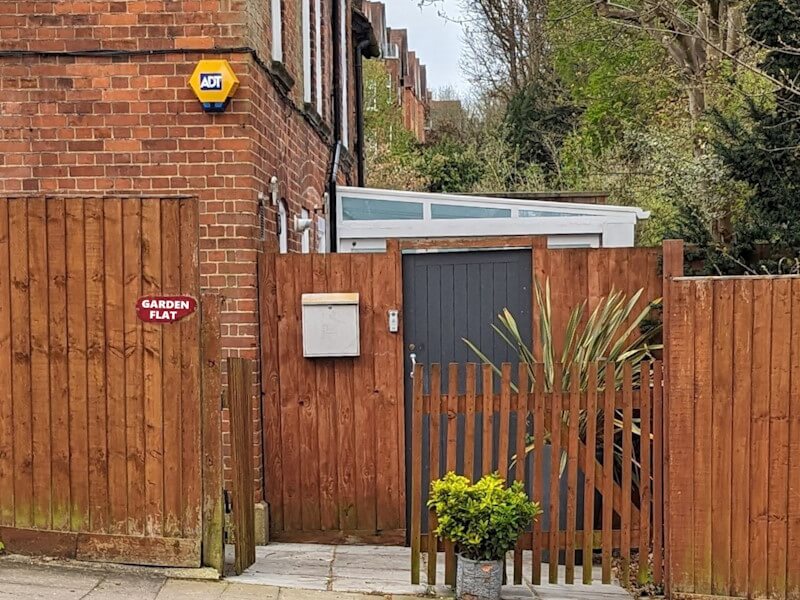
As defined by the Cambridge Dictionary, a garden flat is “an apartment that is on or below the ground level of a building and has a door to the yard.”
These homes can sometimes be highly sought after from potential owners, because they offer several benefits. With a few legal issues to consider, many buyers will see the addition of a garden as a factor strongly in favour of making an offer on your property, because it gives the owner more space. And the vast majority of flats are above ground level without the ability to walk out directly into a garden, so this relatively unique aspect of a garden flat can be another way to get buyers interested.
But as you will see from the following sections of this guide, there are certain negative aspects with which buyers might view your garden flat that could make it more difficult to sell.
As well as explaining these scenarios, the guide also gives tips on how to potentially overcome any selling challenges, including steps to take to make your more attractive to buyers.
You’ll also get important advice on what to expect from the four typical methods for selling a garden flat, which are using an estate agent, selling at an auction, selling on your own or selling to a quick home buyer.
Factors explaining why a buyer could want to own a garden flat
Helping your attempt to sell a garden flat is the fact that these properties have certain attributes that could make some buyers view them more favourably than others.
Many buyers see properties that have a garden as more valuable than those without a garden, That’s because they could use the garden for recreation, gardening or other activities, which is something that they might not otherwise be able to do if they bought a conventional flat on a second, third or higher floor.
The immediate proximity to a garden could be particularly compelling for people who are looking to buy a property within a city, where it’s much rarer to find homes that offer green spaces.
As a result, garden flats can sometimes by very desirable, depending on their location and other factors, with House Beautiful reporting recently on a London garden flat listed in 2024 at £1.75 million.
Separately, if a buyer has a disability or mobility issues that would make walking up and down several flights of stairs difficult if not impossible, a garden flat will be more appealing to them because it is at ground level. And its position could also be an incentive for other buyers to make an offer because they might prefer to own a flat that isn’t several floors high.
When you own a garden flat that has other flats above it, you also won’t have to worry about whether a severe storm could damage your roof and cause a leak to enter your flat, because there will be one or more units separating your home from the roof of the building. For those buyers wanting a low-stress, low-maintenance property, yours could be a good choice.
Potential drawbacks for buyers with owning a garden flat
Although there are a number of reasons why a buyer could have a strong interest in wanting to own your garden flat, these properties can also have a few negative aspects.
Learning these possible drawbacks in the eyes of potential buyers can help you with better understanding why your flat might be struggling to sell. And if that’s the case then you can consider your options for increasing your odds of getting a fast and fair offer for your home, for example by getting in touch with LDN Properties or another quick buyer that has plenty of experience with buying garden flats and can complete the purchase within a few weeks.
One downside of a garden flat can be if there is any uncertainty over access to the garden area, such as a situation where there is no clear legal statement of whether solely you have access and use of the garden or whether other flat owners in the same building also share it.
Buyers will likely want to see some clear declaration of who does and does not have the right to enter the garden, and they may choose against making an offer without seeing this.
Having a garden also creates the potential for problems in the future from invasive weeds, such as Japanese knotweed, which can ultimately lead to subsidence and other structural damage if not treated.
Therefore, the potential workload involved with maintain the garden and protecting it against the risk of problems in the future could be more effort than some prospective buyers are willing to exert, and therefore they may opt against making an offer to purchase your home.
A further concern that some people may have is when the garden flat is located below ground level, because this type of property can sometimes be more susceptible to mould and damp problems than those at higher levels. Even if your home is not currently suffering such an issue, even the possibility of this type of problem happening could be a dealbreaker for some buyers.
Preparing your garden flat before choosing how to sell it
When you are close to seeking a buyer for your garden flat, it can be a good idea to first set aside a little time to make sure the home looks at presentable as possible to buyers.
There are a few simple steps that should either not cost any money or be very low cost that you can take to help improve how much buyers think your property is worth, as The Advisory says. This in turn could lead to potential buyers increasing their offer, which would hopefully boost your selling proceeds.
Outside of your flat you should mow and weed the lawn, trim any overgrown hedges or plants, give window ledges a fresh coat of paint, fix any broken glass and other similar tasks. When you sell a home, first impressions are very important and a flat that appears to be kept in great condition will seem more valuable, and worth a higher offer, to buyers than one that is not.
The same applies for inside your flat, as you should aim to make it as clean as you can, removing as much clutter and personal items from the rooms as feasible, and tidying up after any pets if you have them. Buyers view clean, uncluttered rooms more favourably.
But if you have a larger problem at your property – for example, subsidence, widespread mould or other issues – you will need to consider whether you can spare the time, effort and money necessary to fix it before selling. Leaving the problem unresolved could concern buyers and make them either lose interest or significantly reduce their offer, by at least the amount of money that they expect it would cost them to fix the problem as the flat’s next owner.
Yet many homeowners won’t have the interest or resources to pursue potentially months-long and expensive corrective work at their garden flat before seeking a buyer. If this applies to you, there’s a solution; you can contact a quick buyer like LDN Properties and they will give you a fast and fair offer for your home even with the prominent problem left as is. The next section of the guide elaborates on this selling method as well as three other ways to find a buyer.
Four strategies to find a buyer for your garden flat
A crucial choice to make with the sale of your garden flat is deciding which of four methods to use for finding a buyer: selling at a property auction, selling through an estate agent, selling without any help or selling to a quick home buyer. There are clear benefits and drawbacks that you will discover with each of these approaches, so review them all before making a choice.
A useful strategy can be to make a note of your top aims with the sale of your garden flat, such as your preferred sale price, the amount of time you are prepared to wait before finding a buyer and whether you can accept paying any fees. Then compare these facts against the specific details of the four selling options below in order to find the one that best suits your needs.
Selling at a property auction
With a property auction you will choose a reserve price – the lowest value at which you can accept your garden flat selling – and then people will be able to bid for the home starting at this price, but ideally trying to outbid each other so that it pushes the final price much higher.
There is no promise that your flat will sell at the auction, which would then mean you’d have to start again with seeking a buyer, delaying the selling schedule much further.
Or you could get just one bid at the reserve price, and this is a legally binding agreement to sell your flat and the bidder could sue to make the sale happen if you try to abandon it. Therefore, you need to choose a reserve price that is designed to generate some profit from the sale even after the auctioneer has subtracted their commission from your sale proceeds. If you don’t, you risk selling breakeven at the same price you paid for the flat, or selling at a loss.
Auctioneers charge commission typically at 2.5 percent of a home’s final sale price and this covers their work in designing a listing that describes your flat and features photographs of it, advertising this listing, hosting the auction and then overseeing a successful sale. If you are trying to keep your expenses low when selling then you may want to review other choices.
It’s also not the quickest way to sell a flat because there are long waiting periods involved, including several weeks or more between the day you opt to sell this way and the day the auction happens. If your home sells, the buyer then has about a month to sign all of the required legal papers and finish their other obligations needed to finalise the purchase.
Selling through an estate agent
There is not much work for you to do when selling a garden flat through an estate agent, as they will take on the tasks of creating and marketing a listing, organising viewings for potential buyers to tour your home, hearing offers from people and hopefully taking one to completion.
All of this work takes a huge amount of effort and a lot of time, as The Finance Time notes. And that’s why estate agents charge commission to cover this work, often within the range of 1.15 percent to 1.40 percent of a property’s final sale price, although the exact rate may be higher or lower.
This is another slow option for selling a garden flat and you should be prepared to wait for many months or even more than an entire year before you get a serious offer from a buyer. Even then, the buyer could later change their mind and rescind the offer, which would make the sale fall apart and force you to restart the process of trying to find a buyer, delaying it even further.
Selling without any help
Another option for selling your garden flat is doing so on your own, which puts the responsibility on you to take care of every step from the initial production and advertising of a listing, scheduling of viewings and giving people tours of your property, and fielding offers.
This selling strategy echoes using an estate agent in that someone can make a legitimate offer for your flat but then decide against it at the last minute and cancel the offer, prompting the sale to collapse – and they can do this without any penalties if contracts are not yet exchanged. You would then need to begin again with finding a buyer, adding more time to the selling process.
Only consider this method for selling if you have a friend or family member that is skilled at selling garden flats and is open to helping you sell your property at no charge, or if you have that experience. Without this knowledge, trying to sell without any assistance can easily become a very lengthy and stressful experience with few prominent advantages to enjoy.
Perhaps the only clear benefit of selling without any third-party help is that you will not be charged any commission, as you would have been with an estate agent or auctioneer, and this can help with reducing your overall sale costs. But you’ll need to spend money on advertising your listing and other steps, and this might wipe out any saving you made by not paying fees.
If you are focused on avoiding commission when selling your flat, a viable alternative is contacting LDN Properties or another honest no-fee quick buyer. They will give you the same benefit of not having to pay any commission when you sell your property, but with the extra advantage of securing a much swifter sale than you would get when selling on your own. That’s because quick buyers are typically able to finalise the process of purchasing practically any type of home within a number of weeks, and that covers the key steps of exchanging contracts on the property and then paying the homeowner their full sale proceeds.
Selling to a quick home buyer
Selling a garden flat: frequently asked questions
Founded more than 20 years ago, LDN Properties has bought many garden flats in the UK since then, and here you can read our answers to sellers’ top queries about these homes.
Your top questions when selling a garden flat
Generally, a garden flat refers to a residential property that is “on or below the ground level of a building and has a door to the yard,” as defined by the Cambridge Dictionary. This differs from other flats that may be on higher floors yet still have access to the garden, with the key distinction being the fact that the garden flat is at ground level or beneath it.
Whether located in London or elsewhere, garden flats are desirable to many buyers because having some green space attached to a home is seen as beneficial to one without this feature. If you or any relatives have mobility issues, garden flats eliminate concerns about having to take many stairs. And there is no fear about damage from a leaking roof during a storm.
Garden flats that are built below ground level can sometimes develop problems with mould, which might be enough of a concern to discourage certain people from wanting to make an offer on your property. The upkeep of the garden could also be too much hassle for certain people, and there is also the risk of garden access disputes with people living in the same building.
Inside the home you should tidy up and remove all the clutter you can from rooms because this will create the impression that the property is larger and more valuable. Outside you can repaint window ledges, fix broken windows and other small improvements. If you have a major problem at your flat, such as dry rot, you’ll need to consider whether to fix it before seeking a buyer.
When attempting to sell your property you will be able to choose from trying your luck with an auction, enlisting the help of an estate agent, selling without any assistance from these third parties or selling to a quick home buyer like LDN Properties. There are pros and cons with each of these methods so you should review those before making a final decision on how to sell.
You will only need to pay commission on the sale of your garden flat if you decide to sell through an auctioneer or an estate agent, and this fee will be subtracted from the eventual sale proceeds right away. Selling on your own or selling to a genuine no-fee quick home buyer such as LDN Properties will help you to avoid commission, in turn reducing your expenses.
The different selling methods have varying schedules, and selling through an estate agent or on your own will usually be the slowest as this can sometimes take more than a full year. Selling via an auction may take at least several months, whilst selling to a quick buyer is the speediest choice because the entire process should only take a handful of weeks to complete.