Quick navigation
There are situations where you may have planned a renovation of your home but need to sell before you can finish it, or where you’re a developer that can’t finish building a planned property. Either way, there may be some hurdles involved with selling such a home. This guide offers some key tips on how to still attract a competitive and speedy offer for the property.
- What type of property is a half-finished house?
- Mortgages can be difficult to get for half-finished homes
- Preparing your half-finished home for sale
- Capital Gains Tax and selling your half-finished house
- Four methods for selling a half-finished property
- Queries and answers about selling your half-finished home
What type of property is a half-finished house?
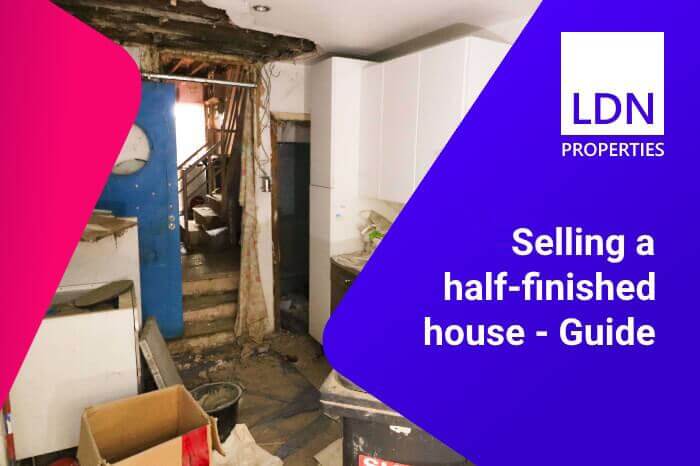
Although there isn’t a single UK law definition of what constitutes a half-finished house, the phrase generally refers to a leasehold or freehold house or flat where work to either build the property or finish renovating it has halted at the time the buyer tries to sell it.
There are many reasons for why a property might be sold when it’s only half-finished. As far as property developers are concerned, they could have begun work on constructing a property only to run out of money to complete it, or lost interest in the development and they simply want to sell what currently exists as quickly as possible to recoup whatever money they can.
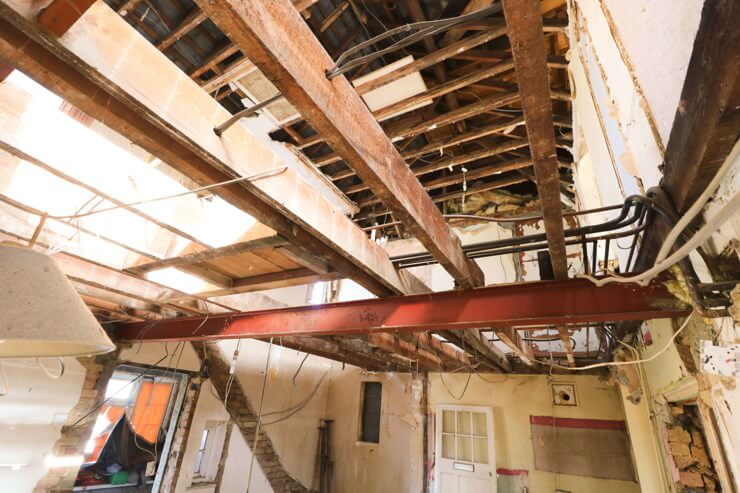
In such a scenario, the home could be planned as a two-storey house yet just part of the ground floor is built. Or perhaps the exterior of the property is done, but all of the important interior work including wiring and installation of fixtures and fittings has not even started.
Alternatively, for those people who own a fully built home but are trying to sell it before a comprehensive renovation is completed, there can also be many situations that prompt such a sale. In some cases, a family illness or other personal problem could require all your time, and you can no longer focus on finishing the work. Or you might have run into an issue with whoever is doing the renovation work and it has become too stressful, so you want to sell the home as is without completing the work. Disputes with neighbours can be yet another reason for selling fast.
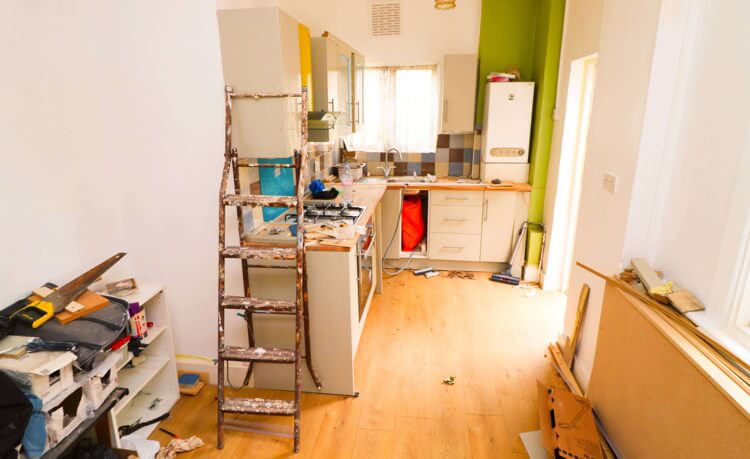
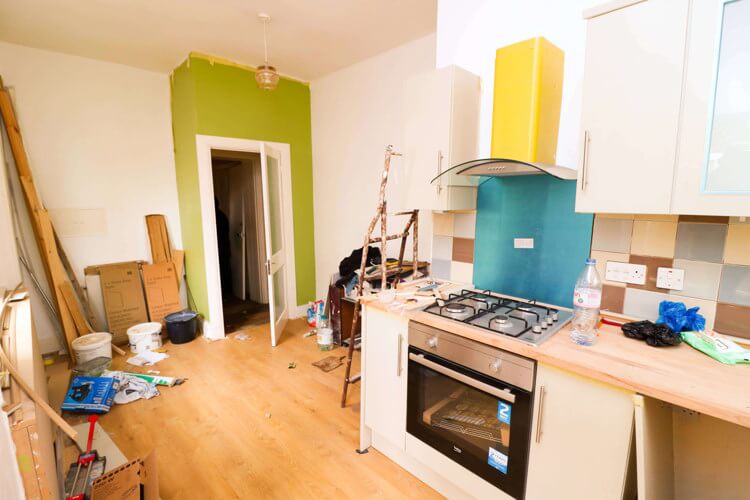
With this type of half-finished flat or house, one example might be that you planned a significant kitchen renovation and have removed all of the existing fixtures and fittings, but for any of the above-described reasons need to sell before the replacement components are ordered.
Whichever type of half-finished property you own, there’s good news in that you are still allowed to sell the home even though you should be aware that the path forward might be complicated. The UK Government has published guidance on how to sell a home.
Mortgages can be difficult to get for half-finished homes
An important consideration when selling a half-finished property is understanding the fact that many mortgage lenders might simply refuse to grant a loan for the purchase of the home, and if a buyer needs that loan to pay for the transaction, the sell will inevitably fall through.
The reason why many lenders might view a half-finished house or flat as unmortgageable is that it likely will not comply with all applicable building regulations, and there is also no guarantee of what the property will look like once the work is complete, or even if the work will be finished.
When a mortgage lender issues a loan to cover the cost of the purchase of the home, the borrower repays it with interest each month after they have become the owner of your property. If the borrower can no longer pay their monthly instalments, the lender might move to sell the home in order to recoup whatever balance is left on the loan through the sale proceeds. But they will only grant the loan if they believe that they’ll be able to get their money back in a future sale. Lenders will usually be far too sceptical about selling a half-finished home later, and therefore may deny mortgages. You can read more in this Which article about mortgages.
But there’s no need to worry that you won’t be able to sell your property if a buyer can’t obtain a home loan for it. As a later section of this guide explains, one option available to you is contacting a quick home buyer such as LDN Properties. These companies are able to make fair and speedy offers to buy almost any type of residential or commercial property, including half-finished houses and flats, and they have the financial ability to purchase homes immediately, so mortgage lenders are not even a factor when you decide to sell a property this way.
Preparing your half-finished home for sale
If you own a half-finished property and are trying to sell it, you could either decide to invest in completing the work or proceed with trying to find a buyer for home in its current condition.
Should you be interested in completing the work, it’s one option but remember that this will cost a lot of funds and likely take many months before the property or renovation is finished, during which time demand for your home from buyers might have dropped. And there’s no guarantee that investing in the work will result in a quick and competitive offer later.
Not everyone will have the money, time or effort available to finish whatever work still needs to be done at a half-finished flat or house before trying to sell it. And in this situation, you can prepare for the sale by collecting sufficient information that might help to answer buyers’ questions about the home. The faster that you can answer queries for prospective buyers, the more likely that you will be able to keep them interested in possibly making an offer.
For example, buyers will likely want to know which building regulations and other mandates your property still does not meet, such as whether it has an Energy Performance Certificate or other required documents.
They will also want a comprehensive list of each and every piece of work that remains to be done on the property, like which fixtures and fittings still need to be installed, any construction work that has not yet been done, whether they’ll have to do any electrical work, and more.
Be prepared to answer all questions about your half-finished home honestly, and do not hide any problems – such as a lack of building regulations, any physical issues like subsidence or the presence of asbestos, or anything else – from potential buyers. If you don’t disclose a crucial piece of information like this and then someone purchases your property and discovers the issue, they can sue you for hiding it and you might be liable for major penalties.
Capital Gains Tax and selling your half-finished house
Whether or not you complete work on your half-finished house or flat before selling it, you should be informed about the possibility that you might have to pay Capital Gains Tax on the proceeds from the sale.
This tax is charged on how much gain, also known as profit, that you might make when you sell a physical asset such as a house, artwork, car or other items. If you’ve got to pay the tax, it will typically be based on the profit compared to the original price that you paid for the half-finished property.
But there are certain exceptions to having to pay this tax or at least options for reducing how much tax you might owe as well as exclusion, so you should consult with a financial professional about this.
Four methods for selling a half-finished property
When you are ready to seek a buyer for your half-finished house or flat, you will have to make a choice among four different methods for selling the property. Typically, the options are selling to a quick property buyer, using an estate agent, selling at an auction, or selling on your own.
You will discover that there are specific advantages to each of the four selections, but also that some of the choices also have rather prominent disadvantages, for example taking a very long time to sell your home or charging high fees. To find the best match for your situation, write down your top goals with selling – such as your goal selling price and how long you’re willing to wait to find a buyer – and see which of the methods describes below is the best fit.
Selling to a quick property buyer
Quick home buying companies like LDN Properties are those that have the financial resources available to purchase all types of leasehold and freehold homes right away, without having to wait weeks or months to first get approved for a mortgage to cover the cost of the transaction. And that avoids the problem of it being hard to get a mortgage for a half-finished home.
Typically, quick buyers are able to complete the full process of purchasing a home in just a few short weeks, and that includes exchanging contracts and paying you the proceeds. It’s usually the fastest way to sell a property, particularly a unique one like a half-finished home.
Quick buyers are also very receptive to making fast and fair offers to buy practically all types of properties, regardless of their shape, size, condition or age – even potential problem houses or flats that are being sold without construction completed, or where renovations haven’t been finished.
LDN Properties, for example, launched in 2003 and in addition to buying half-finished homes it also has experience with purchasing storm damaged houses, flats with very short leases remaining, properties with noisy neighbours, houses that are located by power lines, flats with cladding, plots of land, guest houses, beach huts, billboards and many other different types of properties.
Another important benefit of selling to a quick buyer is that the trustworthy companies will never make homeowners pay any commission when selling their properties, which means that they can keep their costs low. Compare that to selling via an estate agent or auctioneer, where you’ll have to pay large fees that will be subtracted immediately from the sale proceeds.
Using an estate agent
With an estate agent you won’t have to put much effort into selling your home, as they will do the work of preparing a listing that features photographs of the half-finished property and a description of it, then they’ll advertise this in their office, online and in local newspapers. Estate agents also schedule viewings for buyers to see the property, and field any offers.
This is also often not the speediest way to sell a home, because you might be waiting for more than a year before you get a serious offer. This is particularly true for more unique types of properties such as half-finished houses or flats that many estate agents might not know how to sell, because they don’t understand the best ways to generate interest from buyers.
You should ask individual estate agents if they have any experience with successfully selling half-finished properties, and avoid selling through those companies that have had no success.
By way of warning, some estate agents might quote an inflated price for what they think you can get for the property, even if they secretly know buyers will only be interested at a much lower value. The reason that estate agents do this is so that you agree to sell through them, and then they can profit from the commission that they’ll charge if they’re able to find a buyer.
Thankfully, you can fairly easily overcome this trick by visiting property sales websites like Rightmove and Zoopla and writing down the present and past prices of half-finished properties similar to yours. Next, ask several other estate agents for free quotes about the potential sale price of your flat or house. Finally, calculate the average of all these values and it’ll give you a better idea of a reasonable asking price for your home.
Selling at an auction
Auctions can be a gamble, for the simple reason that you never know if your property will receive any bids or, if it does, what the final price might be. And that unpredictably can be too stressful for some sellers who might want to consider other options for finding a buyer.
The process starts when the auctioneer creates a listing for your half-finished property and then advertises it for many weeks or months to generate interest from potential buyers. Then they hold the auction, where people can place bids of increasing value to purchase the home. You will be asked to select a reserve price, which is the lowest value at which you agree to sell the property. If you only get a bid at this reserve price then the house is legally deemed to be sold, so be sure to choose a value that works for you after paying any fees you’ll owe.
If your property does not receive any bids then it will be deemed unsold and you’ll have to begin again with trying to sell it, which can add many more months to the process.
Even if the home does sell, it will take a very long time, starting with a wait of many weeks or months from when you enter the property for sale and when the auction happens. After a successful auction, the winning high bidder than has an average of 28 days to sign all their legal papers and complete their other required tasks to complete the transaction.
Half-finished properties can be difficult to sell at an auction because they will likely attract less interest than a finished house or flat. You should ask individual auctioneers about their track record with selling half-finished homes, and avoid those that have never done so before because it indicates they could struggle to get buyers interested in your property.
Selling on your own
If you have experience with selling half-finished homes or have a qualified friend or family member who might be willing to assist you, another option is selling on your own.
This will require a large amount of work from you, as you’ll be responsible for preparing and advertising the listing, organising viewings, and hearing any offers from buyers, hopefully taking a serious offer through to exchange of contracts. It’s a major undertaking and will require a lot of your time and effort, and won’t be something that you can simply try in your spare time.
It can also be more difficult to sell a potential problem property like a half-finished house or flat compared to a conventional finished home, for the various reasons outlined in this guide. That in turn can make the already difficult option of selling without any help even harder.
The timeline for selling this way can be very unpredictable, particularly for a more unusual property like a half-finished home. You should be fully prepared to be waiting for at least an entire year before you get a serious offer, and even then the offer could fall through.
Selling on your own does have the benefit that you will not have to pay an auctioneer or estate agent any fees for finding a buyer, which can help to lower your overall sale costs. But that saving might be cancelled out by the money you have to spend on advertising your property.
If selling without paying fees is one of your top goals, you should instead think about contacting a no-fee quick buyer like LDN Properties. These companies will not charge you any fees when buying your half-finished house or flat, so you’ll be able to keep the full sale proceeds. And a further advantages of selling to a quick buyer is that the average sale takes only a few short weeks, and that includes the time it takes for the final steps like exchanging contracts.
Top queries and answers about selling a half-finished house
Property owners and investors considering selling usually have questions that need answering, covering topics such as the condition required before selling through to selling when the house is in a bad condition. Here are a handful of questions asked when selling a half-finished house:
Your top questions when selling a half-finished property
A half-finished property is one where the construction work on the home has not been completed before the owner tries to sell it, or where the building itself was completed long ago but an ongoing major renovation of the property has halted and the buyer is now trying to sell it. Either of these types of homes can face additional hurdles in trying to attract buyers.
Most likely not, because it’s typical that half-finished homes do not fully comply with all applicable building regulations and other requirements, making them harder to resell. Mortgage lenders will only grant loans for buying properties if they are confident that they’ll be able to resell the home in the future if necessary, should the borrower default on the repayments.
You own a freehold half-finished house or flat if you are the owner of the building and also the land on which it is situated. You are a leaseholder if you’re the owner of an individual property, such as a single unit within a block of flats, and you pay the freeholder a ground rent each year in exchange for owning the property for a set amount of time, usually many years.
It’s entirely your decision, and if you have the money, time and energy to complete whatever work remains to be done then one option is certainly to finish it and hope that you’ll get a higher offer as a result. But remember that you can still get a competitive and swift offer even for a half-finished flat or house if you sell it to a fast buying company such as LDN Properties.
It can, and if you’re charged Capital Gains Tax then it will typically be based on the amount of profit, also referred to as gain, that you make from the sale of your half-finished home. Make sure you speak with a qualified tax professional about your capital gains tax liability.
Contacting a quick home buyer like LDN Properties is perhaps the most rapid option, because it should only take a handful of weeks from beginning to end. Selling through an auction will take at least many months for all of the various steps involved to be completed. And selling on your own or through an estate agent can often take more than a year before getting a buyer.
If you sell your property to an estate agent, you’ll be required to pay them commission often based on the sale price. You can avoid paying any commission by selling your home to a no-fee quick buyer such as LDN Properties or selling on your own.