Quick navigation
Mobile masts are towers or other structures that include a receiver and transmitter for mobile phone signals that cover a certain geographic area. They are used throughout the UK and many homes are located close to mobile masts. It can be harder to sell such a property compared to other flats or houses, yet you might still be able to sell the home fast and for a suitable price.
- What is a mobile mast?
- When is a home considered to be near a mobile mast?
- Potential problems with owning a home near a mobile mast
- Are there any advantages when selling a property by a mobile mast?
- Fewer buyers might want a house or flat near a mobile mast
- How to address buyers’ concerns when selling a home near a mobile mast
- Methods for selling your property near a mobile mast
- Top queries and answers about selling a home by a mobile mast
What is a mobile mast?
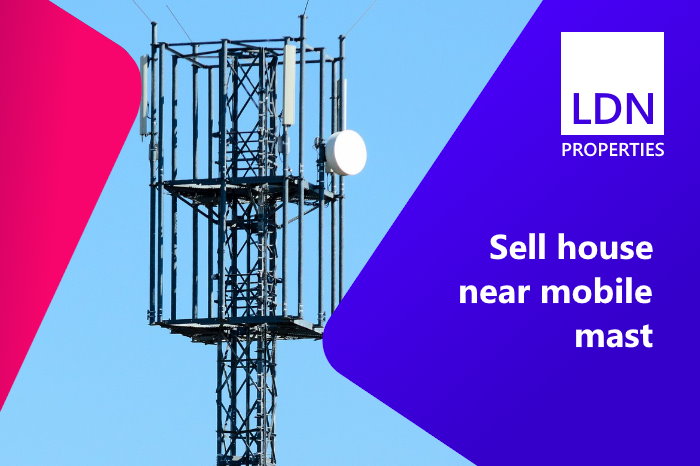
Mobile masts are an essential technology for mobile phone use throughout the UK. They are typically large towers or similar structures that are essentially oversized receivers and transmitters for mobile phone signals that cover specific geographic areas, allowing for a nationwide mobile phone network, according to a recent article on EasyTechJunkie, which is a website dedicated to making complex technological issues understandable for a general audience.
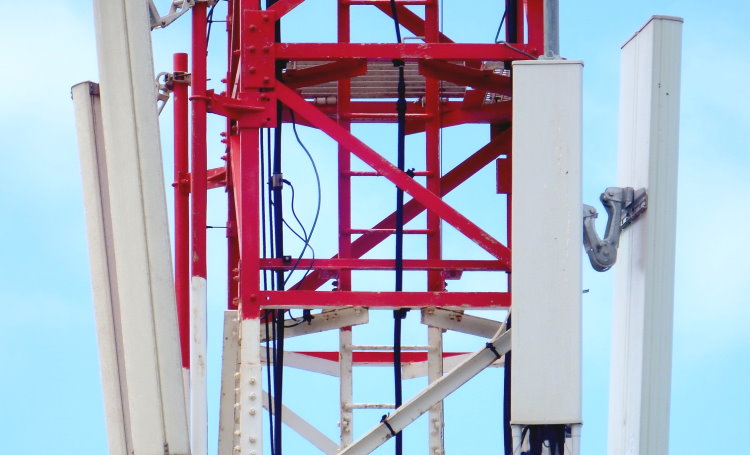
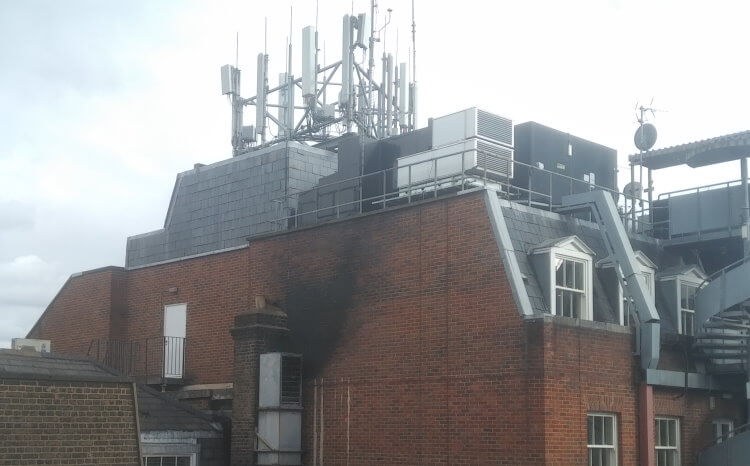
A mobile mast often looks like a large vertical structure that might have one or several antennas on top, along with various transmitters, receivers, and other important devices. Some mobile masts are designed to fit in visually with their immediate surroundings, whilst others might stand out, particularly if the rest of the nearby area is rural or has no other technological structures.
There are tens of millions of mobile phones in daily use throughout the UK, which increases the need for even more masts to carry the signals for those devices. In the early 21st century there were at least 35,000 masts erected throughout the county, a number that increased to at least 48,000 by 2007 and that is expected to continue indefinitely for the foreseeable future.
Current UK rules specify that most mobile masts must be about 25 meters, or 82 feet, in height, which is designed in part to prevent the structures being too tall and unsightly in residential areas. Local councils must also give final planning permission for mobile masts, and they can impose certain restrictions that are designed to make the structures blend in more easily.
The government has proposed rule changes that would give mobile phone companies the ability to construct masts that are up to two meters greater in width and five meters greater in height than the current limits for mobile masts. This change would "increase the range of masts and allow operators to fit more equipment on them so they can be more easily shared, " according to claims on the government’s website.
This likely means an expansion of the number of masts across the UK, increasing the chances that more and more homes in the future will be located near these structures. And when owners decide to eventually sell those properties, the presence of the nearby mobile mast could make the process somewhat harder.
However, certain rules have been designed to limit the visual and other impacts of mobile masts and they will apply in some areas of the country, including world heritage sites, conservation areas, national parks and other sites deemed worthy of aesthetic and other protections.
When is a home considered to be near a mobile mast?
You won’t any single UK government issued definition of when a property is located near a mobile mast, and that is in part due to the nature of the structures – they are built in many different types of location, and the masts can vary from small to large, and from highly visible from your home to inconspicuous and blending well into the surrounding area.
A simple rule is that if you can clearly see a mobile mast from your home then it will be seen in the eyes of most potential buyers as being located close to the structure. As you’ll see later in this guide, that can create some problems with trying to quickly sell your house or flat, although they’re not insurmountable depending on the method of selling that you ultimately choose.
It can also be helpful to look at other situations where a property is constructed nearby to a structure that some buyers might consider a flaw, such as near railway lines or power lines.
For example, policy in the UK states that houses or flats should not be built any nearer than about 164 feet, or 50 meters, from any power lines or other energy structures such as substations. That’s because of some possibility of health harms from being exposed to the electromagnetic frequencies that power lines emit, although the science on this issue is debated. The distance limit is just a non-binding guideline, but it could be extrapolated out to the situation of trying to decide whether your home is considered to be near a mobile mast.
Potential problems with owning a home near a mobile mast
There are a few potential drawbacks that you might experience when buying and owning a home near a mobile mast, including unknown health risks and an obscured view.
There is considerable and ongoing debate over whether being close to a mobile mast can create any adverse health impacts for humans. Powerwatch, which describes itself as a forum for medical researchers, scientists and engineers, says that more than 70 million mobile masts exist throughout the country, and that their network covers almost 100 percent of the UK population.
The website cites some research as showing that people who live near to mobile masts may experience certain increased health issues compared to those who do not live near such structures. These health harms can include disrupted sleep, general feeling of being tired, changes in children’s behaviour, skin problems, headaches and even epilepsy.
These health issues alone can be a dealbreaker for someone when they are looking to buy a property. It’s useful to know this before you even begin trying to sell your property, because it can help you to avoid some potential disappointment if a buyer shows interest then walks away because of the mobile mast.
The other main problem of owning a home near a mobile mast and trying to sell the property is that some people will be turned off by the aesthetics of the structure and being able to see it. Again, these are buyers who will likely lose all interest in purchasing your house or flat because of its proximity to the mobile mast, regardless of whether the property otherwise meets all of their criteria when buying, such as having the right square footage and number of bedrooms.
Thankfully, as you’ll see later in this guide, there are some methods of selling your home that can avoid the struggle of having to sell your flat or house to a reduced baseline of buyers. For example, quick buyers like LDN Properties can make speedy and fair offers to purchase practically any type of home and they won’t be discouraged by the visual or health concerns that some buyers might raise through other methods, such as selling your home via an estate agent.
Are there any advantages when selling a property by a mobile mast?
Whilst there can be several possible disadvantages of selling a home near a mobile mast, there are also a handful of advantages that could also apply depending on your unique needs.
One benefit is that the mobile phone signal near the mast should be off extremely high quality, and more and more homes are now doing away with landlines and relying entirely on mobile phones. For this reason, a mobile mast could help with more reliable phone service which can be extremely useful when working from home.
Fewer buyers might want a house or flat near a mobile mast
Perhaps the biggest reason why someone looking for a home might not be interested in your property is if it’s located close to a mobile mast. There are frequently stories in newspapers and on television about residents opposing the construction of new mobile masts, a problem that is likely to only increase given plans for expanding mobile phone networks in the UK.
For example, homeowners in Salford have recently been campaigning against the building of a 15 meter mobile mast on their street, highlighting just how sensitive an issue this can be for many people.
And both the local council and the company building the mobile mast have said that there are no legal restrictions from erecting the structure without planning permission – which also helps to show just how limited your options might be if you own a home where a telecommunications company then later identifies as being in an area where it wants to build a mobile mast.
Therefore, be prepared that if you own a property located near one of these structures, or that might be the site of a mobile mast in the future, you may have to just accept that some buyers will simply be turned off immediately from considering making an offer on your home.
Another reason why you might experience reduced demand when selling your freehold or leasehold property is that some prospective buyers could have serious fears about the health risks from mobile masts.
Even though, as discussed earlier in this guide, there remains considerable debate about such risks – and many authorities consider the structures perfectly safe for construction near commercial and residential properties – this might still not be enough to convince some buyers. So long as you are prepared for a reduced base of interest in your property, you will be less disappointed should you experience any hurdles with trying to find a buyer for it.
How to address buyers’ concerns when selling a home near a mobile mast
Unfortunately, if you own a property near a mobile mast there is not much that you can do to address concerns from buyers who do not want to live near such a structure. It is all but certain that the mast has been constructed within legal guidelines by a major telecommunications company, and you have zero authority or ability to take down or try to move the structure.
If you’re talking with a buyer when selling your home whose main criticism of the proximity of your home to a mobile mast is that they don’t like how it looks, in most circumstances you’ll have to understand that the situation will never be remedied to the buyer’s satisfaction, and you should move on to trying to find someone else that may be interested in purchasing your property with the mast nearby.
The only exception might be is if you own a home that has a large garden and were able to install some trees, shrubs or other greenery to block out the view of the mast. Whether this will be a feasible option will depend on several factors unique to your property, including how tall and wide the mast is, along with the amount of time and money that you’re willing to invest.
If buyers are concerned about the possible negative health impacts of owning a home near a mobile mast, you could try to do some research into the issue so that you can present them with information to counter such fears, offering them studies that downplay any such health risks. But this could be a very time-consuming activity that might not be worth the effort you would invest.
Instead, you should try to identify which of several methods of selling you might want to use for your property, so that you can pick one that will help you to get a speedy and profitable sale.
Methods for selling your property near a mobile mast
When you’re ready to find a buyer for your house or flat located near a mobile mast, you have four top methods to choose from: use an estate agent, use a property auction, try selling on your own, or use a fast property buyer. There are advantages to each method, but there are also some rather significant disadvantages with some options that it’s important to understand.
Learn the various steps of the four different methods below and find the one that is the best match for your needs, such as how quickly you need to sell and the price you are looking to achieve. Write an honest budget about the time and money that you can reasonably spend with your sale, and try to select a selling option that will best work with your individual situation.
Selling your home using an estate agent
When you sell this way, the estate agent will craft a listing that features photographs of your home as well as a text description of its main features, such as the number of rooms and its overall square footage. The estate agent will then advertise this listing in their office, online, in local newspapers and elsewhere, and arrange and host viewings for buyers to see your home.
If they manage to sell your home, they will expect you to pay a fee for their work, and this is often charged as a percentage of your property’s final sale price. You’ll have to subtract this fee from the sale price in order to calculate your net profit.
This can be one of the slowest ways to sell your home, and you might be waiting many months or even longer than a full year before you receive a serious offer from a buyer. And there’s always the potential that the sale could fall through anywhere up to exchanging contracts.
Some estate agents might also not have any experience with selling homes near mobile masts, and if that’s the case then they could struggle to know how to market the property and generate interest from buyers. Ask specific estate agents about their past success with selling properties located near mobile masts, in order to find out if they have ever been able to do so.
Selling your home using a property auction
Alternatively, you might want to try your luck with a property auction, where your home will be listed at a reserve price – the lowest value at which you can accept selling the property – and people will then place bids on it. The goal is to have many people interested and placing ever-increasing price bids so that you end up selling your house or flat at a decent profit.
However, you might only get a single bid at the reserve price, so you must ensure that you set this value at a level that will still generate a profit for you even after paying the auctioneer’s fees. Most property auctioneers charge commission based on your home’s sale price, but you could potentially negotiate a lower charge with certain auction companies.
It’s also possible that the auctioneer will let you pass the burden of paying some fees on to the winning high bidder that buys your home, so ask the company whether this may be possible.
You could have the choice of selling either by the traditional method of auction, through which your listing is advertised for a set number of weeks and then bidding takes place on one auction day, or the modern method of auction through which your listing will be active for several weeks and people can place bids at any time until the deadline for submitting bids expires.
Although this version of selling can be faster than using an estate agent, there are still delays involved. It will take several weeks at least between listing your home for sale and the auction finishing. And if your property sells, the buyer will have an average of 28 days to complete the sale, although this deadline can be shorter or longer with certain auction companies.
Some auctioneers also might specialise in only selling specific types of properties, and they may not know how to market and sell a home that’s located near to a mobile mast. You can ask individual companies for their past successes with selling properties that are close by mobile masts, and be wary of using an auctioneer that has never sold such a home. This implies that they might find it difficult to market your home in a way that attracts any interest from buyers.
Selling your home on your own
Another method of selling is to try finding a buyer on your own, but this can be one of the most stressful choices because you will be responsible for every step of the process from listing and advertising the home through to scheduling and hosting viewings and overseeing the completion of the sale. It can be a lot of work even for very experience professionals, and it’s not recommended you tackle this unless you have some knowledge of the process first.
A major benefit of selling this way is that you will not have to pay anyone commission for selling your home, and that you’ll get to keep the full proceeds. However, you will also likely face significantly more expenses with this method of selling because you’ll be responsible for funding the advertising of your listing and other costs associated with the process. It’s highly possible that the expenses of selling this way might cancel out any increased profit you could make.
And this method of selling has an incredibly unpredictable timeline, as it could take several months or potentially even more than a full year to find a buyer for your property, making it far from ideal if your top goal when selling your home is to secure a buyer as quickly as possible.
Selling your home to a fast property buyer
Or you could try selling your home to a quick buyer, like LDN Properties, which launched in 2003 and gives London homeowners a stress-free, no-hassle and streamlined option for receiving speedy and competitive offers on their houses or flats, without any fees.
Compared to other methods of selling, fast buyers are incredibly swift — they can usually complete the entire process of buying your home within a handful of weeks, instead of months or even longer. That’s because they already have the financial resources in place to purchase your home immediately, without having to wait several months for a mortgage approval.
And another top advantage of using a fast home buyer is that they are able to purchase almost any property, no matter its type, size, shape, condition or age. For example, in addition to buying homes located near mobile masts, LDN Properties has previously seen dilapidated houses, flats with cladding, homes where the owner cannot find an important document such as the title deeds, properties near railway lines, flats with tenants that have a very long time left on their rental agreement, and homes with radon.
The trustworthy fast home buyers will also never make you pay any commission, unlike estate agents or auctioneers who will make you pay fees that you’ll have to subtract from your property’s sale price before you can calculate your net profit. That’s because we believe that homeowners deserve to keep all of their proceeds when selling.
And for your extra peace of mind, LDN Properties is registered with The Property Ombudsman (TPO), an independent entity that issues policies that aim to shield owners from scams in the fast buying sector. All TPO members must follow those rules, and you should be wary about selling your home to a company that either cannot prove it is registered with the organisation, or which tells you outright that it refuses to join TPO, because these could be potential scams.
Top queries and answers about selling a house near a mobile mast
If you are thinking of selling your home quickly you may have a few questions for us, ranging from how difficult is it selling a property in a bad location through to selling a home with cladding. Here are some of the top questions we’re asked about selling a property close to a mobile mast:
Your top questions when selling a property near a mobile mast
There’s no single UK government rule that says an exact distance when for a property is considered to be located close to a mobile mast, and your home could have a mobile mast on the street or it might be visible at the end of your garden. One comparison is proximity to power lines, as guidelines say a property must be no closer to those than 50 meters.
There can be several reasons why someone might not want to buy a home near a mobile mast, including simply not liking the aesthetics of the structure and having to see it whenever they look outside their windows. Another explanation for why some people would not be interested in buying your property is because they fear health risks from living close to a mobile mast.
It depends on the route you take for selling your home, because you might be waiting many months or even longer when using an estate agent. With an auctioneer, the entire process will take at least a couple of months from beginning to end. But with a fast property buyer, they should be able to complete every step for purchasing your home in just a few weeks.
Not necessarily, and only if you choose a method of selling that typically includes fees, such as a property auction or an estate agent. However, if you use a reputable fast home buyer like LDN Properties, they will not charge you any fees. That means you are guaranteed to receive the full proceeds from the sale, without having to subtract any commission or other seller charges.
There aren’t many viable options for resolving a potential buyers’ worries about purchasing a property close to a mobile mast. If their concerns are related to the health risks of living near such a structure, you could try to highlight research that downplays those risks. Or if the criticism is the look of the mast, perhaps you could plant some greenery to block out the view.
Unfortunately, the disadvantages of owning such a home and trying to sell it — such as buyers’ fears about health harms from mobile masts or simply not liking the look of them — can outweigh the advantages. But one potential benefit of having a property close to a mobile mast is that you are all but guaranteed to get mobile phone service that is very reliable.
Ask specific fast home buyers if they are registered with The Property Ombudsman (TPO), which is an independent entity that publishes rules to protect homeowners against potential scams in the fast buying industry. All TPO members, like LDN Properties, must adhere to those regulations, which offers you extra peace of mind when it’s time to sell your house or flat.