Quick navigation
Properties are considered to be built on a steep slope is they have a gradient, or angle, that is more than 15 percent. Whilst there are some reasons why people like to own this type of house, there are also some drawbacks that can make it harder to get buyers interested. This guide explains the steps involved with trying to sell such a home quickly and for a fair offer.
- How do I know whether or not my property is on a steep slope?
- Concerns that buyers may have about a home on a steep slope
- Reasons why your house on a steep slope may be easier to sell
- How to make your property on a steep slope attractive to buyers
- Four methods available for selling a home on a steep slope
- Frequently asked questions about selling a house on a steep slope
How do I know whether or not my property is on a steep slope?
In particularly hilly or mountainous parts of the UK and elsewhere you can often find houses that are built on a slope, where one end of the land is at a higher level than the other. And these slopes will vary in terms of their gradient, which refers to the degree or angle.
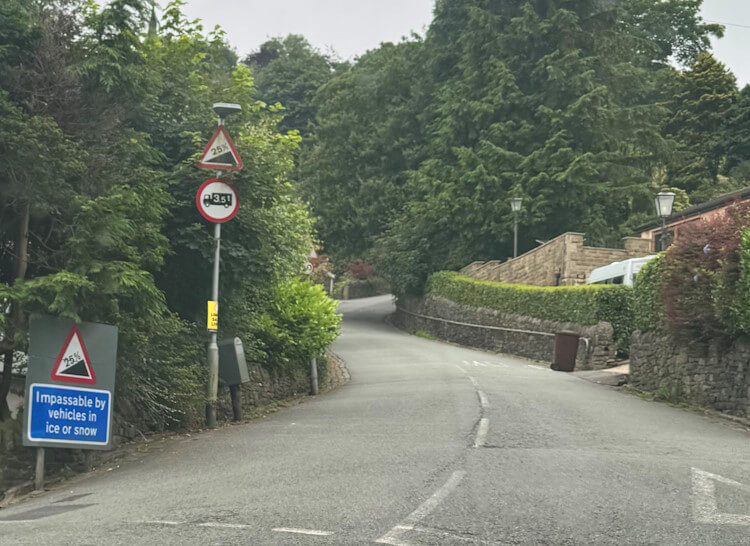
For a property to be considered to be constructed on a steep slope, the gradient must be over 15 percent, as the website NCESC notes. And this type of land is typically considered to be harder to build on, and creates more potential problems, than those with a lesser slope.
But there are also reasons why someone might want to own a home on a steep slope even with these concerns, because of advantages like enjoying better views or a more unique property.
If you are the owner of a house on a steep slope, you might be looking to sell your home fast. There can be many explanations for this, including trying again to find a buyer after a previous sale fell through, needing to raise funds to deal with a financial problem, copying with a change in your family situation such as a serious illness, or many other common home selling situations.
Whatever the reason that is prompting you to sell, this guide provides in-depth details about the various pros and cons with which prospective buyers might view your home. It also offers information on the different strategies that are available to you for seeking a buyer, with some of them having the chance of increasing your odds of attracting a competitive offer quickly.
Concerns that buyers may have about a home on a steep slope
Properties that are located on a hill can sometimes be harder to sell than homes on level ground, and there are a number of reasons that explain this. But these disadvantages can be exacerbated with houses that were built on a steep slope, and they can be even more difficult to attract fast and fair offers.
You should take time to read about the several worries that buyers might have about your home because of its location on a steep slope. Discovering these issues can help in your conversations with people that express an interest in your property, because you might be able to help downplay some of their concerns or suggest possible solutions to them.
And remember that none of the below problems, or any other negative factors about your house, will make it impossible to ever sell. You always have options for securing a sale, including contacting LDN Properties or another quick buyer that has plenty of history with buying homes on a steep slope. Later in this guide you’ll see more details on how you may be able to complete the sale of your house in just a few weeks when you sell to a quick buyer.
Drainage problems: Because water drains downhill, this can sometimes create some water-related issues with properties that are located on a steep slope and that do not have adequate drainage systems in place. If your home has a badly planned drainage system or one that is in need of repair, this could discourage buyers that might be worried about damage to the property that could ensure from stormwater runoff and a number of other potential problems.
Maintenance issues: Given the sloped nature of the land surrounding your house, it can create complications when it comes to upkeep of the garden, and this might worry buyers that see having a garden as a must-have element of their next home. And if you have any kind of structural damage at the property that will need repair work, a home on a steep slope can sometimes be harder to access by vehicles that might be needed for such a project.
Structural integrity: When properties are built on steep slopes, this requires cutting into the ground and this can eventually made it less stable, as the website First in Architecture says. Over time, the ground come become even less secure and this might result in damage like subsidence. Some buyers’ fears about such a future scenario could be enough to make them no longer want your home.
Reasons why your house on a steep slope may be easier to sell
Despite the fact that some buyers might have one or more worries about making an offer to purchase your house because of the fact that it is located on a slope, there are also a handful of reasons why other people may view your property more favourably due to its location.
Just as it’s important to educate yourself on the negative issues that buyers could associate with a house on a steep slope, it’s also equally crucial to see all of the favourable aspects of this type of property. This allows to focus on promoting the beneficial elements of your home to buyers, and you could find that they outweigh any concerns that someone might have.
Unique home: This type of home will often be considered to be a unique property given its location and the slope of the land on which it was built, and this one-off status can be appealing to certain buyers. Builders sometimes have to get creative with the layout and related design features of properties that are located on a steep slope, and this one-off nature may be appealing to certain buyers.
Extra privacy: Another great aspect of a home that is constructed on a steep slope is that you will typically have much more privacy compared to a conventional detached or semi-detached home on a level residential street. That’s because your property may generally be blocked out from view thanks to trees and other natural landscaping, particularly if your property is situated in the countryside, and this additional privacy may be a reason why someone makes an offer.
Excellent views: Perhaps one of the main selling points of a home on a steep slope is that the property will offer unbeatable views of the surrounding area, as noted on the website of the architectural company Huf Haus. This can be particularly appealing if you are selling your property in the countryside, but overall, the views from most of the house may help encourage someone to make an offer.
How to make your property on a steep slope attractive to buyers
Before you decide on how you would like to sell your house, one important part of the process can be investing a little time and effort in ensuring that the property looks its best.
Overall, keeping your home well-lit, decluttered and clean is a good concept to retain buyers’ interest in making an offer on the property. That’s because first impressions count when people come to tour your house on viewings, and if it looks like it is kept in great condition then it should seem more valuable to buyers compared to one that is dirty and looks poorly maintained.
Inside your house there are a number of simple tasks that you can pursue, as noted in a recent Daily Mail article. You should remove as many personal items as possible from every room so that you can make them appear more spacious and tidier, and clean up after any pets that you might have – as well as keeping them safely locked away during viewings.
Outside of your property you can also take a few quick and easy steps that can make it more enticing to buyers. These include mowing and weeding your garden (if you have one), replacing any missing roof tiles or broken window glass giving your front door or window ledges a fresh coat of paint and otherwise looking for ways that you can improve its exterior appearance.
Four methods available for selling a home on a steep slope
A major choice that all homeowners will have to make when getting ready to sell their property is to select the way that you plan on trying to identify a buyer. Your four typical selections are a quick buyer, an estate agent, an auctioneer, or selling without any third-party assistance.
Each of the options have their own benefits and drawbacks, ranging from advantages such as being able to finalize the sale of your property in just a handful of weeks when you contact a quick home buyer through to the disadvantages of paying commission that will cause your overall selling expenses to rise when you use either an auctioneer or an estate agent.
Consider writing down your top priorities for the sale of your home, including your preferred sale price, whether you are open to paying any commission, and the amount of time that you can wait before exchanging contracts. Then compare and contrast all of these details against the information about the four methods below to find the one that best matches your needs.
Selling to a quick home buyer
Selling with an estate agent
Or you may want to sell your home on a steep slope with an estate agent, although you would have to pay them commission if they are able to find a buyer for the property. This is often charged within a range of 1.15 percent to 1.40 percent of the home’s final sale price, and this will cause your expenses to rise as the fee will be taken from the eventual selling proceeds.
An estate agent charges commission to pay for the work they do in selling a home, which begins when they put together a listing that describes your house and includes photographs of the exterior and interior. They will advertise this listing online, in their office and in local newspapers, and then organize viewings and finally hear offers from serious buyers.
That can make an estate agent a good choice for those homeowners who would like to keep their workload as minimal as possible when trying to find a buyer for a property.
But this is far from the quickest way to sell a property because it might take many months or even more than an entire year before you get a genuine offer. And even then, someone can make an offer but weeks later rescind it, causing the sale to collapse. This would lengthen your selling timeline even further as you would need to start again with trying to find a buyer.
Selling via a property auctioneer
Auctioning is another way of selling your house on a steep slope that will charge commission, usually at about 2.5 percent of the final auction sale price of the property. Just as with estate agents, this fee is taken out of the sale proceeds and will therefore increase your costs.
Some auctioneers could be open to reducing their rate of commission or having the winning bidder pay a share of your expenses, which are two ways to lower your costs. But note that other auctioneers may charge an even higher rate of commission than 2.5 percent.
But selling through this method requires minimal effort from you because the auctioneer will take care of creating and advertising a listing, along with hosting the auction and then overseeing the completion of a sale if you succeed in getting a qualifying bid at the auction.
Just beware that this is another selling method that can take a long time, starting with many weeks or months of waiting from the day that you select this strategy through to the day that the auction takes place. And should your home sell, the winning bidder then has about 28 days to sign all the required documents and do their other tasks needed to finalize the sale.
There are some auctioneers that may give the winning bidder even more time than 28 days for finishing all of these tasks, which would make for an even slower sale. One solution could be to ask individual auctioneers about whether they are open to setting a shorter deadline for completing the final stages, as this may be a viable way to speed up the end process.
Selling without any third-party assistance
If you want to prevent having to pay any commission when selling your property on a steep slope, you could also consider trying to sell it without any help from a fee-charging third party such as an auctioneer or estate agent, as this is one way to reduce your expenses.
This would put the burden on you to take care of all the steps needed to sell your house, including developing and marketing a listing, scheduling viewings and hearing offers from buyers, then taking a serious offer through to the exchange of contracts.
It’s a significant amount of work that can quickly become very time-consuming and stressful, and that’s why you should only think about selling on your own if you have previously succeeded in selling a home on a steep slope, or if you have a suitably experienced friend or family member that is willing to help you with the sale without charging any fees.
Note also that someone can make an offer to purchase your home but then change their mind and cancel it, which would prompt the sale to fall apart – and they can do this without the risk of facing any penalties so long as contracts are not yet exchanged. It would delay a final sale even further as you will then need to start again with the process of looking for a buyer.
Frequently asked questions about selling a house on a steep slope
LDN Properties has bought many homes on a steep slope in the UK since launching in 2003, and here are our answers to common questions we get about selling this type of house.
Your top questions when selling a house on a slope
You will typically find houses on a steep slope more often in mountainous or hilly parts of the UK compared to within cities, but not always. These are homes that are built on slopes where one end of the land is at a higher gradient than the other, and to qualify as a steep slope a property must be constructed on land that has a gradient of higher than 15 percent.
There are unfortunately several possible problems that properties built on a steep slope can have, which might slow down your selling schedule. One issue is that the soil may be more unstable than homes built on even land, which can lead to structural damage in the future. There can also be drainage problems that may similarly cause harm to the house.
Yes, even if some buyers will view your home negatively because of its location on a steep slope, there are other people who may be more interested in the house due primarily to its location. One of the most obvious examples of such a buyer is someone who wants a property with excellent views of the surrounding area, which many homes on a steep slope have.
There are a number of simple and no-cost or low-cost actions that can help make your home appear to be kept in excellent overall condition and therefore more valuable to prospective buyers – and worth a higher offer. Inside this includes removing any clutter and tidying your rooms, and outside you can mow and weed your lawn and replace any broken windows.
Generally, you will be able to select among selling your property to a quick home buying company such as LDN Properties, selling without any third-party help, selling at a property auction or selling with an estate agent. There are clear benefits and drawbacks of these methods, as they all vary in terms of their timing, their cost and other.
The fastest way to sell this type of property will usually be getting in touch with a quick home buyer like LDN Properties, as they should only take a few short weeks to complete the purchase, and that includes exchanging contracts and paying you the proceeds. It would, by contrast, take at least a few months to sell on your own or with an auctioneer or estate agent.
When you sell your home using the services of either an auctioneer or an estate agent then you will need to pay them commission if they succeed in selling your property, and this fee will be subtracted from the eventual sale proceeds, adding to your costs. But if you sell to a no-fee quick buyer like LDN Properties or sell without any help then you will pay zero commission.