Quick navigation
If your house is connected to a neighbouring property by a shared garage, then it is considered to be a link-detached home. When you’re looking to sell this type of property, whether it’s freehold or leasehold, you could discover some possible barriers to clear when selling. But this guide shows how getting a competitive and speedy offer from a buyer can be achieved.
- What type of property is a link-detached house?
- Benefits to buyers of owning a link-detached property
- Potential hurdles with selling your link-detached home
- How to get your link-detached house ready to sell
- Your choices to find a buyer for your link-detached property
- Frequently asked questions about selling a link-detached home
What type of property is a link-detached house?
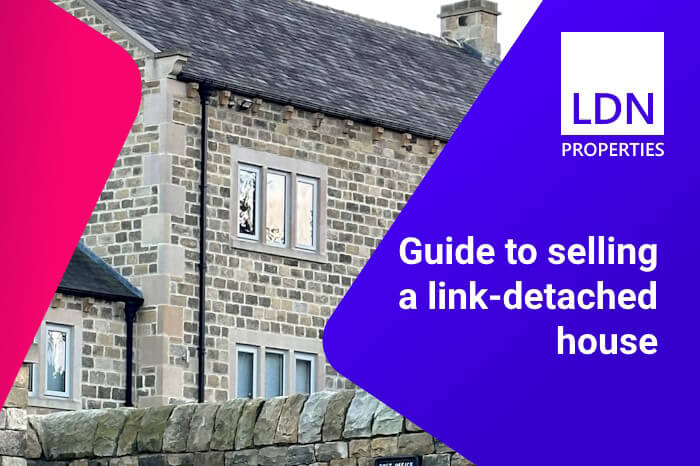
In many parts of the UK you can find link-detached houses, which refers to a house that shares a garage – but no other walls – with a neighbouring property.
Link-detached houses are not fully detached houses because of this shared connection with the neighbouring property. But neither are they semi-detached homes, because those properties share a common wall with the living spaces in one or more neighbouring houses. Link-detached houses only ever share the garage or, in some cases, foundations or another connection.
This type of property saw its peak in popularity from between the 1960s and the 1990s, as the website UK Home Improvement says, and link-detached homes are starting to be in more demand now.
You own a leasehold link-detached house if you are the legal owner of the property and the land on which it was constructed, whereas you own a leasehold home if you signed an agreement with the freeholder in which you are the owner for a set number of years, and you pay the freeholder an annual ground rent along with possibly other fees like a service charge.
Whether you’re selling your home because you are relocating elsewhere in the UK or overseas, selling to raise funds for retirement, or any other reason, this guide explains the possible barriers you might face in selling a link-detached house, and offers advice on how to still get a fair and quick offer.
Benefits to buyers of owning a link-detached property
As part of the process of getting ready to sell your leasehold or freehold link-detached house, you should learn about the reasons why a buyer might be interested in your property.
There are several advantages associated with living in a link-detached house, as the website Lofti explains. Promoting these beneficial aspects of your home to buyers could help with convincing them to ultimately make an offer, and even help to outweigh the potential drawbacks detailed in this guide’s next section.
Less noise: Because your property is only linked to the neighbouring house through a shared garage, you should experience hearing much less noise from the other home compared to living in a semi-detached property where the living space walls are shared with the neighbour’s house. For those buyers who are looking for a quieter overall property, this could make them look more favourably at making an offer on your freehold or leasehold link-detached house.
More privacy: Compared to semi-detached houses, which share walls, a link-detached house typically only shares a garage with the neighbour’s property. This can lead to better overall privacy for the homeowner, and this could be a key selling point for those buyers who believe that semi-detached properties do not give them enough privacy. They may be able to accept sharing a garage in exchange for the improved privacy that they would get to enjoy.
Better investment: Some buyers might view link-detached houses as being an affordable compromise between a fully detached home and a semi-detached property, and therefore see your house as a good investment. Just beware that you could also experience certain potential buyers believing that you should be willing to accept a reduced sale price for your property because of the fact that is linked to the neighbour’s home through the garage.
Potential hurdles with selling your link-detached home
Just as there are a few benefits that buyers might associate with a link-detached property, it’s important to also know there some people could view your home as having several cons.
Although there are some potential downsides for buyers with owning a link-detached house, as the website My Conveyancing Specialist notes, not all of them will be dealbreakers. Having a full understanding of the possible disadvantages associated with your property could help you in planning how to counter buyers’ concerns about these issues.
Problem neighbours: The fact that you are sharing part of your property with a neighbour can lead to disputes with them, particularly when this area needs repairs or other work and neither side believes they should be responsible for it. Having problem neighbours can be a deterrence for some buyers, and that’s why some owners try to sell discretely without their neighbours knowing.
Reduced privacy: The previous section of this guide explained how a link-detached house can be seen as a better choice to prospective buyers than a semi-detached home because it offers more privacy, as only the garage connects it to the neighbouring property. However, this means that your home and the neighbour’s home are still connected with a shared space, which results in less privacy for the owner of either property compared to a fully detached house.
Insurance issues: If you have attempted to get insurance on your property, you might find that some providers are wary about giving you a policy because they are unsure about how to classify your type of house due to the shared garage. If potential buyers ask you about any complications that you’ve experienced with obtaining home insurance, you should be honest with them because this could be a factor in them deciding whether to make an offer.

How to get your link-detached house ready to sell
Your choices to find a buyer for your link-detached property
At the point where you’re ready to get a buyer for your freehold or leasehold link-detached house, you’ll need to decide on a method for selling. Generally you can choose among selling to a quick home buyer, selling on your own, selling at an auction or selling with an estate agent.
You’ll notice some clear advantages with some of the methods explained below, such as being able to finalise the sale of your home within a few short weeks if you contact a quick home buyer. Other approaches have noticeable disadvantages, such as potentially having to pay a large amount of commission when selling through an auctioneer or an estate agent.
Before making a decision on how to sell, consider your top priorities with finding a buyer, including your goal selling price, whether you are open to paying any commission and how long you can wait before selling. Then compare all of these factors against the specific details of the four methods outlined below and this should help identify the closest match to your needs.
Selling to a quick home buyer
Quick buyers can often finalise the process of purchasing a home within a few short weeks, and this includes exchanging contracts and paying the seller their full proceeds. This distinguishes quick buyers as often being by far the most rapid option for selling any type of property.
LDN Properties, launched in 2003, is a quick buyer, and the term refers to the fact that these companies do not need to wait for many weeks or even months to first get approval for a mortgage to pay for the purchase of a property. Instead, they have the funds available to buy homes immediately, and that explains why the timeline for selling is usually so fast.
There are several other benefits of selling to a quick buyer, including that you’ll still get a competitive offer even if your home is considered a "problem" property because of one or more factors. These companies make fair offers for all ages, conditions, locations, shapes, sizes and types of leasehold and freehold houses, flats and other types of properties.
As well as link-detached houses, LDN Properties has purchased many other types of home including flats with cladding, houses with a right of way, properties where the owner cannot find important documents such as the title deeds, flats located close to traffic lights, houses that are lacking a kitchen or bathroom, properties with overdue bills, prefab houses, flats with a leak, homes that do not have a gas safety certification and almost countless other examples.
Yet another perk of selling to a quick buyer is that the legitimate companies will promise to never charge you any commission, so you are assured of receiving the full sale proceeds and can keep your selling expenses low. But if you sell with an estate agent or an auctioneer this will increase your costs because you’ll have to pay them fees that are taken out of the proceeds.
Selling on your own
You’ll be required to do all the work of selling your home this way, starting with putting together a listing that describes the property and features photographs of the interior and exterior. You’ll need to advertise this listing in local newspapers and elsewhere, and then organise viewings where you will take potential buyers on a tour of the house. Finally, you’ll be responsible for hearing offers from serious buyers, ideally taking one of them to exchange of contracts.
This is a massive amount of work that will consume a lot of your time, and therefore you should only pursue this method if you’ve managed to sell a link-detached house in the past, or you have a suitably qualified family member or friend who is willing to help you for free. Without this experience, you could be looking at more than a full year before you are able to sell.
And a buyer also has the ability to make a serious offer but then withdraw it and make the sale fall apart without facing any penalties, so long as contracts have not yet been exchanged. This will delay selling even further because you’ll have to start over with looking for a buyer.
Selling without any help does have the advantage of avoiding any commission paid to an auctioneer or estate agent, which lowers your expenses. But this saving could be eliminated by the money that you have to spend on advertising your listing and other selling costs.
Instead, think about selling your house to a zero-fee quick buyer such as LDN Properties. They will commit to not charging you any commission when purchasing your home, and you’ll also get a much speedier sale that completes within a handful of weeks of you first contacting them. It’s a no-stress, hassle-free and streamlined alternative option for selling your link-detached house.
Selling at an auction
Auctions are a gamble, because you might not receive any bids on your house, in which case it will go unsold and you’ll have to begin again with the time-consuming search for a buyer. This would inevitably add many more weeks or months to the overall timeline for selling.
You will be asked to choose a reserve price, and this is the lowest value at which you are comfortable selling your property. A single bid at this price is a legally binding agreement to sell your home that the winning high bidder could sue to enforce. That’s why you need to calculate a reserve price that should generate a profit, even after the auctioneer’s fees are subtracted. Otherwise you risk only breaking even on the sale of your home, or even selling it at a loss.
Typically, an auctioneer will charge the seller commission at about 2.5 percent of the property’s final sale price, and this increases your costs as it is deducted from the proceeds immediately. You might be able to find an auctioneer who is open to reducing the fee they charge or to have the buyer pay some of your expenses, so it’s worth asking about whether this is possible.
This is not the swiftest choice for selling a property, because it involves several delays, including a wait of many weeks or months between the day on which you decide to sell and the day on which the auction takes place. If the property manages to sell, the buyer then has about a month to sign their legal papers and complete the other steps to finalise their purchase.
Some auctioneers might be open to setting a shorter timeline for the buyer to finish their mandatory tasks, so this is another issue you should ask individual auction houses about. But beware that other auctioneers could give the buyer even more time to finish their tasks, which would result in even further delay to the overall schedule for selling your property.
Selling with an estate agent
When you sell your home this way, you’ll need to pay the estate agent a fee if they are able to find a buyer for your property. Expect to pay between 1.15 percent and 1.40 percent of your home’s sale price, and this fee will be taken right away out of the final sale proceeds.
Estate agents charge this commission for their effort in selling your home, which includes preparing and advertising a listing for the property, scheduling viewings to take potential buyers around the house, hearing offers and hopefully taking one through to completion. This can help to reduce your stress because they will be responsible for each of these important tasks.
But you may be waiting a very long time to sell your property using this method, and you should be prepared for the home to remain unsold for more than an entire year. As a result, using an estate agent can sometimes be one of the slowest approaches for selling a house.
Remember also that a buyer could make an offer but then rescind it without any consequences for them, so long as the contracts haven’t yet been exchanged. This would add much more time to the selling schedule because it would cause the sale to fall through and you’d have to start again with seeking a buyer, and this may take many months or more.
It’s also possible that some estate agents may have no experience with selling link-detached houses, and this implies that they could potentially find it difficult to know how to get buyers interested in your property. You should ask individual estate agents about their past success with selling your type of home, and avoid using those that have never done so before.
Your questions when selling a link-detached house
If you are a homeowner thinking of selling fast, you may have some questions to be answered. Our team are ready to answer any questions you may have including discussing the types of property we can make an offer on. Here are some of the top questions we’re asked about selling a link detached property:
Your top questions when selling a link detached property
You have a link-detached house if the building is connected to another house by a shared garage, although in some cases the link can be in the foundations that are not visible at street level. This type of home is freehold if you own the building and land outright, and it’s leasehold if you pay a leaseholder ground rent and own the home for a determined number of years.
There are a few reasons why someone could be interested in purchasing a link-detached house, such as there being less of a connection with the neighbouring property compared to a semi-detached house, because only the garage is shared. This can help in several ways to improve the owner’s quality of life, including reduced noise and increased privacy.
Whilst there are some advantages that buyers might associate with a freehold or leasehold link-detached property, a number of drawbacks also exist. These include the potential for disputes with the neighbour over the upkeep of the shared garage, the fact that the home is still technically attached to another property, and other facts that may complicate a sale.
The main action you can take is cleaning the interior and exterior of the property, which will give it a more inviting appearance to buyers and hopefully make them think the home is worth a higher selling price. If you have major structural problems at your house, you can also assess whether it’s worth your money, effort and time to fix the issue before attempting to sell.
If you opt for using an auctioneer or an estate agent to sell your leasehold or freehold property, you will be required to pay them commission, which will be taken out of the sale proceeds and charged as a percentage of the final sale price. But if you sell your home to a no-fee quick buyer like LDN Properties, or you sell without any third party help, you won’t pay any commission.
Your fastest choice for selling a link-detached house or any other category of property will usually be contacting a quick home buyer such as LDN Properties, as the timeline is only a few weeks from start to end. The other typical methods – selling at an auction, selling with an estate agent or selling without any assistance – often take several months to complete at least.
One useful question to ask quick buyers is to prove whether they are registered with a third party entity called The Property Ombudsman (TPO), which writes policies to shield owners from scams in the quick buying sector, and all TPO members must comply with these rules. If a quick buyer can show they are a genuine member of TPO then this should give you peace of mind.