Quick navigation
When a property is divided up for several different functions, for example a shop on the ground floor and residential flats above, it is deemed mixed-use. There are pros and cons associated with trying to sell this type of property, and this guide aims to help you understand the process of finding a buyer and improving your chance of getting a competitive and swift offer.
- Which properties are considered to be mixed-use?
- Factors helping the sale of a mixed-use property
- Potential problems with selling a mixed-use property
- Selling a mixed-use property with sitting tenants
- Paying Capital Gains Tax on the sale of your mixed-use property
- Your options for how to sell a mixed-use property
- Frequently asked questions about selling a mixed-use property

Which properties are considered to be mixed-use?
Mixed-use property generally refers to one building or several that are used for a blend of purposes, such as offices and residential units, commercial shops above or alongside flats, and more, as Wikipedia explains.
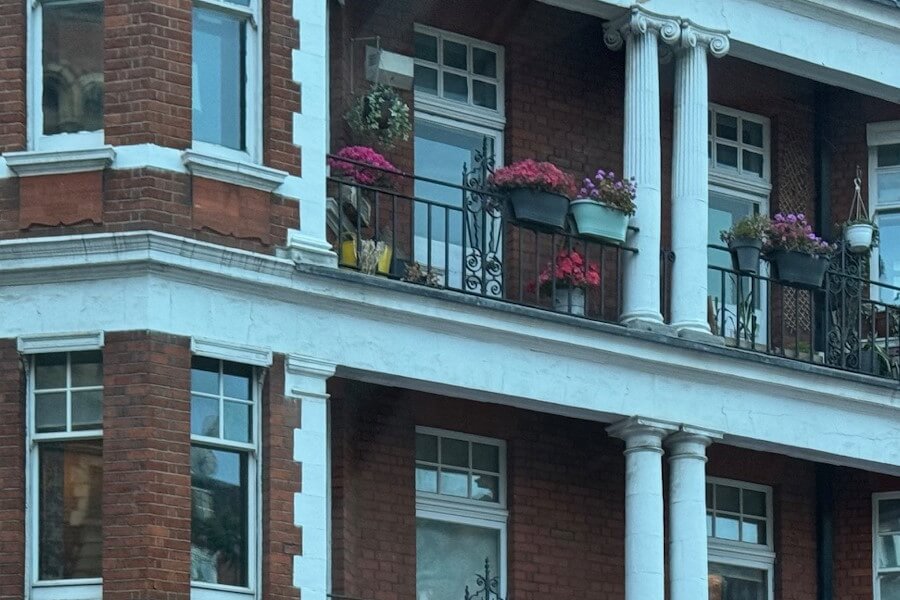
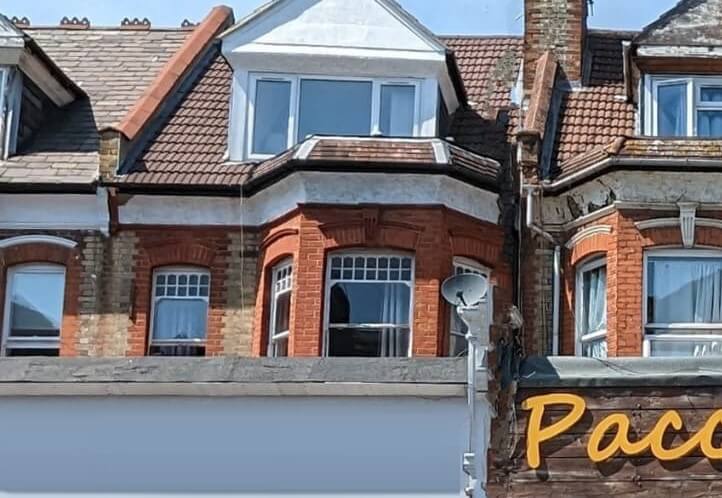
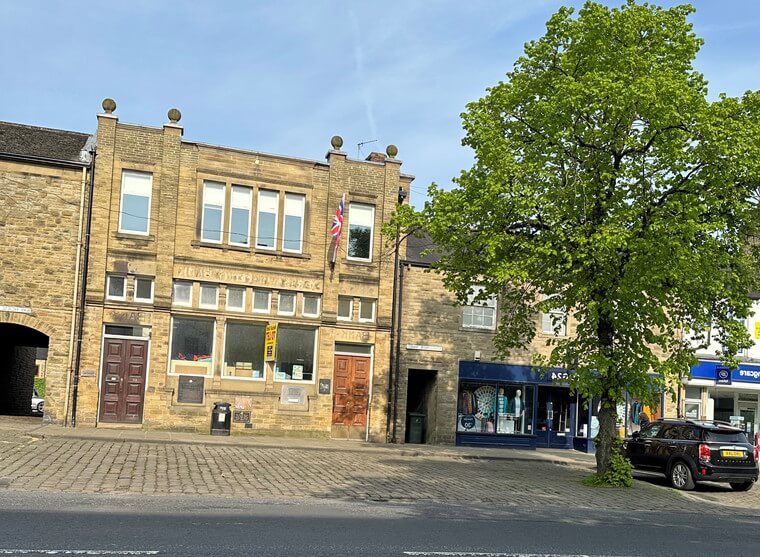
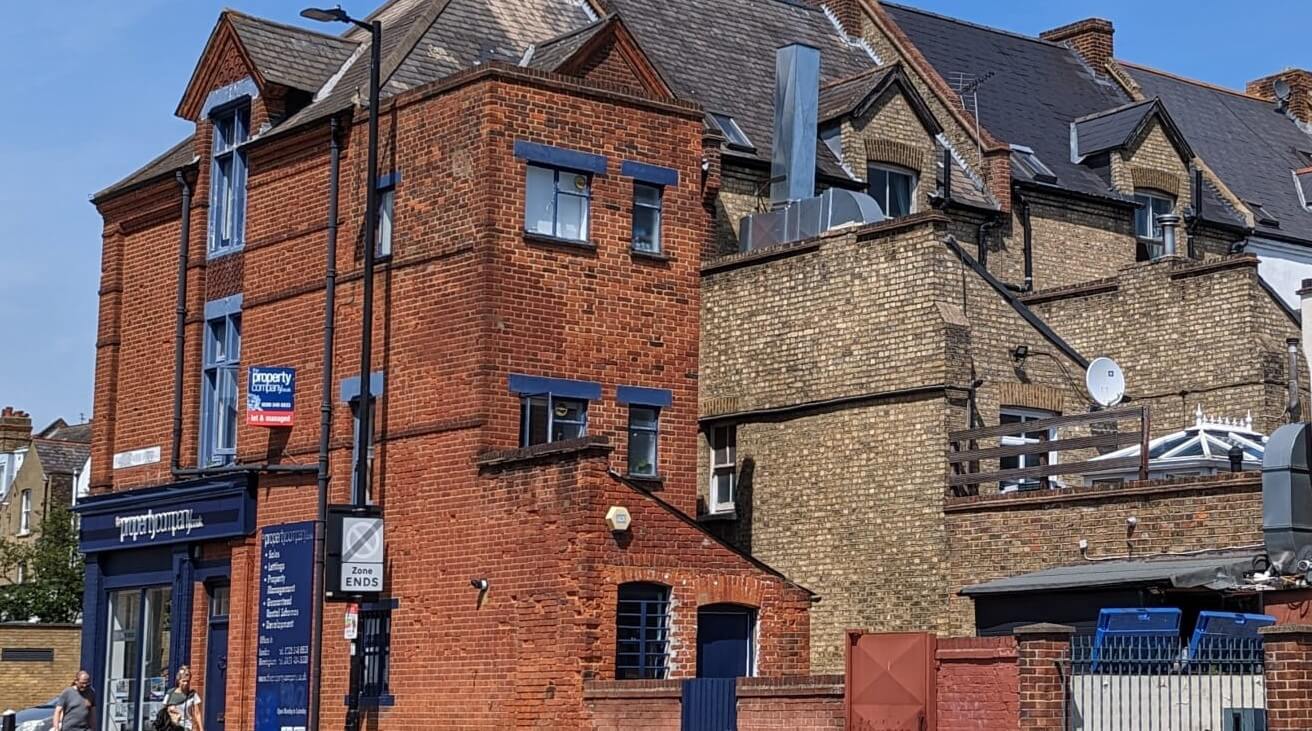
Although the term can refer to large property developments with many units, this guide refers to mixed-use buildings as single units that you might see throughout the UK in cities, towns and even villages and rural areas. The typical example is a multi-storey building that has some type of commercial property on the ground floor and residential flats above.
If you outright own a mixed-use building then you are the freeholder, and you will typically be earning extra money by leasing out the commercial and residential units in the property to paying tenants. Whilst this additional income can be welcome, some owners of mixed-use properties eventually decide to sell because of the work involved – freeholders are often responsible for keeping the building in good condition and paying for any needed repairs.
Having tenants can also be a stressful experience if they become problematic, which can be another justification for making the decision to seek a buyer for the property.
Whatever your reason for wanting to sell your mixed-use property – and it can be anything from preparing for retirement to wanting to raise funds for a financial problem and more – this guide will walk you through the possible challenges and offer tips on how to attract a fast and competitive offer.

Factors helping the sale of a mixed-use property
There are some aspects of the property selling process that can be hard to predict and which might fluctuate, such as the average sale price, as a recent Daily Express article notes. General property market conditions affect the sale of all properties, and there’s not much you can do to avoid this.
But you’ll find that there are some particular elements of mixed-use properties that can make them more appealing to potential buyers and ideally increase your chance of a sale. Knowing these factors is an important part of the process of selling your building because it gives you specific issues that you can tout to someone who has shown an interest in it.
Money maker: One of the strongest selling points is the potential money that the future owner could earn with the mixed-use property, because they will earn money from rent payments from commercial or residential tenants. If you are able to prove that the property has consistently generated a decent extra income, this might persuade someone to make an offer.
Great location: If your mixed-use property is located in a popular area, such as a busy city centre, this might be a major attraction for a buyer for several reasons. They could be planning on living in the residential section of the property and like where it is situated, or they may see great potential for possibly expanding the building to add more units in a high-demand area.
Potential problems with selling a mixed-use property
Prospective buyers might also see some disadvantages of owning a mixed-use property, and it’s equally important to learn what these might be. If someone shows an interest in possibly making an offer but raises the below concerns, understanding them can assist you with answering their questions in a way that might help to reduce their fears.
Wrong uses: It’s possible that a potential buyer may only want one of the uses that your property offers, and the other is a dealbreaker – such as wanting a ground floor shop with offices above when you’re selling a building with retail and residential units instead.
Minimal income: There are many mixed-use properties that are expensive for freeholders to maintain and, depending on their expenses, the payments from commercial, office, residential or other tenants may not produce much of a profit. People who show an interest in buying your property may change their mind if they learn that it doesn’t generate much money.
Selling a mixed-use property with sitting tenants
Another important aspect of a mixed-use property that can sometimes be either a pro or con as far as potential buyers are concerned is whether you currently have sitting tenants.
This refers to a person that lives in the residential portion of your mixed-use building and pays you rent each month. By law, they have the right to live in that unit for however many months or years are specified in the tenancy agreement that you will have signed when they moved in. And you’ll need to make prospective buyers aware that you currently have sitting tenants.
One option is to see if your tenants are willing to move out of the property, which can happen if the rental agreement is close to expiring. You could also give your tenants formal notice that they need to leave the property, but this can be a slow and complicated process.
Alternatively, you could look for buyers that would be willing to purchase your property and take over the rental agreement that you have with your sitting tenants. This situation would cause the least disruption at the building because the tenants would continue to live in their unit under the terms of the agreement, but they would pay their rent to the new owner of the property.
Generally, vacant mixed-use properties are considered easier to sell because this gives the future owner more choice in what rent to charge and which tenants to approve.
But if your property has sitting tenants you will still be able to sell it, but you might need to consider certain methods best suited to finding a buyer for this type of building. For example, quick buyers like LDN Properties make swift and competitive offers to purchase almost any type of freehold or leasehold property, including mixed-use properties with sitting tenants.
Paying Capital Gains Tax on the sale of your mixed-use property
It can be useful to plan a budget when selling a mixed-use property that accounts for costs such as any commission you might have to pay to an estate agent or auctioneer if you use them, and potential Capital Gains Tax is another expense that you should learn about.
As the UK government’s website explains, this tax can apply when you sell a valuable physical asset like property, art, cars and more. Capital Gains Tax is typically charged on the amount of profit that you make compared to the price that you originally paid for the property, rather than being assessed based on the price at which it sells.
Speak with a tax specialist to ask about some options that might be available to either eliminate or significantly reduce how much Capital Gains Tax you may have to pay. And if the sale results in your making a loss compared to the original purchase price, or only breaking even by selling at a price close to what you first paid, then you will not be required to pay this tax.
Your options for how to sell a mixed-use property
An important choice that you will need to make when you’re selling a mixed-use property is which of four common methods you want to use in order to find a buyer for it.
Your options are using an estate agent, selling to a quick buyer, selling at an auction or selling without assistance. There are specific advantages associated with each of the methods, for example fast buyers being able to complete the purchase of a property within weeks. But there are also disadvantages with some of the other choices, such as having to pay commission to an auctioneer or estate agent that will be subtracted from your eventual sale proceeds.
To help you find the selling approach that most closely pairs with your unique needs, write down your main targets with the sale, such as your ideal timeline, how much – if anything – you are prepared to pay in fees, your goal sale price and more. Then read the details of the four methods below to identify which one is likeliest to help you achieve those aims.
Using an estate agent
You won’t have to exert much effort when selling with an estate agent, because they will be responsible for most of the work. They’ll craft a listing that features photographs of the inside and outside of your mixed-use property as well as describing it, and then advertise this online, in their office and in local newspapers. Estate agents will also plan viewings to take potential buyers on a tour of the property, and they will field any serious offers from buyers.
This is not usually a fast way to sell a property, because you might be waiting many months or even more than an entire year before you receive a serious offer. And even if you get such an offer, the buyer could withdraw it any time before contracts are exchanged and face no penalties. Then you would have to begin again with trying to find a buyer, which could add even more time to the selling schedule, which is not ideal if your goal is to sell as fast as possible.
Beware that one trick estate agents might use is to quote you a very generous sale price for the property, even if they secretly know it will only attract offers at a much lower price. They hope the valuable quote will persuade you to use their services for selling your mixed-use property, so that they can profit from the commission that they will be able to charge you.
It is fairly quick, free and simple to prevent falling for this routine, starting by asking several estate agents to give you free sale price quotes. Then look on property sales websites including Rightmove or Zoopla and write down the current and past sale prices of mixed-use properties like yours, particularly those in your area. Finally, calculate an average of all these values and you’ll get a better idea of your viable selling price.
Also note that some estate agents might specialise in selling certain types of property, such as only residential, and they may not have sold a mixed-use property before. This implies that they could find it harder to know how to market your property and attract potential buyers. Always ask estate agents about their track record with selling mixed-use properties, and if you decide to use this method of selling then choose a company that is highly experienced with these sales.
Selling to a quick buyer
Alternatively, you could sell your mixed-use property to a quick buyer – companies that have the financial resources available to make immediate purchases of almost any type of freehold or leasehold property. Because they don’t have to wait for many weeks or months to get approved for a mortgage to afford the purchase of a property, they can typically complete the process in a few short weeks, and that includes exchanging contracts and paying sellers the proceeds.
Quick buyers also a great choice for selling a mixed-use property because they are open to making competitive and fast offers on almost any property regardless of its age, condition, location, shape, size or type – even those that might have major structural problems.
For example, LDN Properties is a quick buying company launched in 2003 that has bought many properties throughout the UK including mixed-use properties as well as vandalised houses, flats underneath noisy airport flight paths, homes that do not have planning permission, properties with old wiring, listed buildings, plots of land, lock-up garages, eco homes and much more.
You also will not have to pay any commission if you sell to a genuine no-fee quick buyer, because these companies do not charge owners any fees when selling their properties, making this method of selling good for anyone who is trying to keep their expenses low.
For your additional reassurance when selling to a quick buyer, ask them if they are a member of The Property Ombudsman (TPO). This is an independent entity that writes policies to guard property owners from falling for scams in the quick buying sector, and all TPO members must adhere to these policies, which gives you extra protection with this selling method.
You can check on any quick buyer’s membership status by visiting TPO’s website, clicking on the "Find a Member" tab on the left of the welcome page, and then when prompted typing in the name of a specific company and clicking the "Submit" button. If the company is a genuine member, the website will next show you their full registration details. If a company claims to be a TPO member but cannot prove this, don’t sell to them because it could be a scam.
Selling at an auction
Another way to sell your mixed-use property is at an auction, where you’ll have to choose a reserve price – this is the lowest price at which you agree your property can sell. Take care to choose a price that should produce a profit from the sale even after subtracting the auctioneer’s fees, otherwise you might end up selling break even or possibly making a loss on the sale.
Note that if you don’t get any bids on your property then it goes unsold and you will have to start over with the process of trying to sell it. If this happens it has the potential to add many more weeks or months to the selling timeline, so if you are trying to find the most rapid method for selling a mixed-use property you may want to look at other choices, like using a quick buyer.
Auctioneers usually charge their commission as a percentage of the sale price you get for the property, and this is deducted straight away from the sale proceeds, adding to your costs. It’s worth asking individual companies if they are open to negotiating a reduced commission rate, or at least making the winning high bidder be responsible for paying some of your costs.
This is not the swiftest approach for selling a mixed-use property, because there’ll be a wait of many weeks or months from when you enter the property for sale and when the auction happens. Then, if your property sells at the auction, the buyer will generally have about 28 days to complete their required tasks to finalise the purchase, such as signing legal papers.
You may find that some auctioneers set shorter or longer deadlines for the buyer to finish these steps. If you want a speedier sale then you could try asking individual auctioneers if they are open to imposing a tighter timeline than 28 days for the buyer to handle their tasks.
Selling without any assistance
You could also consider selling your mixed-use property without any help, which means that you’ll take on all the tasks – everything from making and advertising the listing through to organising viewings and hearing offers from buyers. This is a lot of work and it’s not something that you will be able to defer to only trying to handle during your spare time.
It is among the slowest of the four approaches for selling a mixed-use property and you might be waiting for over a year before you manage to get a buyer. That’s why you should only consider this option if you have sold a mixed-use property before, or you have an experienced family member or friend who might be willing to assist you with the sale for free.
Perhaps the only clear advantage of selling this way is that you will not have to pay an auctioneer or estate agent any commission. But this cost saving might be significantly reduced or even wiped out by the advertising and other expenses that you’ll incur with this method.
Instead, think about selling to a quick buyer like LDN Properties because these companies never charge property owners any fees, and they can also finalise the purchase of most properties in just a few short weeks. With this method you’d still get the benefit of not paying any commission, but you would also get a much more rapid sale than selling on your own.
Top queries and answers about selling a mixed-use property
Property owners considering how to sell quickly often have some questions that need answering, ranging from the time it takes to sell through to selling property with a high ground rent. Here are a selection of questions asked when thinking of selling a mixed-use property:
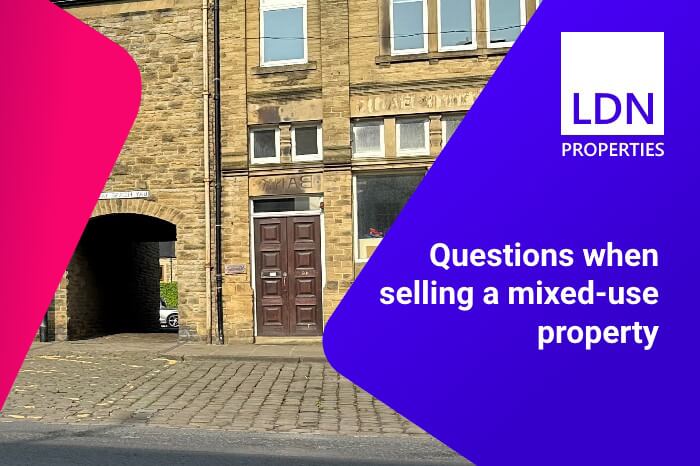
Your top questions when selling a mixed-use property
A mixed-use property is a building that has several units which can be used for more than one purpose, such as office space above a commercial shop or a retail unit underneath residential flats. There are no restrictions on how many different units a mixed-use property must have, but to qualify for the definition, as the name implies, it has to have more than one use.
A primary reason why someone could have an interest in making an offer on your mixed-use property is that they see it as a way to make extra money. If they owned the building then they would be able to rent out the units in the property in exchange for monthly payments from the tenants, and in some areas where demand for property is high this can be very lucrative.
Yes, there are a few reasons that can complicate the sale of your mixed-use property, with location being one of these factors – if the property is located in a low-demand area then buyers might be concerned that it will be harder to attract tenants for the units, and this could make them lose interest in making an offer if their goal is making as much money as possible.
It’s possible, and if you are required to pay Capital Gains Tax then it will be based on how much profit, also known as the gain, that you make from the sale of your property. Make sure you consult with a tax professional before making final decisions when selling your mixed-use property.
Get in touch with LDN Properties or another zero-commission quick property buying company because they will never make you pay fees when selling your mixed-use property. However, if you sell through an estate agent or at an auction, you will be charged commission that will add to your selling expenses because this fee will be deducted out of the final sale proceeds.
You should ask individual quick buyers if they are registered with The Property Ombudsman (TPO), which writes rules to protect owners from scams in the industry. All TPO members must follow these regulations, which should give you extra peace of mind when selling. Be careful of selling to a company that can’t prove it belongs to TPO.
Selling to a quick property buyer like LDN Properties is often the swiftest choice, because these companies can generally finalise the purchase of almost any type of property within a handful of weeks, and this includes paying you the proceeds and exchanging contracts. Selling at an auction, with an estate agent or on your own can all take at least many months.