Quick navigation
It can be harder to sell a petrol station than a typical residential property because there are various hurdles involved, such as potential environmental contamination and other issues. Below you’ll find top tips on how to increase your odds of selling your patrol station fast and at a suitable price.
- Potential options for how to sell a petrol station
- Reasons why buyers might want to own a petrol station
- Factors that can make it harder to sell a petrol station
- Do you have to pay tax when selling a petrol station?
- Four methods to find a buyer for your petrol station
- Queries and answers about selling petrol station
Potential options for how to sell a petrol station
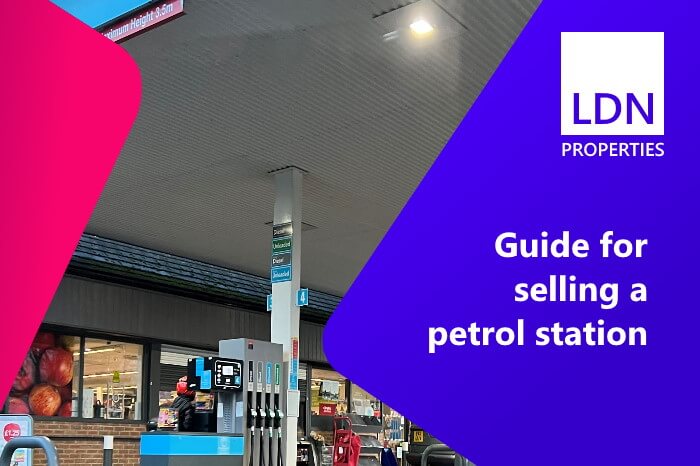
Petrol stations are a common sight throughout the UK, whether they’re located near motorways, in and around cities, or even in rural neighbourhoods. In addition to petrol pumps, they usually have a small shop that offers newspapers, food and drink, and some other items.
You might find extra services at some petrol stations, such as a car wash, but the standard definition of these properties is listed in the UK Government’s Petroleum (Consolidation) Regulations 2014. That law says petrol stations are "premises used, or intended for use, for dispensing petrol to the public for use in motor vehicles, ships or aircraft by way of sale and includes any vehicle fuel dispenser, other apparatus or storage tank for storing vehicle fuel used there in connection with that fuelling."
That means a typical petrol station will likely be considered selling a retail property, because as the owner you will earn income from the profit that you make from selling petrol to consumers.
There are typically two ways that a petrol station will be of interest to a potential buyer; either to continue operating it as a retail property or to redevelop the land and build another property.
In some cases, you might get approached with a price offer from a buyer who would like to take over the ownership of the petrol station and to keep it going as that type of business. As detailed in the next section of this guide, the potential income they could make will likely be the primary reason why they will have an interest in making an offer on purchasing your property.
But if your buyer is interested in purchasing the petrol station with the intent of demolishing it, they will not want much information on the revenue and profit or loss that you’re currently making operating the facility as a retail business. That’s because their plan is entirely different, and they likely see the land as being more profitable if they build offices or homes on it.
Reasons why buyers might want to own a petrol station
Throughout the UK, petrol stations are a niche property, which means they appeal to a narrower group of potential buyers than the general public. That’s because, as described in the previous section, someone purchasing a petrol station either intends to operate it as a retail business, or they have a plan for redeveloping the land and building new property on it.
As mentioned in The Telegraph and Argus, some large retailers own multiple petrol stations, whilst others are individual businesses that have a single owner. Whether you own just petrol station or several, there are several factors that can help when trying to sell.
Potential for making money: A major reason why some buyers will be interested in your petrol station is that they see it as a profitable business, which would be a good investment to help them generate extra income. If your petrol station generates a decent net profit every year, be sure to provide potential buyers with as much information as possible to show them it’s a viable business.
Land development opportunity: Some people who are looking to buy petrol stations have no interest in ever running that business. Instead, they see the land on which the property is built as having great potential for redevelopment. Usually this means the future owner will demolish the petrol station and build commercial property in its place, such as shops or offices.
Popular location: Regardless of whether someone is looking to buy your petrol station as a business, or to demolish and redevelop the land on which it’s situated, if it’s in a popular location then you will likely attract more interest from buyers. This can include being near to growing cities or in neighbourhoods that are slated for extensive future development – the closer your petrol station is to an area in high demand from property buyers, the better.
Factors that can make it harder to sell a petrol station
Although petrol stations can be popular with the right potential buyers, you should remember that they are a very specific type of property, unlike a conventional freehold or leasehold house or flat. For that reason, it can be a much harder process to find a buyer for a petrol station.
And whilst the previous section of this guide detailed some factors that can help boost your prospects of selling a petrol station, there are also some issues that can make selling more difficult. Learning about these potential downsides is a useful part of the process of trying to attract interest in your petrol station from buyers when you’re ready to sell the property.
Low-demand location: Just as a popular location can help to attract buyers to your petrol station, you might find less interest from would-be owners if the property is in a remote or otherwise undesirable location. Rightly or wrongly, potential buyers might see little financial potential in either redeveloping the plot of land or trying to make a profit by continuing to run the petrol station as a business.
Business expenses: Whether or not your petrol station is currently making a profit will be of primary concern to anyone who might be interested in owning the business and continuing to operate it as a petrol station. One factor that might hinder your attempts to sell a petrol station is if running the business has very large expenses, whether because of the distance from petrol suppliers or any other cost issues, and this might further reduce your field of potential buyers.
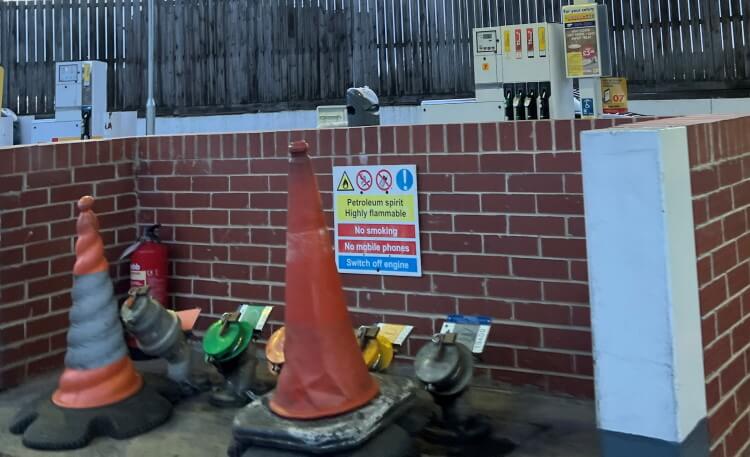
Risk of contaminated land: At some petrol stations, the tanks where the petrol is stored before people use the pumps to purchase it can sometimes leak, which in turn might contaminate the immediate surrounding land. You can read the UK Government guidance on dealing with contaminated land. This can be a major negative factor in the eyes of people that might otherwise be interested in purchasing the petrol station, because the clean-up costs can be very high.
Do you have to pay tax when selling a petrol station?
Your goal with selling a petrol station, or any other type of property, should always be to make a profit compared to the original price that you paid when buying it. However, making a profit on the sale of property can potentially be subject to a levy known as Capital Gains Tax.
It’s always worth consulting with a financial professional about your potential tax liability with selling your petrol station, because they might know ways to reduce you overall tax burden.
Four methods to find a buyer for your petrol station
When you are ready to search for a buyer for your petrol station, you will have to decide on the best way to go about this. Your options generally are to sell via a property auctioneer, sell with an estate agent, sell to a quick property buyer, or attempt selling without any assistance.
There are distinct benefits associated with each of the methods, but also some rather notable drawbacks with a few of the options, such as increased costs or slow selling timelines. To discover the best selection for your unique situation, start by writing down all the key facts and goals with your sale, such as how fast you want to find a buyer and whether you can accept paying any fees to a third party. Compare all of this information against the specifics of the four methods outlined below and sell using the one that best matches your wants and needs.
Selling via a property auctioneer
At a property auction, people will hopefully place bids to buy your petrol station at ever-increasing prices, and you’ll end up selling at a decent profit compared to your purchase price. And a winning high bid is considered a legally binding agreement to purchase your property that you can sue to enforce if the buyer tries to back out of the sale at a later date.
However, auctions can be a gamble because you don’t have any idea what the final sale price might be. That’s why it’s important to choose a reserve price – the lowest value you’re willing to accept for selling your petrol station, even after you have paid the auctioneer their fees. Otherwise you might end up selling breakeven or at a loss.
Note that if your petrol station does not receive any bids then it will be considered unsold, and you’ll have to start the time-consuming process of starting over with trying to find a buyer.
Selling this way is not quick, and you can expect there to be a wait of many weeks or longer between when you list the petrol station for sale and when the auction happens. If the property does sell, the buyer then usually has roughly 28 days to complete all of their required steps, such as signing legal paperwork, which adds a further delay to the overall process.
Remember also that auctioneers will make you pay fees for the work that they do in attracting buyers to your petrol station. This includes preparing and marketing a listing for your property, which will describe the petrol station and feature photographs of the exterior and the interior of any buildings on the land.
Some auctioneers might be willing to either reduce the commission that they charge, or make the winning high bidder pay some of your expenses, so it’s worth asking about this possibility.
It’s possible that individual auctioneers will have never sold a petrol station before, and if that’s the case then it’s more likely that they won’t know the best strategies for generating interest from potential buyers in your property. Check with specific auctioneers to find out if they have managed to sell petrol stations before, and only sell to those companies that have done so. Otherwise you risk an auction where nobody is interested in your petrol station, and it will receive no bids, resulting in you having to waste more time in starting anew looking for a buyer.
Selling with an estate agent
Alternatively, you might consider selling your home using the services of an estate agent, who will take care of producing and advertising the listing, viewings, and fielding any offers.
For their work estate agents typically charge sellers commission. This charge will be subtracted immediately from the final sale proceeds, which will increase your selling costs. You could always try negotiating a lower fee with individual companies if their charges are too high.
Using this method of selling can also take quite a long time, and you should not be surprised if your petrol station remains on the market unsold for many months or even a full year. That makes estate agents one of the slowest choices available of methods for finding a buyer. If you’re in a hurry to sell you should consider other methods, such as using a fast buyer.
It’s also important to know that some estate agents might not have any history with selling petrol stations. If that’s the case, they could find it difficult to generate interest from prospective buyers in your property, which creates the irks of the petrol station remaining unsold for a long time. You should always ask individual estate agents about their past track record with selling petrol stations, and steer clear from using any companies that do not have this experience.
Selling to a quick property buyer
A quick buyer can be a good choice if your petrol station has a problem that might discourage many would-be owners, such as contamination from leaking petrol storage tanks. This Inside Conveyancing article discusses contamination impacts and potential risks when selling a petrol station at length. Quick buyers won’t lose interest in making a fair and fast offer on a property just because it has a problem, as shown by the long list of purchases LDN Properties has made.
The fast buying company LDN Properties, which was founded in 2003, offers property owners throughout the UK a streamlined, no-stress and hassle-free way to receive competitive and swift offers for selling all ages, conditions, shapes, sizes and types of properties. The many purchases that LDN Properties has considered over the years includes not only petrol stations but also homes built from non-standard construction material such as concrete, flats with poor Energy Performance Certificate rankings, houses that have solar panels, properties where the owner cannot find crucial documents such as the title deeds, pubs, flats with cladding, and many other scenarios. If you are also considering selling a beach hut, don’t hesitate to get in touch with us.
These companies have the financial resources upfront to immediately buy most types of property and even if you are selling with an absent freeholder, without having to wait for weeks or months to initially get approved for a mortgage that will cover the cost of the purchase. This significantly reduces the time it takes to complete the process of buying a petrol station to just a few weeks, and that includes exchanging contracts. This makes fast buyers often by far the speediest way possible for selling almost any type of property.
Another major benefit of selling to a fast buyer is that they will never make you pay any commission when selling your property, which means you can count on receiving the full proceeds. That compares favourably to selling via an estate agent or auctioneer, because those two choices impose fees that will be taken out of the sale proceeds, adding to your total costs.
The reliable fast buyers, such as LDN Properties, belong to an independent organisation known as The Property Ombudsman (TPO), which helps to protect against fraud in the quick property buying industry by publishing a series of regulations designed to shield owners from falling victim to scams. All TPO members must follow those rules, which should give you extra peace of mind when selling your property.
Thankfully, it’s very easy, free and quick to check whether a particular fast buyer belongs to TPO. Just visit the organisation’s website and look for the “Find a Member” tab on the left of the welcome page, then click on that and when prompted type in the name of a fast buyer that you want to look up. If they’re truly registered with TPO, you’ll be shown their membership details.
Selling without any assistance
Yet another way you could attempt to sell your petrol station is on your own, meaning you would have to prepare the listing, advertise it, organise and lead any viewings, and field offers from potential buyers, ideally taking one through to completion and exchange of contracts.
This is a tremendous amount of work and it’s only recommended if you have successfully sold any type of property in the past, or have an experienced friend or family member who does and might be willing to help you out for free. Otherwise, selling without any assistance will take up a lot of time and effort as it’s not something you can only do in your spare time, and it can be very stressful. You might also have increased costs with advertising the listing and other expenses.
Selling without any help is also typically a very slow process, and you should not be surprised if you find yourself still looking for a buyer after your petrol station has been for sale over a year.
The only obvious benefit of selling this way is not having to pay an estate agent, auctioneer or other third party any commission if they find a buyer for your petrol station. But you can get the very same result, with absolutely no stress, if you sell your property to a no-fee quick buyer.
Top queries and answers about selling a petrol station
Property owners wanting to sell their property quickly may have some questions that need answering, ranging from the types of property we can buy through to the condition required before selling. Here are the main questions you may find useful when selling a petrol station: