Quick navigation
If you leasehold or freehold house or flat has a right of way in the garden, this can mean neighbours are able to pass through the garden for certain reasons or the public can use part of the garden as a footpath. Although having a right of way can complicate the sale of your property, this guide will show how to hopefully still sell it quick and at a competitive price.
- What is a right of way through a garden?
- How a right of way can affect the sale of your home
- Do you have to tell buyers about a right of way?
- Options to address concerns about a right of way when selling
- Will you pay Capital Gains Tax when selling your home?
- Four methods to find a buyer for your property with a right of way
- Frequently asked questions about selling a home with a right of way
What is a right of way through a garden?
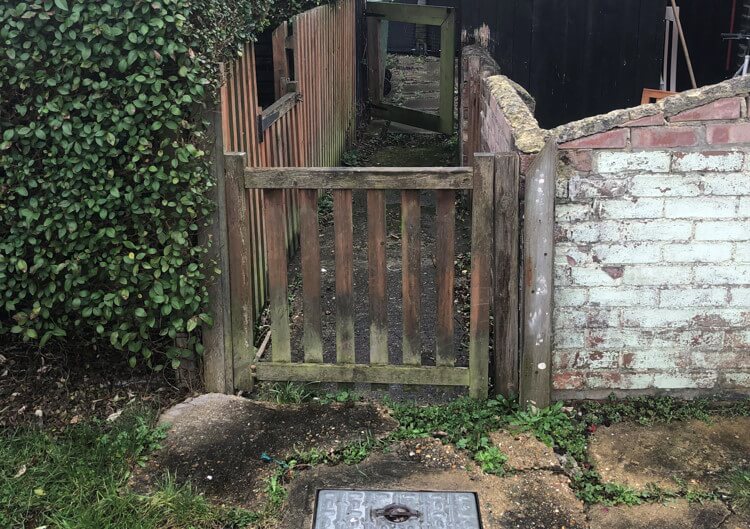
Under UK laws and regulations, a right of way through a garden is a situation where someone that is not the property owner has the lawful ability to walk across what would otherwise be considered private land.
There are various scenarios where this could occur, for example if the land on which your freehold or leasehold house or flat sits was used in the past as a public footpath or other right of way. Another situation where this can occur is if the public has been using the land as an open right of way for more than 20 years and in that time the use has never been challenged.
But it can also apply on a much smaller scale, for example if you have neighbours whose only ability to leave their property or move their bins each week is by walking through your garden.
Regardless of which situation you might currently have, you could discover that it is somewhat more difficult to attract interest in your property from buyers compared to a home that does not have a right of way. But don’t worry that you’ll never be able to find a buyer for your property, because this guide outlines how you may still be able to get a fair and rapid offer for it.
How a right of way can affect the sale of your home
If there’s a right of way through the garden at your property, you might find that this complicates your ability to sell the home because of some buyers’ concerns about other people accessing the land.
If the right of way is part of a public footpath, which often happens in rural areas, this can be a particular worry for buyers because it might result in many people each week passing through their garden – such as ramblers who use the path for hiking. Ramblers.org.uk discuss the rights of way laws that are useful to understand when selling your home. These buyers will likely be worried about the possible loss of privacy they would feel with seeing so many people pass by.
Even if the right of way is only for neighbours who need to pass through the garden to leave their homes, this can still be enough of a privacy concern to deter some buyers.
A further reason why some buyers might be hesitant to make an offer on a home that has a right of way through the garden is the potential legal liabilities associated with that pathway. If a member of the public is passing through your garden on a right of way and trips and injures themselves, they might try to sue by claiming you did not maintain the path in a safe condition. Even the fear of facing such litigation can be enough to make some buyers lose interest.
Do you have to tell buyers about a right of way?
If you have attempted to sell your home with a right of way but are not attracting any serious offers, it is reasonable to consider whether that public access is the main reason that buyers aren’t interested.
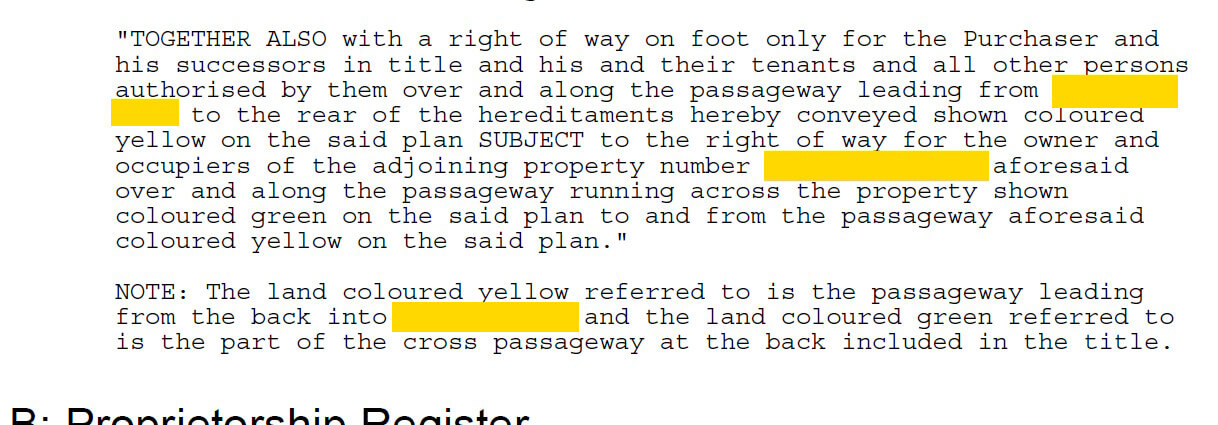
Even if that does explain why you’re struggling to sell your flat or house, it’s crucial that you do not try to fix this issue by hiding the fact of the right of way from any potential buyers. If you are the owner of a freehold or leasehold property that has a right of way in the garden, you are required by law to disclose this feature to all prospective buyers. This is to give them the chance to consider making an offer on the home based on knowing all pros and cons about it.
As part of the selling process you’ll have to fill out what’s known as a TA6 form (full details about TA6 forms are discussed in this Homeowners Alliance article) where you have to identify various issues associated with your home, including boundaries, environmental issues, and whether the public has any right of way through any part of the property. Always ensure that you are upfront and honest about the right of way with anyone that shows an interest in your property, because it’s not worth the consequences of keeping this information secret.
If you try to conceal the fact that your home has a right of way through the garden and then someone buys the property and discovers this feature, they could sue you for withholding this information during the selling process and if you lose, you may face significant penalties.
Options to address concerns about a right of way when selling
Unfortunately, if a buyer has a significant problem with a right of way through your garden, there are not many viable options to do much that can fully address their concerns. If the pathway is lawful for the public to use, you cannot close it off just because you don’t like it.
One possible way that you might be able to address the privacy concerns about a right of way would be if you can plant trees that would block the ability of people using the pathway from being able to see through the windows of your property. However, this can be a costly and time-consuming project and it’s not something all owners will be able to do before selling.
An alternative solution to overcome buyers’ concerns about purchasing a property with a right of way is focusing on selling to a quick property buying company rather than an estate agent, because they are experienced with making speedy and fair offers to buy almost any type of home – including those that some buyers might see as “problem” properties, such as those with a right of way in the garden.
Because quick buying companies should have a long history of purchasing homes that have rights of way, they won’t look unfavourably on your property just because it has one. That way you will still be able to get a competitive and speedy offer when selling your home.
Will you pay Capital Gains Tax when selling your home?
One question that you will need to resolve when selling your home that has a right of way (read more in this Land Registry article) through the garden is whether you’ll have to pay Capital Gains Tax.
The UK government can charge this tax on the amount of profit, also called gain, that someone makes when they sell a property or another type of tangible asset, such as a car or artwork. The tax, if it applies, will typically be based on the amount of profit that you have made on the sale compared to the price that you originally paid for your home, and not on the total sale price.
It’s important to understand that there are certain ways that you might be able to either reduce or completely eliminate your burden for paying Capital Gains Tax on your property sale proceeds, so consult with a financial expert about whether this might be a possibility.
Four methods to find a buyer for your property with a right of way
The last major decision that you need to make before seeking a buyer is choosing the method for doing so, and typically you’ll have to select between selling to a quick property buyer, using an estate agent, selling without any assistance, or using a property auction.
There are distinct pros associated with each of the four methods, but some of these choices also have rather prominent cons such as requiring that you pay large amounts of commission for selling or that you might have to wait more than a year before getting a buyer.
To identify the method of selling that best matches with your wants, you should write down your top goals with finding a buyer, such as how fast you want to sell, your ideal selling price and whether you can accept paying any fees to sell. Then compare this against the details of the methods below to see which one of the choices most closely meets your needs.
Selling to a quick property buyer
Quick property buyers are companies like LDN Properties, founded more than 15 years ago, that have the cash resources available to immediately buy almost any type, size, shape, condition or age of leasehold or freehold residential, commercial and other properties.
These companies do not have to wait for many weeks or months to first get approved for a mortgage to cover the cost of purchasing a home. Instead, they use their own funds and can usually complete the entire process of buying a property – including the important steps of exchanging contracts and paying sellers their proceeds – within just a few short weeks. That often makes quick property buyers by far the swiftest option for selling a home.
Because they are able to buy almost any home, quick property buyers are also a good choice for”problem” properties that have a feature some other buyers would see as a dealbreaker, for example a right of way through the garden. Quick property buyers will still make a fair and speedy offer for such a property, helping you overcome any barriers to selling it.
Yet another advantage of selling to a quick property buyer is that the honest companies will never make you pay any commission for selling your home, which keeps your selling costs down. But estate agents and auctioneers will charge you fees if they find a buyer for your property, and this expense will be subtracted from the final sale proceeds immediately.
Selling to a quick property buyer is also incredibly straightforward, streamlined and no-hassle. Start by calling the company and asking for a free price quote on your home, and they will give you an estimate that you’ll then have at least an entire week to consider.
Should you decide to accept that initial offer, the quick buyer will then send one of their representatives to your home so that they can assess the interior and exterior before making a final offer – and this is the only visit you’ll need to have, compared to selling via an auction or estate agent where you might have to endure dozens of viewings for many people.
If you then accept the quick buyer’s final offer, they will then work with your solicitor to quickly finalise all of the paperwork and complete the purchase of your home within weeks.
Using an estate agent
When you sell your home through an estate agent, they will do much of the work needed to find a buyer, however be sure to ask the estate agent many questions before committing to this route.
This includes preparing a listing that features photographs of your home’s interior and exterior and describes the property, advertising that listing in their office, local newspapers and online, organising viewings to take people on tours of the property, and fielding offers. This can help to reduce your stress when selling because it won’t require much effort from you.
But estate agents also expect to be paid commission for doing all of this work. This fee is deducted right away from the sale proceeds, adding to your expenses.
And this is also far from the quickest way to sell a property, particularly one that some buyers might see as a problem home because of the right of way. You should be prepared to be waiting for an entire year or even longer before getting a serious offer taken through to completion.
Beware also that even if someone makes an offer to purchase your home, they could still withdraw that offer and walk away without penalty right up until the exchange of contracts. If that happens you’d have to start over with finding a buyer, adding even more time to the process.
Also, some estate agents might not have any experience with selling a property that has a right of way through the garden, and if that’s the case then they could find it difficult to know how to advertise the home in order to generate interest from buyers. You should ask individual estate agents whether they have ever successfully sold a home with a right and way, and generally avoid using those companies that aren’t able to point to any such examples.
Selling without any assistance
Selling without any help can be a very stressful, costly and lengthy choice because you will be responsible for every step from the initial preparation and advertising of the listing through to scheduling viewings and fielding offers from buyers, ideally taking one to completion.
It’s a massive undertaking and not something that people are able to do in their spare time, so you should only select this method if you have successfully sold a property on your own before, or have a suitably experienced friend or family member who is willing to help for free. Otherwise you could be waiting for over a full year before you are able to sell your property.
The only clear benefit of selling on your own is that you would not have to pay an auctioneer or estate agent any commission for finding a buyer. But the savings you might make from not paying this fee could be eliminated by the advertising costs and other expenses of this method.
If you want to avoid paying commission when selling, think instead about selling your property to a no-fee quick buyer. You would get the same advantage of not having to pay any commission, but you would also get a much speedier sale, because these companies can usually finalise the process of buying almost any type of house or flat within a handful of weeks.
Using a property auction
Auctioning is another way to sell your home but it can be a gamble because you don’t know if anyone will even bid on your property – if it doesn’t receive any bids on the day of the auction then it will be deemed unsold and you’ll have to spend many more weeks trying to find a buyer.
Even if your home manages to sell using this method, it can take a long time. There will be a delay of many weeks or longer between when you list your property for sale and when the auction takes place. And then after a successful auction, the winning high bidder typically has about 28 days to complete their legal paperwork and other steps to finalise the purchase.
Some auctioneers might give the buyer more or less time to finish their required steps, and you can ask individual companies if they’re open to setting a stricter deadline for this.
When you sell through an auctioneer, you will be expected to pay them commission for their work in finding a buyer, which includes creating and marketing a listing, organising any viewings, hosting the auction and overseeing the completion of the sale. This fee is usually charged as a percentage of a property’s final sale price, and the commission will add to your selling costs because it will be deducted from the eventual sale proceeds immediately.
You should also check with individual auctioneers to see whether they might be open to charging you a reduced fee, or having the buyer responsible for paying some of your costs. This can be an important step if a top goal when selling is reducing your overall expenses.
And just as some estate agents might never have sold a home with a right of way before, the same can be true of many auctioneers. Ask individual companies to tell you their track record with selling your type of property, and avoid using those auctioneers that have zero experience with finding a buyer for this type of home as they might find it difficult to sell yours.
Top queries and answers about selling property with a right of way
Homeowners looking for a quick sale sometimes have a few questions, ranging from the types of property that we can buy through to selling with boundary problems. Here are some of the top questions we’re asked about selling property with a right of way:
Your top questions when selling property with a right of way
A right of way is any pathway through your garden that the public has a lawful right to use, for example this could be an essential walkway that your neighbours might need to use to enter and exit their own homes, it could be part of a long-established public footpath in a rural area that covers part of your land, or there could be other similar scenarios.
Some buyers will be wary about purchasing a property that has a public right of way through the garden for several reasons. One, they might be concerned that they will have a significant loss of privacy as a result of the public being able to use the pathway. Two, they might fear liability if they are required to maintain the pathway and someone is injured whilst using it.
Yes, you must disclose this information to anyone who expresses an interest in your property because, by law, the presence of a right of way is information that must be disclosed as part of the selling process. If you hide this fact from a buyer and they discover the right of way after purchasing your home, they could use you and you’d be liable for major penalties.
If you are required to pay Capital Gains Tax then you will often only have to pay it based on the amount of profit that you make from the sale of your home compared to what you paid for it, rather than the final price. However, there are ways to either eliminate or lower the amount of tax that you have to pay, so consult with a financial professional about this issue.
You could consider planting some trees or a fence on your side of the right of way if feasible, because this would help to create a privacy shield between your property and people walking along the right of way. But this can be an expensive and time-consuming project to pursue, so it might not be possible for many homeowners who lack the funds or the time to do it.
If you sell your home using an estate agent or an auctioneer, they will charge you commission for their work in finding a buyer, and this fee will be taken out of the final sale proceeds, which will add to your selling costs. If you instead sell your home to a quick property buyer like LDN Properties or sell without any help, you won’t have to pay anyone commission.
Using a quick property buyer is likeliest your best option because they can typically finalise the purchase of almost any home within just a few short weeks, and this timeline includes exchanging contracts and paying the owner their sale proceeds. That’s much speedier than using an estate agent or auctioneer or selling on your own, which can all take months.