
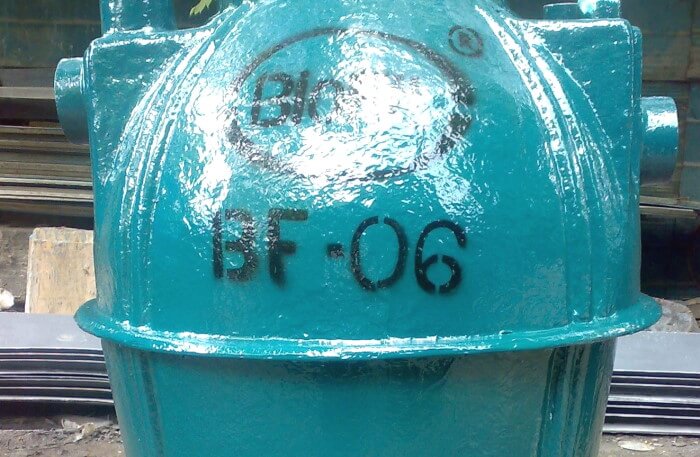
What are septic tanks?
Septic tanks generally are units that are typically buried underground – but can be located above ground — at properties and act as drainage systems. They are more common in rural neighbourhoods where it can be harder to connect a house to a public sewage system, providing an alternative and effective way to handle wastewater that a home generates.
Wastewater from a house is collected in a septic tank, and the unit holds the water for long enough so that any solids can sink and settle at the bottom, with the goal of draining off the remaining water, also known as effluent. For a long time, owners of septic tanks could empty them by discharging the water either into a waterway or a drainage field. The solids that are left over after the separation process are typically emptied only a few times each year.
One of the reasons why septic tanks became so popular at mostly rural homes is because of the relatively low cost of installing and operating the easy-to-use systems.
However, there have always been concerns about the adverse environmental impacts of septic tanks, including unregulated discharged of potential contaminants into watercourses. The UK government took steps as a result of these concerns to tighten existing regulations for existing and new septic tanks, which affect any homeowner who has such a unit on their property.

Updated requirements for homes with septic tanks
The UK government has long enforced regulations that are designed to protect the environment from potential hazards such as water pollution that septic tanks could cause.
The regulations were updated effective January 1, 2020, and outline specific requirements for how homeowners should operate septic tanks. The updated rules include a prohibition on discharging tanks into surface waters in order to reduce potential harm to watercourses.
Known as the General Binding Rules, the requirements are issue by the Environment Agency and they make clear that it’s the responsibility of homeowners to guarantee that their septic tanks are constantly in good working order and are not causing any pollution to the immediate nearby environment. The Environment Agency has the ability to pursue enforcement actions and fines against any homeowner whose septic tank damages the environment.
The regulations specify that if your home has a septic tank and it is discharging its effluent into surface water then you can either divert the waste stream into a designated field for drainage that meets requirements, or you replace the unit with a sewage treatment plant.
Many homeowners have reported uncertainty about the regulations because, they say, the government did not promote them to the necessary extent. That’s why it’s vital that you keep checking the Environment Agency’s website and more to ensure that you know the most recently revised regulations to prevent any issues with your home’s septic tank.

Why is it sometimes harder to sell a house with a septic tank?
If you own a house with a septic tank, it is possible that you might find it harder to secure a buyer for the property compared to a home without a septic tank. There are a number of reasons why it can be harder to sell, although it’s important to note that this doesn’t mean it will be impossible to get a sale.
One of the reasons why someone might be reluctant to buy such a property is the threat of fines from the government if the septic tank does not meet all regulatory requirements. Even if you can prove that your septic tank currently complies with existing mandates, a potential buyer might be wary of having to operate the unit and be worried about falling into non-compliance, which could ultimately lead to them facing fines for violating the regulations.
Another reason why having a septic tank at your house could make selling the property harder is aesthetics, because some people simply might not like the look of having a septic tank by their home. Unfortunately there is not very much that you can do to win these buyers over other than removing the tank, which could be time-consuming and costly move.
And as the owner of a home with a septic tank, you will have to do a lot of work that can make the process of selling harder. You are required by law to disclose in writing all possible information about your septic tank to a potential buyer, including where it is located, what repairs might be required, how to operate the tank on a daily basis, whether there are any significant negative issues with the tank, what are the costs of running the tank, and more. Someone interested in buying your home might have a host of questions about the tank, and it can potentially delay the sale by a very long time until you are able to provide all the answers.
You can be sued if you fail to disclose important information about a septic tank at your house, so be sure to complete all of a potential buyer’s questions in as much detail as possible.
It can also be harder to sell a home with a septic tank if the unit needs repair or not working, because buyers will understand that if they buy the property then they will be responsible for the costs of repairing the tank. As a result, they might ask you to lower the sale price of your home by the amount that they estimate it will cost to repair the tank. Or you could attempt to fix the tank before selling if you have the time and money to do so, which would likely make the home more appealing to buyers but would delay your final sale date.
Alternatives to having a septic tank at your home
There are alternatives to having a septic tank on your property, as explained by Homebuilding & Renovating, a publication that provides resources for people looking to build or renovate their homes.
Below you’ll find a brief summary of the different options, each with their own potential pros and drawbacks. Some of the alternatives could potentially add value to your property compared to a septic tank, so it’s worth seriously considering whether to switch out your unit before trying to sell your home.
However, it is often not possible due to time or money constraints for homeowners to change out an existing septic tank. The next section addresses how you can still sell a home with a septic tank, particularly the speedy option of selling to a fast buyer like LDN Properties.
Cesspool
Also commonly referred to as a cesspit, this is a tank that holds waste from your house but unlike a septic tank it does not have any opening from which you can discharge the effluent. The waste is collected on a regular schedule by a lorry and then taken away for disposal. These units are currently prohibited in Scotland and are rarely used at homes in the UK, the latter in part because emptying a cesspool costs up to £300 and must be done up to eight times a year.
Drainage fields and mounds
These are options for letting the wastewater from your property drain and then dissipate slowly into soil, and the exact size of the drainage field or mound will depend on factors such as how much space you have available on your property, and how quickly the water dissipates. Some homes with septic tanks use drainage fields or mounds to handle the unit’s discharges.
Reed Beds
These are typically used in combination with a septic tank or a sewage treatment plant at a home, and they work by having microorganisms in the reed beds digest any sewage from a property whilst also cleaning the water. You can choose between a horizontal flow or vertical flow reed bed, although they are usually most effective if you combine the two types. Reed beds are considered perhaps the most environmentally friendly of all of the various options.
Sewage treatment plant
Many homes have sewage treatment plants that are relatively small in size and also affordable. They work by blowing air into the bottom of the waste tank which speeds up the process through which microorganisms break the waste down, using a rotating disc mechanism. The resulting liquid is then treated and after that it is discharged into drainage fields or mounds. A sewage treatment plant can range in cost from £2,000 to £6,000 but it is often considered a good investment because it only needs to be emptied as rarely as every four years.

Options for selling a house with a septic tank
If you own a septic tank at your property and you need to sell it without removing or replacing the unit, you have a few options available. Just because your home might be harder to sell compared to a property without a septic tank, you will still be able to find a buyer. However, the profit you could make from the sale and the time it might take depends on the option you use.
Your choices when selling your home are primarily using an estate agent, using a property auctioneer, or using a fast house buyer such as LDN Properties. Keep reading to learn about the various advantages and disadvantages of each method, including the time it might take to sell your home, the cost that you might have to pay to find a buyer, and other crucial factors before you make a final choice.
Using an estate agent
One of the most common methods of selling your home is using an estate agent. They will develop a listing that will detail the features of the property such as how many rooms it has, and also the fact that it has a septic tank. The listing will include photographs of the interior and exterior of the home that aim to make it look as enticing as possible to potential buyers.
When you ask various estate agents about the potential sale price of your home, they might quote a figure that is high and appealing to you, even though the estate agent knows that they will truly only be able to sell the home at a lower value. That’s because they want to ensure that they get your business. This is why it’s vital to compare price quotes from a number of estate agents in order to get a better sense of how much your home is actually worth.
The estate agent will advertise your listing in the local newspaper, online, and elsewhere in an attempt to generate interest from potential buyers who will then schedule a viewing whether they get to tour your home. Estate agents will typically take care of organising these viewings, although some homeowners find that they can be inconvenient and take up a lot of time.
If someone makes an offer to buy your home and the sale is finalised, you will have to pay the estate agent commission for their work in finding a buyer. This can be a drawback if you need to maximise the profit that you make from selling your home.
Another potential negative aspect of using an estate agent is that it can take a very long time before you sell your home. It’s not uncommon for some properties to struggle to get any serious offers for a number of months, and possibly even more than a full year in some cases. That’s far from ideal if your primary goal is making sure you sell your home as quickly as possible.
And some estate agents might also not have any experience with selling houses that have septic tanks, and could therefore find it difficult to know how to market the home and produce any interest from buyers. It’s important that you ask estate agents whether they have sold homes with septic tanks before so that you can learn more about their potential expertise.
Using a property auctioneer
Alternatively, you might be interested in trying to sell your home at a property auction. These work like auctions for any other items, with your house going before bidders at a starting opening minimum reserve price. The aim is to have many people wanting to buy your home so that they keep outbidding each other, which will push the final sale price up.
However, there is no promise that this competitive bidding will actually occur during the auction of your home. If you receive no bids, your home will not sell. And if you only receive the minimum opening reserve bid, your home will sell but it might be at a value that is lower than you either needed or wanted for the sale. Remember that a qualifying bid on your property is deemed to be a legally binding agreement to buy the home that can be enforced.
Auctioneers, like estate agents, will prepare a listing that they will use to advertise your house, including disclosing the fact that it has a septic tank. You might face a potential delay of a few weeks or longer from the date that you list your home for sale and when the auction occurs.
Be sure to ask auctioneers whether they have been successful in the past with selling homes that have septic tanks, because if they have not then they might not be able to find any bidders interesting in your property. The reserve is also true: if an auctioneer has a long record of success selling houses with septic tanks, then they could be a good choice for you.
You will also have to pay an auctioneer fees for the work that they do in selling your home, so ask each auction house how much they will charge you for a successful sale. In some cases you might be able to have the winning high bidder pay these fees as part of the sale.
But note that even in the event of a successful auction you might have further delays whilst all of the necessary legal paperwork for the sale is completed and contracts are exchanged.
Using a fast home buyer
A third option for selling your house with a septic tank is to contact a fast home buyer such as LDN Properties. We provide a streamlined, hassle-free and no-stress way for you to receive a competitive and speedy offer for selling your property. And we promise that we will never charge you any fees, which means that you will keep 100 percent of the proceeds from the sale.
We can typically complete the purchase of each home within a few weeks, and that includes the time it takes for all steps of the process including exchanging contracts. We consider this to often be a much swifter timeline than you can expect when selling at an auction or via an estate agent, and it’s ideal if your priority is finding a buyer for your property as quickly as feasible.
Another advantage of using a fast home buyer is that we have 15+ years of experience with buying almost every type, shape and size of freehold and leasehold houses and flats. We have made fast and fair offers to buy all types of properties including dilapidated homes, flats that have tenants with lengthy leases remaining, houses near power lines, properties that are located in potentially problematic areas such as flood zones, and more.
If you’re interested in selling your home with a septic tank quickly, contact LDN Properties and within the first hour of talking we should be able to make an initial offer for buying your house.
You also won’t have to deal with any viewings where a long list of strangers come to tour your home when you sell your home to LDN Properties. Instead, one of our friendly team members will likely come to your property so that they can assess it inside and outside before we make a final offer to buy it. We ensure that the process of selling your home is as simple and straightforward as possible for buyers, and can answer any questions you might have along the way.
Top queries and answers about homes with septic tanks

Your questions answered when selling a house with a septic tank
No, although you might find that it could be harder to attract buyers compared to trying to sell a property that does not have a septic tank. That’s because many people do not want homes with septic tanks. However, you still have a number of options for selling your home if it has a septic tank, including contacting a fast home buyer that has experience with buying such properties.
It depends on which option you use for finding a buyer for your property. If you use the services of an estate agent or home auctioneer to sell your house with a septic tank, you will have to pay commission that will reduce your overall potential profit from the sale. But fast home buyers like LDN Properties don’t charge fees, which means you will keep all of the sale proceeds.
Each estate agent sets their own rates of commission that you will have to pay them for the work that would do in finding a buyer for your property. You will have to deduct this commission from the total profit that you can expect to make from the sale.
The answer to this question also depends on the method you choose for selling your house. Using an estate agent can take many months or even more than a year to find a buyer. An auction might take a few months or perhaps less. And selling to a quick property buyer is the speediest option because the entire process should only take a handful of weeks.
Yes, there are a number of alternatives to having a septic tank at your home that might be more appealing to potential buyers, which could help your efforts to sell the property. Choices include cesspits or cesspools, sewage treatment plants, and reed beds. Each option has its own pros and cons so be sure to carefully consider those before deciding.
The UK government is responsible for setting rules for how homeowners should operate and maintain any septic tanks on their properties. The regulations were recently updated and as of January 1, 2020, there are revised policies for houses with septic tanks, including a new prohibition on discharging any wastewater from the tanks into surface waters.
No, and that’s why it’s important you ask an estate agent or property auctioneer whether they have experience with selling a home with a septic tank if you are interested in using either of those options. If they don’t know how to sell such properties, you might not find a buyer. But fast home buyers like LDN Properties have experience with buying many types of homes.