Quick navigation
If you’re trying to sell a home without a gas certificate, which certifies that appliances in the property using gas are safe for use, then you might find additional hurdles to securing a buyer compared to a house or flat that has such a certificate. In this guide, you will find advice on some simple steps you can take to increase your chances of still finding a buyer fast.
- What is a property gas safety certificate?
- The law on selling a home without a gas safety certificate
- Problems with trying to sell a home that lack a gas safety certificate
- Obtaining a gas safety certificate for your home
- Methods for trying to sell a home without a gas safety certificate
- Top queries about selling a property that lacks a gas safety certificate
What is a property gas safety certificate?
Whether you are the freehold or leasehold owner of your house, flat or other property, if it contains appliances that are operated with gas, you typically need to have a gas safety certificate for them.
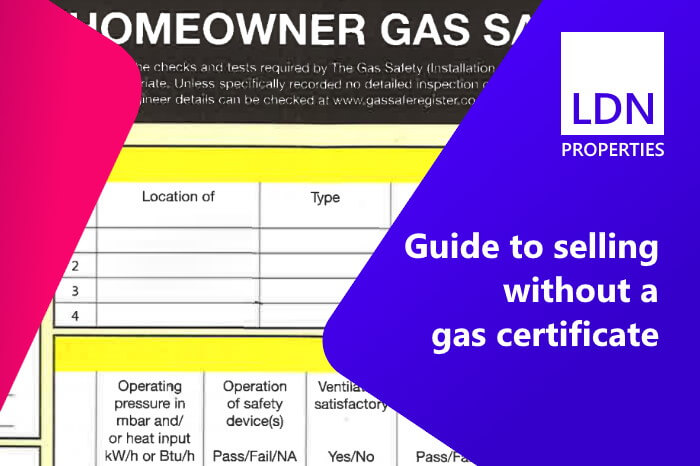
The certificate will be issued by an official recognised engineer and in the simplest terms it says that the gas appliances are safe for use. Some of the basic information included in the certificate will include your address, the date of the last inspection, and your name.
The engineer will thoroughly assess the appliances in your property, and then also include key details in the certificate such as a list of all of the gas-powered devices in the kitchen and other rooms, the results of their assessment, any recommendations for how you could improve the safety of your appliances, and any other relevant facts about the appliances.
For this work, the engineer will check the various gas pipes in your house or flat, making sure they fit tightly and are well-connected without any potentially hazardous leaks. They will also look at any vents in your home to ensure that gases are emitted outside without building up.
As part of the assessment, the engineer will also test your home for the presence of carbon monoxide, which is a gas that you can’t smell or taste but can be deadly at high levels. It can be a great idea to install a carbon monoxide detector in your home to catch any possible leaks.
It’s highly recommended to get a new safety inspection every year to make sure that your appliances are not dangerous. Although these inspections can cost £50 or more, they only require about an hour of your time and could be lifesaving if a deadly fault is discovered.
These certificates are issued by gas engineers and businesses that are officially recognised by the Gas Safe Register, which is the UK’s sole official organisation that oversees gas engineering work and ensures that people and companies it recognises have current and valid qualifications for the work that they do. This ensures that gas safety certificates issued by recognised industry members will comply with all current building regulations.
The Gas Safe Register replaced the previous gas registration body CORGI starting in April 2009.
As described later in this guide, there is no legal requirement to have a gas safety certificate in place before trying to sell a typical house or flat. However, if you are the owner of a property that you rent out to others as a landlord, The Gas Safety (Installation and Use) Regulations 1998 is a UK government mandate that you have certificates for every gas-powered appliance in the rental home.
The law on selling a home without a gas safety certificate
Technically, you don’t need to have gas safety certificates in place before trying to sell any freehold or leasehold property in the UK – but as the next section of the guide makes clear, trying to sell without these certificates can make it harder to find a willing buyer.
Although the owner of a property is not legally required to have a gas certificate before trying to sell their freehold or leasehold home, the situation is more complicated for landlords selling a rental property. These are owners who rent out their property to someone else to live in for a set number of months of years, in exchange for paying the owner rent that has the potential to provide a good second income for the landlord.
If you are the landlord of a house or flat that currently has tenants, you will be required by law to have a gas certificate regardless of whether you are trying to sell the home.
British Gas explains that every individual gas-powered appliance in the rental property must have its own gas certificate and that this document is, by law, required to be renewed once a year. Without these certificates in place, the appliances have the risk of not being safe for the tenants to operate, and as a landlord you might also be liable for major fines for the missing certificates.
Problems with trying to sell a home that lacks a gas safety certificate
Although it’s not illegal to try selling a property without a gas safety certificate – unless you are the landlord of such a tenanted home – you may still find it harder to attract interest from buyers.
That’s primarily because people interested in making an offer on your flat or house might be concerned that there’s no proof the gas-powered appliances are safe to use, and that they could have dangerous undetected leaks. This could be enough to make some people completely lose interest in purchasing your home, because they’ll be too worried about the appliances.
Buyers might ask you to provide a gas safety certificate to address their concerns about the safety of the appliances, and they will be discouraged when you are not able to do so.
Also, some mortgage lenders might not be prepared to issue a loan to a buyer to cover the cost of purchasing your property if you do not have a gas safety certificate. The lender could have concerns that the home might have unsafe appliances, and could be at risk of a problem in the future. This could be enough to make the lender believe that the property will be impossible to resell should the buyer default on their payments and the lender needs to sell the house or flat in order to recoup the costs of whatever outstanding balance might be left on the mortgage.
And a problem unique to landlords is that the lack of a gas certificate is unlawful, and you could be subject to jail time or fines costing thousands of pounds if this situation is discovered. The lack of a gas safety certificate and the risk of these penalties can therefore make it very difficult to sell a rental property to a buyer who would be the new landlord and liable as a result.
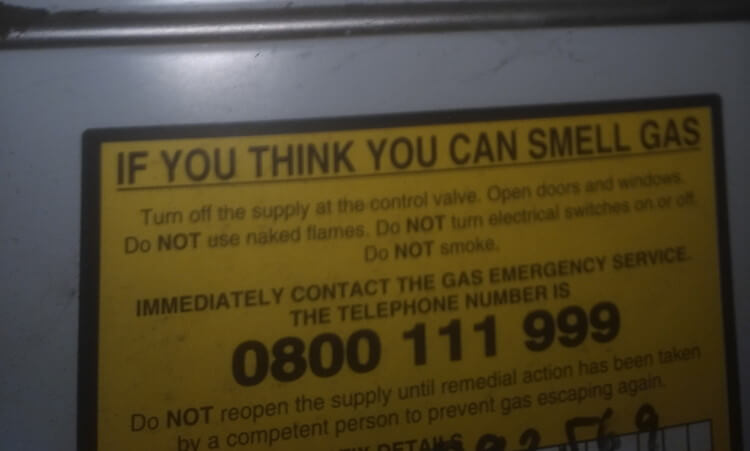
Obtaining a gas safety certificate for your home
If your house or flat does not have a gas safety certificate, you could consider obtaining one. The easiest way to do this is to get in touch with the Gas Safe Register and find an engineer in your area who is recognised as having the qualifications to issue such a certificate.
The cost of obtaining a gas safety certificate for your property can vary depending on how many gas-powered appliances you have, and the individual engineer, but usually starts at around £50. The inspection itself should only take about an hour, so it would not delay the sale of your property significantly if you were to try and obtain the certificate before looking for buyers.
One reason for obtaining a certificate ahead of trying to sell is that prospective buyers might ask whether you have one, and if you don’t, they could lose interest in purchasing your home.
However, that doesn’t mean you will always have to spend the time and money required for getting a gas safety certificate. For example, you could get in touch with a quick home buying company like LDN Properties, and they may be willing to make a competitive and speedy offer for purchasing your house or flat even if you never get a gas safety certificate for it.
Methods for trying to sell a home without a gas safety certificate
Unless you’re the landlord of a property that you own and are also trying to sell it, it’s perfectly legal to try selling your home as is without obtaining a gas safety certificate before trying to find a buyer.
That makes your next decision having to choose which approach you would like to use for selling the house or flat: selling via an estate agent, selling to a fast buyer, selling at an auction, or selling on your own. There are clear benefits linked with all four methods, but some of the options also have significant disadvantages and it’s crucial that you learn about them.
The best way to find your ideal selling method is to write down your most important goals when trying to find a buyer, including the amount of time that you are prepared to wait to sell, your ideal sale price, and whether or not you’re willing to pay any commission for selling. Compare all of that information against the details of each method below and this should help you to identify the approach to selling that is the best fit for your particular wants and needs.
Selling via an estate agent
One traditional way of selling a home is through an estate agent, who will do much of the work in trying to secure a buyer. This starts with preparing a listing for your home that describes it and features photographs of it, and then advertising it online, in local media and in their offices. They also organise viewings for potential buyers, and will field any offers you might get.
For this effort, estate agents will usually charge owners commission based on the home’s final sale price. This charge will be taken out of the sale proceeds right away, so you should be aware that this will increase your overall selling costs.
It’s also far from the swiftest way to sell a property – particularly one that might be considered by some buyers to be a problem home because it lacks a gas safety certificate. The usual timeline for selling can be many months, or even an entire year in worst case scenarios. This makes estate agents far from the best selection when you’re trying to sell a home fast.
Also beware that some estate agents might not know how to generate interest from buyers in home without a gas safety certificate, particularly if they’ve never sold this type of property before. You should ask individual estate agents for their experience with trying to find buyers for homes without gas safety certificates, and avoid those that haven’t achieved this in the past.
Selling to a fast buyer
Fast property buyers have the financial resources to immediately buy homes, without having to wait for possibly many months to first get approved for a mortgage to cover the transaction costs. This cuts the usual timeline for selling this way to just a handful of weeks, and that includes the key steps such as exchanging contracts and paying owners the proceeds.
A top benefit of these companies is that they are able to make offers to buy almost any home, even those that may be seen by some buyers as “problem” properties because of an issue such as structural damage or other flaws, like the lack of a gas safety certificate. These companies can make competitive and fair offers for practically any age, condition, shape or size of home.
LDN Properties, for example, launched in 2003 and since then has bought or considered an ever-growing and highly varied list of homes that includes those without gas safety certificates, vandalised properties, student flats, mundic houses, homes that do not have planning permission, houses with chancel repair liability, bed and breakfast properties, flats located near to unsightly power lines, properties near railway lines, prefabricated houses, plots of land, flats with dry hot, properties that have solar panel, homes with bad roofs, houses that are infested with Japanese knotweed, and more.
Legitimate quick home buyers also never charge any commission when purchasing properties, so you would be assured of receiving the full sale proceeds. By contrast, when selling to an estate agent or auctioneer, you’ll have to pay them fees that will be taken out of the proceeds, which will add to the overall costs involved with trying to find a buyer for your property.
The advantages of not having to pay any fees and also securing a speedy sale therefore make fast buyers often the perfect option for owners who want to sell quickly and at a fair price.
Selling at an auction
Auctions can be a gamble because you never know what sale price you’ll get for your home, or even if your property will receive any bids, which means it would go unsold.
You’ll choose a reserve price, which is the lowest value at which you can accept selling your property. Be sure to select a reserve price that accounts for the commission that you will have to pay the auctioneer for the work that they do in advertising and selling your flat or house.
Generally, you can expect to pay an auctioneer fees based on the sale price your home without a gas safety certificate is able to get during an auction.
This is not the quickest way to sell a home, because there are a few delays involved. You will have to wait many weeks or longer between first listing your property for sale and the day on which the auction occurs. And if the flat or house does sell, the buyer then has an average of 28 days to complete all of their required steps in order to finalise the purchase of your home.
Some auctioneers might give buyers even more time to complete the sale, whereas other companies may set stricter deadlines. Always ask individual auctioneers what deadline they will set, and see whether you can convince them to set a shorter deadline for your sale.
Selling on your own
Selling on your own has the benefit of not requiring you to pay commission to a third party like an estate agent or auctioneer, but the trade-off is having to do a lot of work.
You will have to develop and market a listing for your home, organise and host viewings, and field offers from buyers, hopefully taking one through to exchange of contracts. This could require a lot of time and effort and is only suggested if you’ve sold homes in the past, or have a skilled family member or friend who might be willing to help you out at zero cost.
Otherwise, this can be a stressful process that make take more than a year. If you want to avoid paying any commission when selling your home, you might want to consider instead selling to a fast buyer, as you won’t pay any fees and you’ll also sell within just a few weeks.
Top queries and answers about selling without a gas safety certificate
Homeowners considering a quick sale of their home often have a few questions and queries for our team, ranging from how to prepare a home for sale through to the amount of repairs needed before selling. Some of the main questions follow about selling without a gas safety certificate: