
Quick navigation
Owning a former council flat can have many benefits, including the fact that they are often larger and cheaper than similar properties. However, there can be some downsides including the fact that it’s sometimes more difficult to sell an ex-council flat than other homes. This guide offers important tips on how to overcome those hurdles in order to sell your flat fast for a profit.
- What is an ex-council flat?
- Rules for buying a former council-owned property
- Pros and cons of owning an ex-council flat
- Issues with ex-council flats that might cause a problem when selling
- Restrictions on trying to sell an ex-local authority flat
- Different options for selling your ex-council flat
- Top questions about selling a council flat
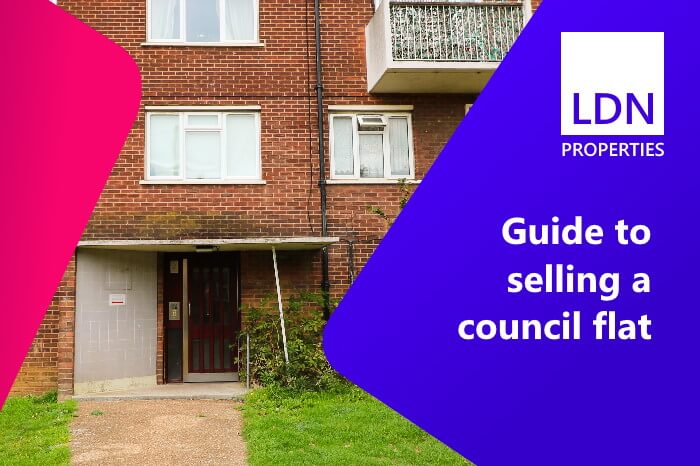
What is an ex-council flat?
Council flats, as well as council houses, are properties that were constructed by a local authority and provided by people who met certain criteria. These homes can vary in size from studios to those with one or more bedrooms, along with a kitchen, bathroom and living room. They can be found throughout the UK, and their construction hit its peak from 1919 to the 1980s.
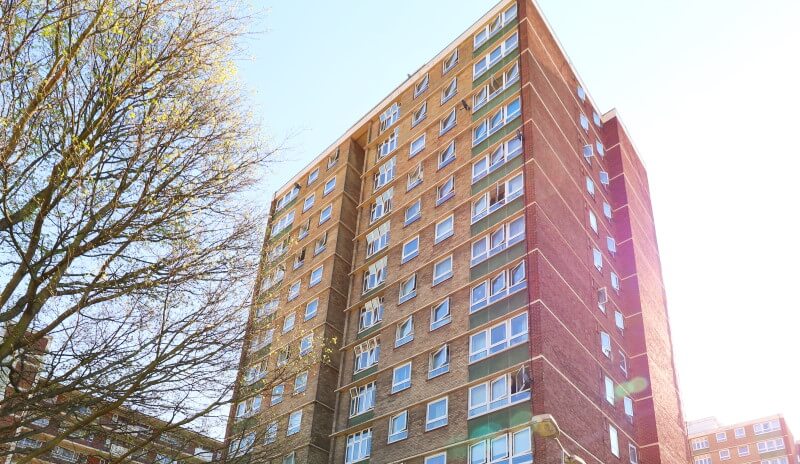
A council flat is known as “social housing” and you can apply to live in one of these homes through the local authority, with priority consideration given to those housing requests seen as the most urgent. Councils will set certain restrictions on who can get a council house, including limiting to people at low income levels, and those with a “local connection” such as having lived in the district for many years of having family or a job in the area – although the local connection is not always required, as the charity network Citizens Advice explains. Anyone who successfully applies for a council home will then be given a move-in date from their local authority, and they will then pay a monthly rent to the council.
Massive destruction from bombing during World War II significantly reduced the available housing stock in the UK, prompting huge growth in council property development after the war was over. But eventually the pace of construction, along with demand, slowed down.
Many council properties were built from non-standard construction material such as steel or concrete, because these were believed to be more durable and resilient. Some types of council homes might also be known as prefabricated, or prefab, homes, which are properties designed to be built quickly and cheaply.
Although construction of council properties declined significantly after the 1980s, some parts of England have seen a revival in construction of these homes. For example, the London councils of Hounslow and Southwark are in the midst of ambitious plans for building thousands of brand new council properties, including flats, which must meet certain criteria outlined in the plans.
An ex-local authority flat is therefore a property that was constructed by a local authority in the UK, lived in for a period as a council-owned home, and is now in private leasehold ownership.
Rules for buying a former council-owned property
Former Prime Minister Margaret Thatcher’s government in the 1980s introduced the Right to Buy scheme which gave people who live in council flats and houses the ability to purchase those properties at a discount.
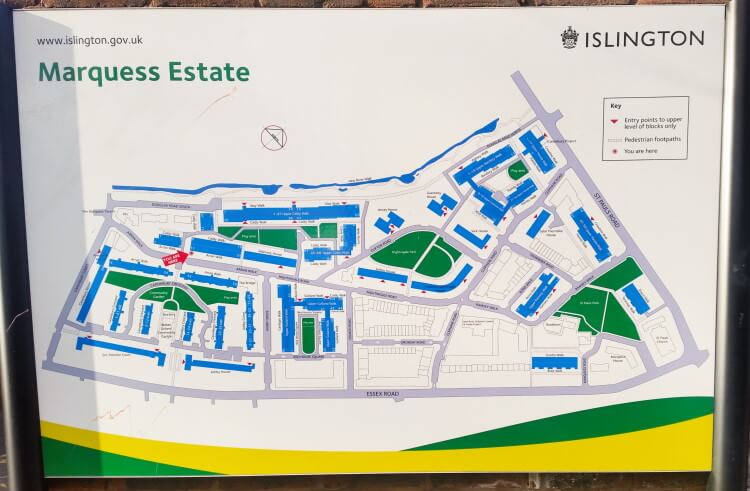
Council flats are leasehold properties, meaning that if you buy a home you will own the leasehold on it, paying a ground rent to the freeholder – typically the council that constructed the home – each year. Leaseholders own homes for a certain amount of time, and when that expires the property technically returns to the ownership of the freehold who owns the land on which it was built. Leasehold homes can be more complicated to buy and sell than freehold properties in certain circumstances.
Nevertheless, the Right to Buy scheme tries to make it as straightforward as possibly for you to purchase your council flat, so long as it is your sole property, it is a self-contained unit, your landlord has been a public sector entity for at least three non-consecutive years, and you are a secure tenant. The latter condition says that you have the right to live in the council home indefinitely so long as you don’t break key rules, such as not letting the property out.
It’s also possible to jointly apply to purchase a council flat with anyone who currently shares your tenancy of the home, or up to three family members that have lived there for the last year.
If the flat once belonged to the local authority but was subsequently sold to another freeholder, for example to a housing association, you could request to purchase the property if you are still living in it, using an authority that is known as “Preserved Right to Buy.”
Once you own the leasehold of your council flat, it has now become an ex-local authority flat and you have much more freedom about designing and renovating the property compared to the restrictions that would apply if the local authority was still your landlord.
And it’s also possible as a first-time homebuyer to seek out ex-council flats that have already gone through the Right to Buy sale process, in which case you will not deal with a local authority and will instead be working with the seller to purchase the leasehold of the flat.
Pros and cons of owning an ex-council flat
As with any type of property, there are pros and cons of owning an ex-council flat that might have affected your initial decision to buy the home and that could also factor heavily into the decision by prospective buyers about whether or not to make an offer on the flat.
Pros of owning an ex-council flat
Cheaper to buy: Council flats can be a great investment for first-time homebuyers that have been living in the properties, because the local authority will typically sell at a discount compared to the price of a privately owned and similarly sized flat in the same area. Some prices of ex-council flats on property sales websites like Zoopla can be as much as 20 percent lower than equivalent privately owned flats. This can be very appealing to people who might be working with a restricted budget for buying a home.
More space: Many council properties are built to standards that provide much more space that you could expect from new privately constructed flats, creating a better home environment. You’ll find that some ex-council flats are up to twice the size of equivalent privately owned properties, and many people place a premium for a home on having the most space possible.
Cons of owning an ex-council flat
Stigma: This is not necessarily a far disadvantage, but it’s a true one; some people look down on former council properties as having a certain stigma of a cheaper or less valuable home. These buyers don’t want to be associated with a property that the council once owned. This is particularly true for ex-council flats that are in tower blocks with bland exteriors.
Service charges: If the council is still the freeholder of the tower block in which your flat is located, you’ll have to pay an ongoing service charge that funds the general upkeep of the building’s communal areas. This charge can often be quite expensive, and you might find that the work done by the local authority in maintaining the property is of a lesser quality.
Issues with ex-council flats that might cause a problem when selling
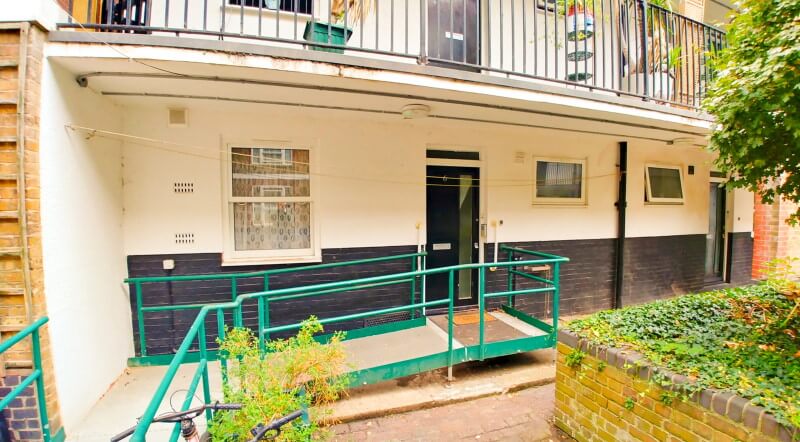
Separate from the regular pros and cons of buying and owning an ex-council flat, there are certain issues that can create barriers both in terms of selling such a property, and also hurdles for buyers that might want to purchase the home.
Presence of cladding
Many council-built blocks of flats might still include cladding, a material that is used during construction which is designed to protect the inside of the property against the weather or provide insulation.
But cladding can be highly flammable, as highlighted by the devastating Grenfell Tower fire that happened in June 2018 at a block of flats in the North Kensington part of West London. The cladding used at Grenfell Tower failed to meet certain safety requirements and this increased the potential that that material would catch on fire. The tragedy led to the recognition that many tower blocks of council and ex-council flats still use potentially dangerous cladding.
The presence of cladding alone can be enough to discourage certain buyers from wanting to purchase your property. And following the Grenfell Tower incident, there are now new safety measures in place through which you need to obtain a survey specifying whether cladding exists, and whether it is safe or not. There is a significant backlog with these surveys, which creates major delays for trying to sell any flat that has cladding, discouraging buyers.
Mortgage difficulties
If you’re trying to sell your ex-council flat through the conventional method of using an estate agent, the vast majority of buyers will likely need to get approval for a mortgage in order to have the funds necessary to purchase the property. This can be a months-long process that might result in the mortgage being rejected, which means more delay when trying to sell.
Some mortgage lenders might be reluctant to provide a loan for buying an ex-council flat because of the cons associated with such homes as detailed in the prior section. That’s especially the case if you’re trying to sell a flat in a tower block that still has cladding. The lender might see an ex-council flat as a difficult property to sell at a profit, should the buyer fall behind on their monthly mortgage payments and the company has to sell the home to recover its costs.
If someone is interested in buying your home but cannot obtain the mortgage necessary for the purchase, the sale will not happen. Thankfully, there are some options available through which you can still sell, such as using a fast buyer that has the cash upfront to buy the flat.
Energy efficiency problems
In August 2007, the UK government introduced a requirement that homes have Energy Performance Certificates (EPCs), which rank the energy efficiency of a home from the lowest rating of G to the most efficient rating of A.
It’s the law that you must have an EPC for your home, and if the certificate is more than a decade old then it is no longer valid. This can be an issue if you own an ex-council flat and you bought it before 2007, because you might not have such a certificate in place. If that’s your situation, you will need to take steps to obtain a certificate before trying to sell the property.
Restrictions on trying to sell an ex-local authority flat
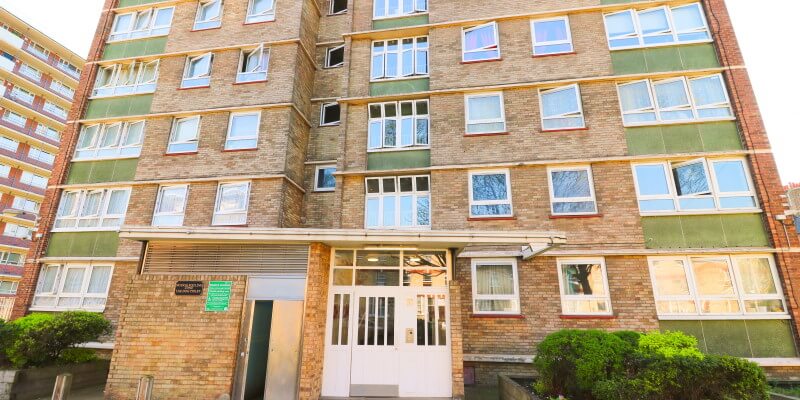
If you would like to sell your ex-council flat that you bought from the local authority, there are some additional restrictions that do not apply to conventional leasehold flats. It’s vital that you learn about these before you attempt to sell, in order to ensure a smooth overall process.
Conditions on selling the property
For anyone that bought their ex-council flat through the Right to Buy scheme and tries to sell it within the first decade of the purchase, the UK government requires that you first offer the property to either your prior landlord (typically the council) or another local social landlord.
The flat must be sold at whatever was the full property market price of the home as agreed to between your former landlord and you. If there’s any disagreement here, a district valuation expert will get involved to assess the value and set the sale price of the property. The good news is that the valuation is free in the event that the sale requires that one be done.
If you are selling within the first 10 year window, you will have the power to sell your flat to anybody if the former landlord declines to purchase the property within eight weeks.
Paying back your property discount
One of the major benefits of buying a council flat is the discounted price compared to similar non-council-owned properties. However, if you decide to sell the property after buying it, you will have to pay back all or part of this discount if you’re selling within five years of purchasing it.
Within the first year after buying the flat, you’ll have to refund the entire discount, but the amount of the discount owed will drop in subsequent years. In the second year of ownership it’s 80 percent of the discount, in the third year it’s 60 percent of the discount, in the fourth year it’s 40 percent of the discount, and in the fifth year of ownership it’s 20 percent of the discount.
In the event that a family member buys your ex-council flat, it’s possible that you will not have to pay back any of the discount, but you’ll need a solicitor to help you sort through this.
Rural ex-council flats
Although rural ex-council flats are not common, these properties do exist and if you’re trying to sell one after buying it then there are also some conditions that might apply.
If your former landlord was the local authority then they could be able to restrict the type of people who eligible for buying the flat, if it’s located in an area defined as being of outstanding natural beauty, an area designated for rural Right to Buy, or within a national park. You’ll likely be made aware of such restrictions when first buying your flat from the local authority.
Different options for selling your ex-council flat
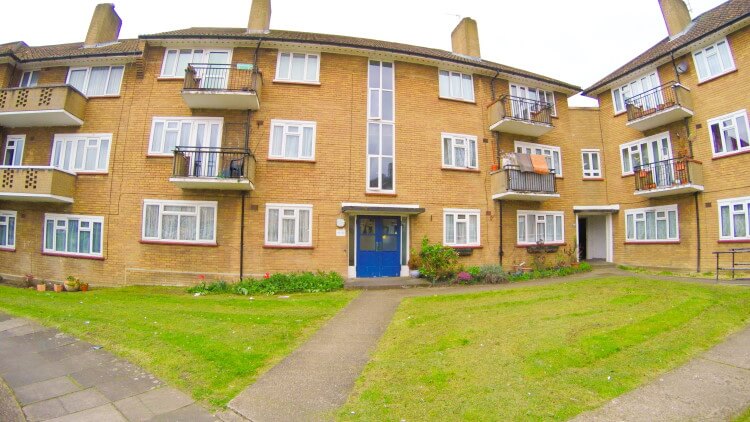
When you are looking to sell your ex-council flat, you will need to decide between four possible options for finding a buyer: using an auctioneer, using an estate agent, trying to sell on your own, or selling to a quick home buyer like LDN Properties. There are benefits to each method, and some negatives with certain approaches that you should consider before deciding.
Selling your home through an auctioneer
Auctioneers will prepare a listing that features photographs of your flat along with descriptions of its main features, such as total square footage and number of rooms. They’ll advertise this listing on their website and in local media to generate interest from buyers. And they’ll host the auction where people will hopefully place ever-increasing price bids for buying your home.
This can be a gamble, because you might not get any bids and your home won’t sell, putting you back at the start of the selling process. Or you may only get a single bid at the reserve price, which is the lowest price at which you agree to sell your home. Choose a reserve value that will still produce a sale profit after subtracting the auctioneer’s fees. The best outcome is that several people want to buy your home and you end on a high price with a great profit.
One type of auction is the traditional method where the listing is advertised for a few weeks ahead of the auction happening on a specified date when people place bids. The other is the modern auction where people can bid on your listing for a set number of weeks. Ask auction houses which methods they prefer, and decide on the one that’s right for you.
It can take some time to sell this way, as there’s a wait of several weeks with the traditional method between when you list your flat for sale and when the auction happens. If the home sells, the buyer then has an average of 28 days to complete their required steps.
Selling your home through an estate agent
An estate agent will also prepare a listing for your ex-council flat and advertise it in local media, online and in their office. They will also arrange and likely host the viewings where interested buyers get to tour the inside and outside of your home. But they expect to be paid for this work, with commission often as a percentage of your flat’s final sale price. You’ll have to deduct this from the sale price in order to calculate your eventual sale profit.
There is no set timeline for selling your flat via an estate agent, it might take just a few weeks or it can take many months or, in worst case scenarios, more than full year. That can be a major setback if your priority when selling is to secure a buyer on the speediest timeline possible.
Selling your home on your own
Some people try to avoid the costs of an auctioneer or estate agent by selling their ex-council flats on their own. But this approach is really only recommended if you have experience with selling, or a network of friends who work in the property market who are willing to assist you for free or at least at a significantly lower cost than using alternative methods of selling.
This option will require that you’ll have to handle every step of the sale, including preparing your listing, advertising it, organising and leading viewings around your home, and overseeing offers through to completion. This is a huge amount of work and it’s something that you’ll have to spend a lot of time and money on, it’s not a task you can simply handle in your spare time.
It’s also unfortunately a lot easier to fall victim to scams when selling on your own, because you don’t have the safeguard of experienced professionals who can spot potential fraud.
Selling your home to a fast property buyer
You could also consider selling your ex-council flat to a quick home buyer such as LDN Properties. These companies are able to make speedy and competitive offers for buying a large range of freehold and leasehold flats and houses, no matter their shape, age, condition or size. They are called fast buyers because they can generally complete the process of purchasing your home in a few short weeks, and that includes exchanging contracts and all other steps.
A clear benefit of using a fast buyer is that they do not discriminate when purchasing homes and can consider almost any type of property that might struggle to sell using other methods, such as ex-council flats, inherited but unwanted retirement houses, properties situated on noisy streets, houses of multiple occupancy, flats with cladding, homes with septic tanks, and more.
Another advantage of selling your ex-council flat this way is that the reputable quick buyers will never make owners pay any fees for selling their properties. That means you will be able to count on receiving the full proceeds from whatever price the company offers for your flat.
And for your additional peace of mind when selling, many fast buyers belong to The Property Ombudsman, (TPO) which is an independent organisation that publishes regulations designed to guard owners against potential scams in the fast buying industry. TPO members are required to follow those rules, giving you extra protection. Be wary of any quick buyer that either cannot prove it’s a member of TPO (or equivalent) or that says it refuses to join the organisation, because this increases the possibility that the business is fraudulent.
Thankfully, you’ll find it is incredibly simple and free to find out whether a quick home buyer belongs to TPO. Just visit their website and on the left of the main page click on the tab marked “Find a Member” and then when prompted type in the name of a specific company. If they are truly registered with TPO, you should quickly see their membership details. If they are not a genuine TPO member then their details will not appear on the website.
Top questions about selling a council flat
Homeowners thinking of selling their ex-council / ex-local authority flat quickly often have various questions, from the cladding concerns before selling through to selling a council flat in need of modernisation. Some of the main questions we’re asked about selling an ex-council flat are discussed below:
A typical flat is a leasehold property and you’ll own for it for the duration of the lease, whilst a private person or entity will be the freehold who owns the building in which the flat is contained. Council flats by contrast were constructed by local authorities and you’ll have had to live in one with the local authority as your tenant before you can make an attempt to purchase it.
Through the UK government’s Right to Buy scheme that was introduced in the 1980s, giving people who live in council flats and houses the ability to make an offer to buy the property. There are certain criteria that homeowners have to meet, but if they successfully buy the property and it becomes an ex-council flat, they can try to sell it in the future.
That depends on how you choose to sell it, because you will have to pay commission to estate agents or auctioneers if you decided to use either of those options for selling your ex-council flat. Alternatively, you could try selling your home to a trustworthy fast home buyer such as LDN Properties because they won’t charge any fees, which will maximise your sale profit.
Yes, the UK government has in place certain rules that apply at specific times when you want to try selling your ex-council flat. For example, if you have owned the home for less than ten years after purchasing it through the Right to Buy scheme, when you decide to sell you must first approach your former landlord or another type of social landlord in the neighbourhood.
The method that you choose for selling the home will determine the speed at which you can sell it. Using a fast buyer will often take just a few weeks from beginning to end. An auction will take at least a couple of months once you factor in all the steps of that process. And there’s no deadline when selling via an estate agent, it can be more than a year before you receive an offer.
Because they look at the unfortunate but very real stigma of owning an ex-council flat, including the fact that some of the homes have cladding, and they see the properties as being hard to sell at a profit in the event that the buyer can no longer meet their monthly mortgage payments. If that happens, the lender will have to sell the flat to cover the costs of the abandoned loan.
The honest fast property buying companies are typically registered with a third-party entity called The Property Ombudsman (TPO) or equivalent. This organisation writes rules to shield you against potential fraud in the quick buying sector, and all TPO members must follow those policies.