
Quick navigation
If you own a studio flat and are thinking about selling it, you might find that it’s harder to attract potential buyers compared to people trying to sell properties with one or more bedrooms. The reduced space can make a studio flat less appealing to buyers as well as mortgage lenders, but the good news is these problems are not insurmountable depending on how you choose to sell.
- What is a studio flat?
- The pros and cons of owning a studio flat
- Hurdles you might face with trying to sell a studio flat
- What’s the usual process for selling a studio flat?
- Conditions of sale that might apply to your studio flat
- Four options for trying to sell your studio flat
- Frequently asked questions about selling a studio flat
What is a studio flat?
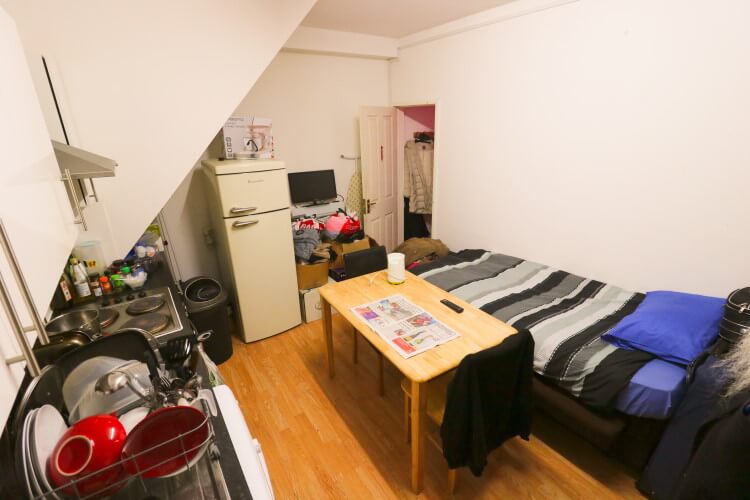
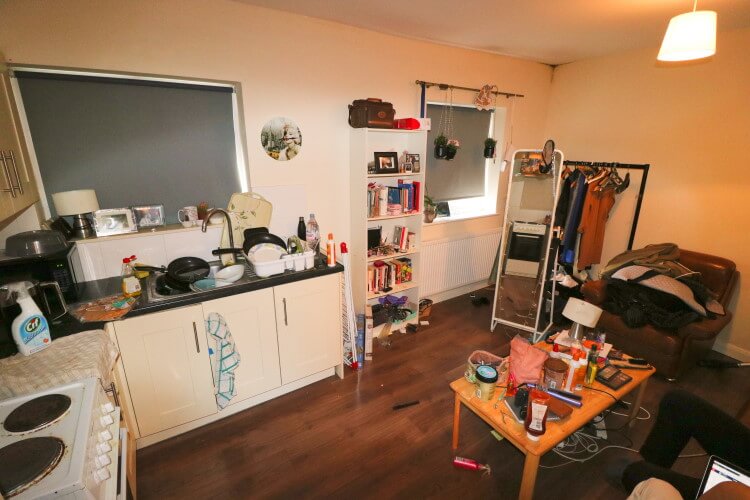
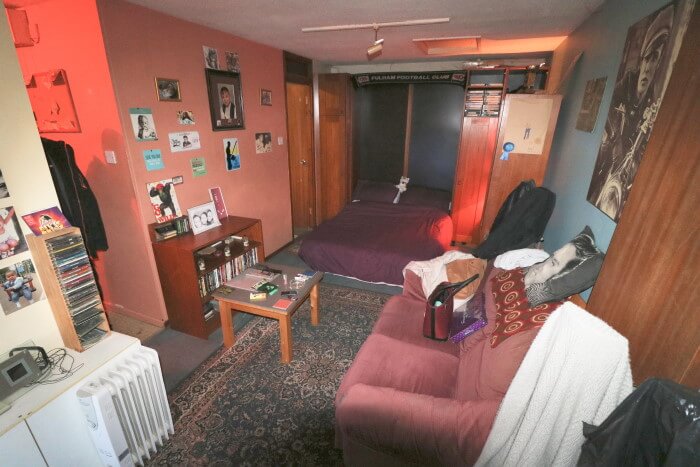
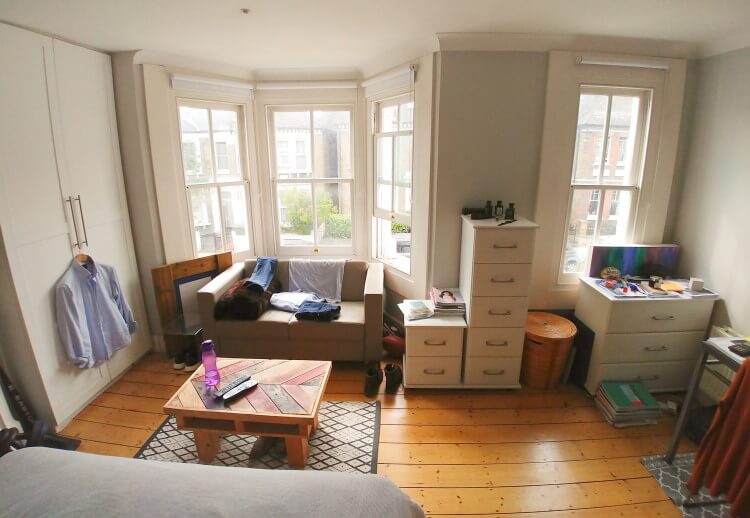
Studio flats are residential properties where every element, including the living room, bedroom and kitchen, are all in the same typically small space, with a bathroom as a separate room. It’s rare that a studio flat would have a bathroom as well as a separate room just for a toilet.
In London, planning guidance recommends that the minimum space for a studio flat should be 37 square meters, according to Designing Buildings which says it is a “construction wiki” database of information on planning, design, construction and operations of buildings. But some university studio flats can be as small as 13 square meters in certain parts of the city.
A studio flat can just be on wide open room, or it might be a single room that is partitioned with the use of dividing walls to establish specific parts of the residence such as the kitchen or bedroom. Because of their limited size, room for storage of personal belongings within a studio flat can be quite limited. Some buildings in which a studio flat is located might include storage space in the basement or elsewhere, which can help to alleviate this issue.
Some studio flat buildings also have certain perks, such as address to a shared garden, balconies, and other features that can make them more enticing to buyers. As the next section explains, there are pros and cons of owning such a property, and some of the negative aspects can become particularly noticeable once you make the decision to sell your studio flat.
The pros and cons of owning a studio flat
As with any type of property, there are a number of advantages and disadvantages of owning a studio flat that will become particularly obvious when it’s time for you to sell the home. Understanding the various pros and cons be incredibly helpful before listing the studio flat for sale, because you can learn some of the doubts buyers might have and how to address them either partially or in full.
Pros of owning a studio flat
Because of their relatively low cost compared to one-bedroom flats or larger properties, studio flats can be very popular with recent university graduates, young professional workers and others who are looking for a comparatively affordable option for buying their first property.
The fact that there is less overall square footage means that studio flats are some of the easiest to clean and maintain properties, simply because there’s less surface area to keep tidy. Instead of having to clean a two-level multi-room house, you are working with a much more limited area.
Studio flats also will require less energy because you won’t have to power appliances in several rooms, which should hopefully mean lower power bills and other utility charges. This can be great for anyone living on a budget who is trying to save funds by any means possible.
You can also make some decent money from a studio flat by renting them out, because they are popular with students and people on a limited budget. The rental yield, or how much annual return you can expect to make on your property investment, is usually about 5 percent to 10 percent, which is a few percentage points higher than you might expect from one-bedroom or bigger units, according to UK property investment firm RWinvest.
Cons of owning a studio flat
One of the biggest drawbacks of a studio flat compared to a larger home, such as a one-bedroom flat, is the reduced amount of total square footage you’ll own. This means you will have less overall living area, so you’ll have to fit your bed, couch, desk and any other furniture into a reduced space. This can be problematic if you have a lot of furniture and don’t want to sell any of it, although some buildings will have storage space in the basement that you can use.
Another potential negative aspect of owning a studio flat is that it can be harder to sell in the future, because you’ll be working with a reduced number of potential buyers. That’s because only a set amount of people will be interested in buying your type of unit compared to more popular properties.
That reduced interest in buying your home can also cause problems for buyers who do want to make an offer on your property, if they will struggle to get the loan that they need to buy your studio flat. The next section offers more insight into the hurdles that you might face when trying to sell your property, including some tips for how to overcome these common barriers.
Hurdles you might face with trying to sell a studio flat
Although there are some advantages of owning a studio flat as discussed above, there are also some potential downsides that apply particularly when you are ready to sell the property. It’s vital that you understand these negatives so that you can plan for how to overcome them. Your goal should be to make your sale as smooth, as quick, as stress-free and as profitable as you can.
As discussed in the previous section, the initial problem that you will face is reduced demand from buyers for your studio flat. The vast majority of buyers who want to buy a flat are likely to be looking for properties with one or more bedrooms, a living room separate from the kitchen, and other requirements that can only be satisfied by a physically larger property. Unfortunately there’s nothing you can do to change this situation because you can only work with the space you have, and therefore your goal should be on impressing the people who are interested.
You can do this by taking every action possible to make your studio flat look enticing to anyone who either looks at it in an advert or visits it in person on a viewing. If there is a garden attached to the property then you should spend some time mowing it and making sure there are no overgrown weeds or other eyesores outside, because first impressions are important. Similarly, fix any chipped paint or broken glass as these can be turn-offs for prospective buyers.
Also take steps to tidy up the inside of the apartment, moving furniture to create as much open space as you can and removing any clutter. Try to get as much natural light as feasible into the apartment because this will help the small space to look larger in the eyes of buyers. And remove any potential divisive or offensive personal belongings, because you want buyers to feel completely relaxed so that they can picture what it would be like to own and live in the unit.
Even if you have someone who is very interested in buying your studio flat, the sale could still fall through if that person fails to get approval for a mortgage to complete the purchase. Some lenders might see a studio flat as a risky loan option. If the borrower ends up unable to meet their mortgage payments, the lender will then repossess the unit and try to sell it in order to clear the outstanding debt. But the reduced demand for studio flats could make the lender think that they will not be able to sell it, leaving them with a loss on the mortgage. Difficulty getting the funds to buy a studio flat can often be the biggest barrier to securing a sale.
One way to avoid this mortgage problem is to consider selling your home to a quick cash buyer such as LDN Properties. These companies have the financial resources upfront to buy homes immediately, rather than having to wait the many weeks or months to first obtain a mortgage. This means you won’t have to worry at all about whether a buyer’s offer might fall through because they are ultimately unable to get a loan from a lender who is sceptical about you investing in a studio flat.
What’s the usual process for selling a studio flat?
Selling a studio flat can be somewhat complicated because most of them are leasehold units. This means that you own the lease to the studio flat but someone else, known as the freeholder, owns the building and land. As such, selling can require more time and effort, but there are ways to speed up the process, says the Leeds-based property management company Regent.
The company notes that these are the usual steps involved with selling a studio flat, although they apply specifically to selling via an estate agent. The steps below are not the same as you can expect if trying to sell through an auctioneer, on your own, or via a fast home buyer, but there are certain elements of the process that are common to all four approaches.
- The initial decision to put your studio flat up for sale
- Waiting for, and then accepting, an offer from a serious buyer subject to contract
- You and the buyer instruct your legal representatives to handle the sale
- Your solicitor will produce proof that you own the flat, such as a Land Registry title copy
- Your solicitor develops the draft sale contract and sends it to the buyer’s solicitor
- The buyer’s solicitor makes enquiries and searches about your studio flat
- Contracts are exchanged, the sale deposit is paid, and a completion date is chosen
- Within 28 days of the sale, you’ll usually have to notify the freeholder about it happening (consult with your solicitor to understand the specific leasehold requirements for your property as they may differ)
Other methods for selling can add or remove some of these steps, for example with an auction you will also have the stage of waiting for the auction to take place where people will make bids on your property — this is something that is wholly unique to that type of selling.
Some estimates say that it takes about 50 days for a property, including studio flats, to sell after their initial listing, but the actual time can vary significantly from home to home.
The entire time taken also ranges from weeks to months or even longer depending on how you choose to sell, and a later section in this guide elaborates on those options along with their pros and cons. For example, it’s entirely possible that you might be waiting up to a full year or more before you sell your home when using an estate agent or trying to sell on your own. By contrast, if you sell your studio flat to a fast buyer then the entire process could be completed within weeks.
Conditions of sale that might apply to your studio flat
Because you’ll be dealing with the sale of a leasehold studio flat, there are certain legal complications that you should learn first. Leaseholders own properties for a set amount of time, typically 99 years at the start of the lease but it can be more or less time depending on the individual property and freeholder. Selling your remaining lease is known as an assignment, and almost every property lease in the UK has conditions that are attached to this process.
The primary goal of such conditions is usually to make it easier for the freeholder and others to monitor who is leasing the studio flat, which eases their efforts to collect any service charge fees along with the ground rent. These are three typical conditions that you might have in your lease:
Requirement to register the assignment: this gives the leaseholder the ability to sell the unit without first getting permission from the freeholder, but if you manage to find a buyer for the studio flat then you will have to notify the freeholder usually within 28 days of the sale occurring. You’ll also typically pay fees to the freeholder to cover deed registration costs and other expenses.
Deed of covenant: this requires that the seller of the studio flat makes sure that the potential buyer will agree to a deed of covenant with the freeholder, which effectively means the buyer agrees to sign a contract with them much as you did when you bought the unit.
No assignment without consent: this requires that the freeholder must first give their approval for the sale of the studio flat, although it’s rare that they would attempt to block a sale.
You should have a conversation with your freeholder or your solicitor, or both, to learn more about the conditions of sale that are included in your lease before you list the studio flat for sale. This can help to alert you to any potential issues that need to be resolved before you sell.
Four options for trying to sell your studio flat
Once you have decided to try selling your studio flat, the next major decision that you will have to make is choosing which method for trying to find a buyer. Common options include using an estate agent, using an auctioneer, trying to sell yourself, or selling to a fast home buyer. Each approach has certain benefits, and some have notable drawbacks. Consider the information below on each choice carefully and decide which approach best fits your needs and wants.
Using an estate agent
You can avoid a lot of work when you use an estate agent, because they’ll put together the listing that features photographs of your studio flat and text describing the property and its main features. They will market this listing in their office, local newspapers, online and elsewhere, along with scheduling and hosting viewings where potential buyers get to tour your property.
Just know that some buyers consider viewings to be incredibly intrusive and to take up a lot of their free time. And you might be waiting for many months, or in worst case scenarios more than a full year, before you receive a serious offer from a buyer. There’s also the possibility that the sale could fall through anytime up until you are able to exchange contracts on the property.
You’ll also have to pay estate agency fees when using an estate agent, which are typically charged as a percentage of the final sale price you achieve for your studio flat. You will have to deduct this commission from the sale proceeds in order to calculate your overall net sale profit.
Some estate agents might also have no experience with selling studio flats, which means they could find it difficult to get a buyer for your property. Ask specific companies about their success rate with selling studio flats to get a better idea about whether they are a good choice for you.
Using an auctioneer
Auctioneers can also help to reduce your workload when selling because they similarly will develop the listing for your home and market it. You’ll be asked to set a reserve price for your home, which is the lowest value at which you are comfortable selling. Be sure to set this price at an appropriate level considering you will need to pay the auctioneer their fees, because it’s entirely possible that you only receive one bid on your home. You might also get zero bids, in which case your property will not sell and you’ll have to start the process of selling all over.
The uncertainty about the outcome of the auction can be too stressful for many people. And auctioneers will also charge you commission for their work, which will naturally reduce your net profit from the sale. In some cases you might be able to make the buyer pay some fees, so ask the auctioneer.
Selling this way can take several months, because there will be a wait of at least a few weeks between the date on which you list your studio flat for sale and the date on which the auction occurs. If your unit does manage to sell at auction, the buyer usually then has an average of 28 days to finalise their steps for completing the purchase. Some auctioneers set tighter or longer deadlines for this part of the process, so always ask specific companies for their policies.
Some auctioneers may also have never successfully sold a studio flat, which implies that they may struggle to attract interest from buyers in your home. You should inquire with specific auctioneers about their history with selling studio flats before deciding on how to sell yours.
Trying to sell yourself
Another way you could try to sell if by doing it yourself, but this is only really recommended for people with extensive knowledge of the property market and the legal steps involved with selling, because it requires a lot of time, money and effort in order to secure a sale.
You will be solely responsible for developing a listing, choosing where to advertise it, scheduling and then leading viewings around the studio flat, and overseeing the formal final stages of the sale such as doing searches and exchanging contracts. This can quickly get overwhelming, particularly if you don’t have much free time or the resources required to devote to the sale.
And there is zero certainty about when you might sale when trying to do so on your own. Indeed, the potential for you to make certain errors is quite high unless you are experienced, and any problem can cause weeks or months of further delay. At the very least you should plan on it taking a number of months to sell the property by yourself.
Selling to a fast home buyer
Your fourth option is to use a fast home buyer like LDN Properties, a London-based company that since 2003 has given homeowners a straightforward, no-stress and hassle-free way to receive competitive and speedy offers for selling all types of leasehold and freehold properties.
There are several benefits associated with using a quick buyer, including the fact that the trustworthy companies never charge any fees. That means you can count on receiving the full proceeds and profit from whatever final sale price the speedy home buyer offers for the unit.
And as their name suggests, fast home buyers are often perhaps the speediest way to sell your studio flat. They have the financial resources available to make an immediate offer for buying your home, without having to wait weeks or months to get approved for a mortgage. This significantly reduces the sale timeline, and most quick buyers can complete the process in just a handful of weeks, which includes exchanging contracts and ensuring you receive the proceeds.
Quick home buying companies are also able to consider making offers on practically any type of house, flat or other property regardless of how old it is, its condition, its type, its shape or its size, making them an ideal option for selling a studio flat. For example, the diverse list of homes that LDN Properties has experience with buying includes, but is not limited to, houses with solar panels, homes of multiple occupancy, properties built from concrete or some other non-standard construction material, flats with cladding, homes located in high-risk flood zones, houses with subsidence or some other major structural problem, and inherited retirement properties.
Top questions about selling a studio flat
Homeowners thinking of selling their studio flat quickly often have a wide range of questions, from the repairs that are required before selling through to selling a studio flat in poor condition. Some of the key questions we’re asked about selling a studio flat are mentioned below:
Studio flats are usually just one large room, which may or may not have some dividing walls within it, that consist of a living room, bedroom and kitchen all in the same space, along with a separate bathroom. The size of studio flats can vary widely, but in London the general guideline is that a minimum size for such a property should be no smaller than 37 square meters.
For several reasons, including the fact that the reduced size can be a turn-off to buyers who are looking for a larger property with a separate bedroom, even if they like the price of the unit. And some mortgage providers see studio flats as a risky option because it might be hard to sell the property in the future, so if a buyer can’t get a loan then their offer on your flat may fall through.
Because of the reduced demand for such properties, which makes many lenders question whether they’d be able to sell the home if needed in the future. If a borrower defaults on their mortgage then the lender will repossess the unit and try to sell it to clear the debt, but they might be unwilling to issue a loan if they feel the studio flat will be difficult to sell in that situation.
Yes, there are a few advantages that you’ll get with a studio flat, including that it’s much more manageable and simpler to clean and maintain than a larger property. Because of the reduced space, you’ll also have to spend less on heating and other utility bills. When you’re buying your first home, the lower price range can also make these units more affordable.
Not necessarily, you’ll only have to pay fees using certain methods of selling such an auctioneer or estate agent who will charge you commission for their effort in finding a buyer for your studio flat. You’ll have to subtract these fees from the sale total to get your net profit. But if you use a cash buyer to sell your home, the reputable companies won’t charge you any commission.
Fast buyers are usually able to complete the purchase of studio flats within a few short weeks. With an auction, you’ll wait several weeks between the day you list your home for sale and the day of the auction, and a further wait of about 28 days after a successful auction for the buyer to complete their steps. Estate agents might take months or even a year to find a buyer.
Some estate agents will quote a high sale price for your home that they may know is not attainable, because they want to secure your business. The best way to avoid this outcome is to get quotes from a number of estate agents and then calculate the average among those prices, because this can give you a much more accurate idea of your home’s potential sale value.