
Quick navigation
The guide below offers important advice for how homeowners can calculate the value of their freehold or leasehold properties, including what to consider when using online valuations, tips for potentially increasing your home’s value, and other options for valuing your home.
- Steps you can take to value your home
- Free online house valuation tools
- Other options when considering "how much is my house worth?"
- Summarising the different type of house valuations
- Top four ways to improve the value of your house
- Questions you may have when calculating the value of your home

Steps you can take to value your home
If you own a freehold or leasehold house or flat and would like to sell it quickly, one of the first important steps that you must take is figuring out how much your home is worth. Determining the value of your property does not have to be precise, and you can rely instead of a general range of values within a reasonable amount. That value will then be the basis for calculating a sale price for the home, and that price will be specific just to your house or flat based on its size, condition and when your house was built.
It’s important to get an accurate valuation because that will inform the level at which you set the sale price for you home. In the event that the valuation is inaccurate, you could risk setting the initial sale price for your house or flat at a level that is far too high to attract any buyers, and you could then have to wait many months or perhaps even longer until you receive an offer. Similarly, if the valuation is too low then you risk setting a sale price that is below the price at which you could easily sell your property. If that happens then you will receive less profit when selling your home, which can complicate efforts to buy your next home.
As a homeowner there are a number of no-cost and quick steps that you can take to begin the process of valuing your house or flat without contacting any professionals. Just remember that it’s not typically advised to rely solely on any work that you do without any expert input when trying to value your home. Instead, consider the options in this section to be starting points for getting a general value for your home before possibly seeking a professional valuation.
Check property sales websites to compare home prices in your area
A simple first place to start your home valuation process is visiting property sales websites such as rightmove and Zoopla. These websites aggregate sales listings from estate agents and others throughout the UK, including house and flats sales along with rental properties. They can not only provide information on the prices at which homes in your area are currently selling, but often are also able to give you details on how much properties have sold for in the past.
One great feature of these websites is that you can search for home sales in areas as specific as your postcode. If you’re trying to find a suggested value for your flat or house you should visit the websites and search for properties of similar shape, type and size. Look at the search listings to find out how much such homes are currently listed for sale, and the price at which such properties have sold in the past. This should give you a general guideline for how much your home is worth and the potential price at which you might be able to find a buyer.
But even once you have an average price for sales of homes that are similar to yours, it’s not recommended that you simply proceed to trying to find a buyer at that price. Instead, you should pursue a number of other sources for valuations before settling on a potential sale price because you want to make sure you are getting the most accurate value possible so that you can only attract a good number of potential buyers but also maximise your potential sale profit.
Search the UK House Price Index for up-to-date property prices
The UK House Price Index, or HPI, is a very useful website operated by the HM Land Registry, a non-ministerial department of the UK government that registers the ownership of properties throughout the country. The HPI provides important information on home sales prices on a regional basis, and can help with house valuations.
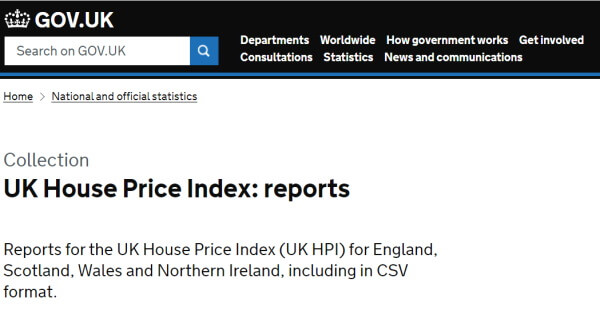
Also, some websites such as those operated by banks including Halifax and Nationwide have their own HPIs which they have developed using different sources of data such as mortgage applications and more. You could also visit their websites and others to search the indexes for additional information that you can compare against the data on the UK HPI website.
Browse websites that predict the future of the UK housing market
Another far less reliable option is to use websites that specialise in predicting the future of the UK housing market, including demand for homes and changes to sale prices. One example, which launched in 2003, is HousePriceCrash which provides a forum for predicting and debating future booms and busts in the property market.
These websites can give some sense of the general debate about the future demand for selling and buying houses and flats, and offer useful tips on market indicators that might help to guide you research on valuing your home. But nobody can predict the future with any certainty and therefore you should treat any claims as informative but absolutely not determinative.
You should always be wary of any websites that try to get you to pay money before providing you with a valuation, because there are a large number of free online sources for home valuations.

Free online house valuation tools
Another option for getting a valuation on your home is to use an online valuation tool, typically provided by some property sales websites, estate agents and other companies specialising in home sales. These tools can be a great idea for getting a very quick and zero-expense valuation, typically presented in a range of prices from suggested low value to potential maximum high value.
But beware that these home valuation tools can often provide inaccurate valuations because they are tools that aggregate many different pieces of information and then use that data to make instant calculations on your home’s value based on general facts that you provide about it, such as your postcode and the total number of rooms and size of the property. As such, online valuation tools at best can give you a rough idea of how much your home is worth.

But in a sign of the potential unreliability of such tools, the range from potential top to bottom prices can vary substantially. As an example, a recent search for a home in the northeast provides an average price of £258,000 with a minimum price of £212,000 and a maximum price of £304,000. The large range in projected prices could not only be confusing to many homeowners, but can also make it difficult to accurately plan a budget when selling their homes because some people might not know which range of the estimate is the most accurate.
You might want to consider using several different online home valuation tools to see whether the projected valuations are wildly at odds with each other, which suggests you cannot rely on them and should move on to consulting with a professional. In contrast, if the tools all give similar valuations for your home, then they might be considered to be more reliable.
As with other websites that can help in your search for an accurate home valuation, you should be wary of any website that tries to make you pay before giving you a projected home value. Given the many different options online and offline for finding out an estimated value for your property there is typically no reason to pay a website to provide this information.

Other options when considering “how much is my house worth?”
Regardless of whether you have experimented with some of the options above for valuing your home, it’s highly recommended that you seek the input of a professional before settling on what you believe to be a fair and accurate valuation and potential sale price for you home.
Although steps such as searching property sales websites and consulting the UK HPI can be very useful in giving you an idea about your home’s potential value, only experts who are currently working at selling and buying houses and flats can provide the most accurate quotes. They will have up to date information on the latest and potential upcoming trends in the housing market, along with current data on demand for all types of houses and flats in your area.
Contact estate agents to gather several competing valuations

And if an estate agent tries to get you to pay for a valuation and projected sale price then you should usually decline that service. You can easily find other estate agents who will be willing to do the work for free because they will be trying hard to get you to sell your home through them.
Consult with a property auctioneer for a projected sale price
Another method of selling your home is using a property auction, where you will agree to a minimum reserve price opening bid for your home, which is the value at which you are comfortable with your home selling. The goal is to have many people interested in buying your home, leading to competitive bidding that ultimately drives the final sale price of your home up. Ask the auctioneer for what they think would be a good reserve price, and you should be able to get a free quote even if you don’t follow through with using them to sell your home.
Whilst this method isn’t a reliable way to get a fully accurate valuation on your house or flat, it is another general guideline that can be instructive as you try to get a final projected price. You likely shouldn’t solely on this information when trying to determine your home’s value.
And as with estate agents, some auctioneers should be happy to provide this service for free because they will want to get you to sell your home at one of their auctions so that they can charge you commission for their work in the event that your property successfully sells.
Get in touch with a fast cash buying company like LDN Properties
Launched in 2003, LDN Properties is a cash buyer specialising in making fast and competitive offers to buy houses and flats throughout London. Our friendly team of experts can give you a no-obligation quote for buying your property, and you’ll have at least seven full days to consider it. There’s also no penalties for turning down the offer after the waiting period, which means we can provide you with a very quick, simple and no-cost way to get a valuation on your home.
And unlike online property valuation tools, our representatives can consider the most recent and accurate data when making you an offer. We will assess factors specific to your home, such as whether you have made any investments in physical changes including extensions or renovations that might have increased or decreased its value. And we also assess important factors that other types of valuations don’t consider, such as performing our own assessment of the current pros and cons of living in your neighbourhood, checking with the local planning authority for any important paperwork they might have on your home, and more.
Our valuations can also take into account whether your home has unique attributes that a more-general online estimate might not consider, such as whether it is a problem property because of a factor such as being located near a flood zone or under a noisy flight path, a recent structural issue including dry rot and subsidence, and more. Virtual valuations will likely not know about or be able to consider such factors, which can reduce the accuracy of such projections.
Pay for a qualified independent surveyor to give you a valuation
Yet another way that you can get a valuation for your home is contact a professional independent home valuer who is registered with the Royal Institution of Chartered Surveyors, or RICS. This is a professional organisation that enforces high quality standards in managing, developing and valuing properties, construction, infrastructure and land development.
The typical cost for a RICS valuation is currently about £100-£200, although it could be higher or lower depending on your home and the surveyor that you use. Of course, not every homeowner might have the funds necessary to pay for such a valuation, and if that’s the case then you can simply use a number of the no-cost options detailed in this guide for receiving a valuation. There are no provisions in UK law that requires that you use a qualified independent surveyor for a basic home valuation, although such a professional might be required in tax cases or other situations.
RICS surveyors have no personal or financial stake in your home sale and therefore you are ensured to receive an independent and objective valuation that is free from any commercial influence that could overestimate or underestimate your property’s value.
In addition, because of the independent nature of RICS surveyors’ valuations, they can often be used them for insurance applications, relying on them in legal disputes and transactions, and other situations.

Summarising the different type of house valuations
Although seeking a home valuation might seem fairly straightforward, there are in fact several different types of valuations depending on the size, shape, type and condition of the property that you are seeking to sell. Keep reading for a brief description of all possible home valuation types, and find that ones that are most applicable to your particular selling situation.
Some of the below valuation situations might require that you pay to hire a qualified expert home valuer, particularly in complicated legal disputes or when you have to make tax calculations. But not every option will require you to spend any money, and even if you do have to pay someone for a valuation you should ask around to see if you can find a more competitive rate elsewhere.
Building reinstatement valuation
This is a property valuation that will be undertaken as part of the process of getting insurance for your home. The valuer will assess the expected cost of rebuilding your house or flat in case it is ever damaged to such an extent it cannot be repaired and must be rebuilt completely, along with any associated potential insurance risk costs.
Expert witness valuation
You will need one of these evaluations in the event that you are involved in any litigation about a disputes relating to a house, flat or other property. Expert witness valuations are used by courts to rely on an independent, credible and professional valuation in such lawsuits. These valuations are also useful in providing a reliable record of any problems or other issues with your home, and for providing information about their leases.
Insurance valuation
If you have paid for a surveyor to value your house or flat, it’s possible that they might also conduct one of these valuations as well. The goal of such assessments is to determine your home’s potential insurance value based on the average construction price if it needs to be rebuilt due to burning down, bulldozed, or damaged beyond repair.
Matrimonial valuation
These are used as part of separation or divorce proceedings where house or sale ownership is involved. Courts will rely on matrimonial valuations in a bid to decide how the separating couple should have to divide their assets, including their home. Typically, the couple will agree on which qualified valuer or surveyor to use, and once they receive their valuation then they will submit it to the court overseeing their case.
Mortgage valuation
Also sometimes called a basic valuation, this process generally requires a quick survey of your house or flat that tries to identify any clear negative issues with the home at a broad oversight level without requiring much more information. A mortgage lender will conduct their own assessment of a home’s value to determine the amount of money that they are willing to provide as a loan for a mortgage, and these valuations can be a great way to get another party’s view on how much a house or flat is worth.
Online valuation
When you seek an online valuation you will typically visit a property sales website and enter a basic set of data such as your postcode into an online tool operated by a computer, which will then provide you with an estimated range of values for your home from maximum to minimum. Just remember that these tools sometimes rely on outdated data and therefore the accuracy of these valuations is not always reliable.
Probate valuation
When someone dies and they were a property owner, it might be necessary to obtain a probate valuation of their home in order to calculate the amount of inheritance tax that might be owed by the person or people listed to inherit the property in the deceased owner’s will. The UK government suggests using a qualified surveyor for this valuation.
Property valuation
This term generally refers to the valuations that most freehold or leaseholders obtain in order to get an idea of how much their houses or flats might be worth if they decide to try finding a buyer for it on the property market. As detailed in this guide you have a number of options for getting this valuation, including seeking input from estate agents.
Retrospective valuations
These types of house or flat valuations or used when you are looking to establish how much your property was worth on a certain date sometime in the past. You might need to get one of these valuations if your home is included in any legal proceedings, if you need them for tax documentation, or deciding a value as part of the probate process in which you are selling an inherited home or trying to find out your inheritance tax.
Tax valuations
When you have a property transaction for which capital gains tax applies, you might want to obtain a tax valuation because it can be a fairly accurate guide to the amount of tax that you’re liable for paying to the UK government. This can quickly become quite a complicated process and that’s why it’s highly recommend that you get in touch with an expert qualified value who can do this work for you. And the Inland Revenue might also mandate that you get such a professional valuation and supply it to them in writing.

Top four ways to improve the value of your house
If you have taken any or some of the steps above and are disappointed that the valuation of your home is lower than you would like or need when selling it, don’t be discouraged. There are number of potentially zero-cost and speedy ideas that you could implement which might be able to increase the overall value of house and flat and therefore its potential sale price.
Tidy up the exterior and interior of your property
If you decide to get a valuation from one or more estate agents, they will want to come to your house or flat so that they can inspect the exterior and interior before giving you an estimated value. That’s why it’s very important to ensure that the entirety of your home is in pristine condition, because if it looks messy outside or inside then that could lead the estate agent to give you a valuation than your property actually deserves. Take some time to pull out weeds, clean up inside rooms, cover any chipped paint on the front door or window ledges, and review and other ways you can boost your home’s appearance.
Increase the number of bedrooms in your home
One of the main features that make houses or flats attractive to potential buyers is how many bedrooms they have. Thankfully, it can be fairly quick and cost-free to increase the number of bedrooms in your property in some cases. If you have any rooms that are currently in use for other purposes, including as a home office, you might want to consider instead converting that room to a bedroom. It will increase your overall number of bedrooms and potentially make your home more attractive to buyers.
Fix any potential structural issues with your home if possible
Your home’s value can be significantly and negatively affected if the property has any structural issues, which can range from an easily treatable amount of dry rot through to more serious problems such as subsidence or other structural issues. Calculate to see whether you can spend the time and money to fix the problem, because doing so will help to increase your home’s overall value.
Make sure you don’t have any vacant rooms
If you do convert an existing room into a bedroom, be sure to put some basic bedroom furniture in there because a vacant room can be a discouraging sight and it might even prompt some estate agents to undervalue your home. Similarly, if any other rooms in your home are completely empty then you should consider installing some furniture in them at least on a temporary basis. You want to take every step to get the best possible valuation for your home.
Unfortunately, as the consumer advocacy website Which? notes, there are a number of elements that can potentially negatively affect the value of your house or flat that might be outside of your control, and you have minimal recourse to change these beyond hoping for a change in those circumstances.
Some of the many different factors that are beyond your potential to address include current crime levels, plans for any regeneration or additional property building, the amount and quality of primary and secondary schools in the area, important amenities such as a doctor’s surgery, the demographics of an area including whether it’s best suited for families or other residents, transportation links to other parts of the region and beyond, the range and quality of restaurants, shops and other businesses, and the overall state of infrastructure in the district.
Questions you may have when calculating the value of your home
Homeowners considering how much their house is worth often have questions for us, ranging from the best online property valuations through to the steps required to value a home . Here are some of the top questions and answers we’ve been asked on the topic – how much is my house worth?