Knowing your property’s age can often be essential for selling
Buyers will typically want to know the age of your house or flat when they talk with you about potentially purchasing your property, and it some cases having this information might be essentially before they can complete the sale. Some home insurance applications will require the date, so when you are selling you need to able to find out when your property was built.
There are a few different options available for researching the year that your property was constructed, some won’t cost you anything whilst others might charge a small fee. But they will all time, which may be at odds with your plans if you are trying to get a sale.
And the age of your home is just one issue to consider among many others that might affect someone’s interest in making an offer. Other features that can affect the sale of a house or flat include whether it has any structural damage, its location, the overall condition and more.
This guide focuses on the age of a property, and in the following sections you can learn specific details about the number of strategies that you can use to try and found out the year in which your house or flat was constructed. You can also get informed about the possible challenges you might face in attempting to sell a home without knowing its age, if that’s what you decide.
You’ll also get a summary of your various options to find a buyer for your home regardless of whether you’re able to find out its age before selling or not. For example, once choice is selling to a quick home buyer like LDN Properties, where the entire process should only take a few short weeks, and that includes paying you the sale process and exchanging contracts – and without charging you any fees.
Problems when trying to sell a home without knowing its age
Although there is no legal requirement that you must know the age of your home before attempting to sell it, you should be aware that there are one or more problems that you might encounter if you try to find a buyer for the property without knowing when it was built.
One issue is that the exact age of your home can affect its potential sale price, as the website Confused notes. Broadly, properties built many decades or even centuries ago might cost significantly more in general upkeep and repairs than modern homes built in the last few years.
But older homes might also be more attractive to specific buyers, particularly those that are hunting for a property that was built in a specific era and reflects the architectural choices of that time. If you own this type of historic home then you could promote this aspect of it when trying to appeal to buyers, although the age can limit how many people are interested in making an offer.
Another crucial factor is that the year a home was built can often indicate whether or not the structure and systems of the property are in good condition or may need a large investment of time and money to upgrade. This can include elements such as the electrical wiring, any air conditioning that might have been installed, the plumbing and other factors. Some buyers could have zero interest in purchasing a house or flat that they would then need to renovate, or they might lower the price they offer by at least the amount they expect the work would cost.
Newer properties often also have dishwashers, fridges and other items that have better energy efficiency and reduced maintenance costs compared to what you may find in older homes, and this can be appealing to prospective buyers that are seeking the latest appliances.
Despite all of these factors, none of them mean that you must discover your home’s age before selling it. You have a number of options for selling a flat or house without knowing when it was built. One solution is selling to a quick home buyer such as LDN Properties, a process that won’t charge commission and takes just a few short weeks. You can learn more about how to sell this way, along with alternative steps to sell your property, later on in this guide.
Start your search at the HM Land Registry
The first place you should start your search for your home’s age is the HM Land Registry, which is a great source of information on properties throughout England and Wales. Through simple searches and some small fees for downloading certain documents, you can obtain a host of data on houses and flats including title deeds that list their current owners, and more.
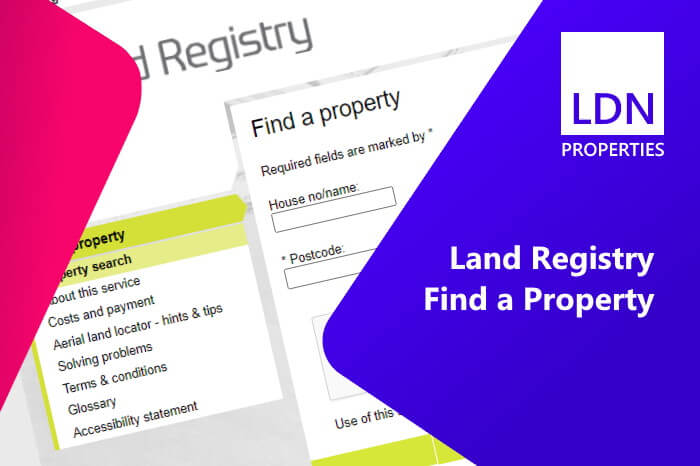
It is important to know that the HM Land Registry does not have specific details on what has been built on the land you’re looking at, merely the ownership of that land. But it is possible to figure out the exact age of your home if it was sold by the same developer that built it. If that is the case you can find the age by looking at the date of the first land transfer or first lease by the developer, because this information is typically including in the registry’s database.
But the HM Land Registry also cautions on its website that if the developer who built the property did not sell it, the registry will not have any information on the age of your home.
HM Land Registry have also written a blog helping you answer the question "When was my house built?" – it is certainly worth a read.

Alternative options for finding out when your house was built
If your search with the HM Land Registry does not help you find out the age of your house or flat, you still have a number of other options available for getting this information.
Some of the options are very quick and simple – for example asking your next door neighbours whether they know anything about how old your house is. Sometimes they will surprise you with knowing extensive details about the property, potentially including its age.
You can also visit your local council or library and search through their records to see if they have any information on your house or flat, including when it was built.
And if you have a mortgage on your house or flat, there is a good chance that the date of the property might be included in the documents generated as part of the lending process. It is a relatively straightforward, free and fast way to find out your property’s age.
Selecting a strategy for selling your house or flat
Whether or not you discover the exact age of your property before selling, you will eventually need to make a decision about which approach you will take to find a buyer for it.
There are four standard options available to most homeowners, and they are selling to a quick buyer such as LDN Properties, selling with an estate agent, selling at an auction, or selling without any external help. You will find that all of these strategies differ in terms of the average timeline, whether they charge a seller commission, and various other factors.
For example, if you sell your home through an estate agent or an auctioneer then they will make you pay them a fee if they are able to find a buyer for your property, which will increase your costs. But you can prevent having to spend any money on commission if you opt for selling without any assistance, or selling to a legitimate zero-fee quick home buyer.
Browse the information about all four methods below to learn more about them, and compare them to your main goals with selling – such as how fast you want to find a buyer, whether or not you can accept paying commission, your preferred sale price and more – to help you narrow the selection down to the one that appears to be the best match for your needs.
Selling to a quick buyer
Often the fastest way to sell any home is getting in contact with a quick buyer like LDN Properties, who has the funds available to purchase your home right away without needing to wait for weeks or longer to get approved for a mortgage to afford it. This cuts the overall selling schedule down to just a few short weeks, covering every step from start to finish.
As well as getting such a fast sale, you’ll also enjoy not having to pay any commission because legitimate quick buyers never charge owners any fees when purchasing their homes. If you’re trying to save money when selling, this makes quick buyers a great choice compared to using an estate agent or auctioneer, as those two methods will charge you commission.
And the age of your house or flat doesn’t matter to a quick buyer as these companies are well known for making competitive and swift offers to buy almost any type of leasehold or freehold home no matter when it was built, its condition, location, shape, size or other factors. That includes home with legal disputes, structural damage and other potential flaws.
Selling with an estate agent
You can avoid having to put much work into selling your home when it’s done through an estate agent because they’ll do most of the tasks. They first will create a listing that describes your home, including its age if known, and features photographs of the interior and exterior, which they’ll advertise online, in local newspapers and in their office. They’ll arrange viewings to give potential buyers a tour of the home, hear offers, and try to get one to a final sale.
A significant problem that can happen when selling this way is that someone might make an honest offer to buy your home but then for whatever reason they later cancel the offer. This would cause the sale to fall apart, and the person that made the offer cannot be penalised if you have not yet exchanged contracts. You would then need to restart the search for a buyer, which might end up adding many months to your overall selling timeline.
If you are able to exchange contracts, bear in mind that you will need to pay the auctioneer commission for their work done in finding a buyer. This is often charged anywhere between 1.15 percent and 1.40 percent of your home’s sale price, but may be above or below this range. The fee will increase your expenses because it will be taken out of the sale proceeds immediately.
Selling with an estate agent can also take a long time, and it might be many weeks or even months before you get an offer, and in some cases it could take over a year to sell. If you’re hoping for a much more rapid sale, consider talking to a quick buyer as that option should only take a few weeks to complete, including the time needed for the exchange of contracts.
Selling at an auction
Another way to prevent having to put much effort into the sale of your home is by trying your luck with an auction, where people will place bids of increasing value on it, and the highest price bid at the time the auction ends being deemed the winner and buyer of the property.
This is not a fast way to sell a home because there is a lot of waiting involved, starting with many weeks or longer from when you choose this approach and when the auction occurs. If your property does sell, the buyer will usually have about a month to sign all of the mandatory paperwork and complete the other steps necessary for finalise the sale.
Some auctioneers could be willing to set a shorter deadline for the buyer to do this work, so it’s worth asking if that is possible – but others might give them even more than a month.
You will also have to pay commission when selling your flat or house through an auctioneer, and this fee will cause your expenses to rise because it will be deducted immediately from the final auction proceeds. Expect to pay about 2.5 percent of the property’s final sale price in commission, although the specific rate will vary among individual auctioneers.
It can be a good idea to ask auctioneers if they are willing to reduce their rate of commission or at least require that the buyer pay a share of your fees, as this can help with lowering your charges. But auctioneers are not required to agree to this even if you ask for it.
Selling without any external help
Or you might want to try selling your home without any assistance, which puts the burden on you to handle all the stages of finding a buyer, starting with putting together and advertising a listing, organising viewings, hearing offers and getting one to the exchange of contracts.
This is a lot of work and it will need a lot of your time and can become very stressful, and it might still be many months or more than a year before you are able to get a sale. That’s why you should only consider this approach if you have succeeded with selling a home before or if you have a suitably skilled friend or family member that can assist with the sale for no fee.
The only clear advantage of selling on your own is not having to pay an estate agent or auctioneer commission on the sale, which reduces your expenses. But you could find that any saving is eliminated by the funds that you will have to spend on the various selling tasks.
For a zero-fee sale, get in touch with an honest no-commission quick buyer like LDN Properties, as you will not only avoid any such charges buy you will also benefit from a much speedier process, as it should only take a few weeks to exchange contracts and pay you the proceeds.
Common questions about when a house was built
We talk with many homeowners daily about buying their properties, and sometimes they have questions for us that include these common queries about when a house was built:
No, you can try listing your house for sale, for auction, or contacting a property buying company without knowing the age of your property. But be aware that some buyers will need to know this information, particularly for building insurance because the insurance application forms often ask for the precise age of a property.
It doesn’t have to cost anything, because sometimes finding this information out can be as easy as making a call or sending an email. For example, if you currently have a mortgage on your house or flat then the survey that was done as part of the lending process might have the exact age of your home listed for you to see.
Not much time at all, because most of the options for finding out the value of your property can be done very quickly – whether it’s calling your mortgage lender, searching the HM Land Registry website, or any other step.
For most homeowners, the first place to start should be with the HM Land Registry, as this is often the simplest and speediest way to find out the age of a property. But other methods you could pursue include asking the former owner if possible or your neighbours, visiting a library or council office to search records, and if you have a mortgage you can check the loan documents.
When you are ready to sell your home, regardless of whether you have found out its age or not, there are usually four options for how to find a buyer. You can sell to LDN Properties or another quick home buyer, sell with an estate agent, sell at a property auction, or sell on your own. All four choices vary based on whether they charge commission, how long they take, and more.
This depends on how you go about finding a buyer, as you will be required to pay commission if you opt for selling through an estate agent or an auctioneer. This fee will be subtracted right away from the sale proceeds, adding to your costs. But you can avoid paying any commission by selling to a no-fee quick buyer like LDN Properties or selling without any help.
If you decide to sell your home to a quick buyer such as LDN Properties then you can expect the timeline to be only a handful of weeks, and this includes the exchange of contracts and paying you the full sale proceeds. But if you pick an estate agent, an auctioneer, or selling on your own, then you should plan on the process taking at least several months.
Contact the team at LDN Properties for a fast and fair cash offer on your home
If you’re looking to sell your house or flat, then LDN Properties can make you a speedy and competitive cash offer to buy it through a simple and zero-stress process.