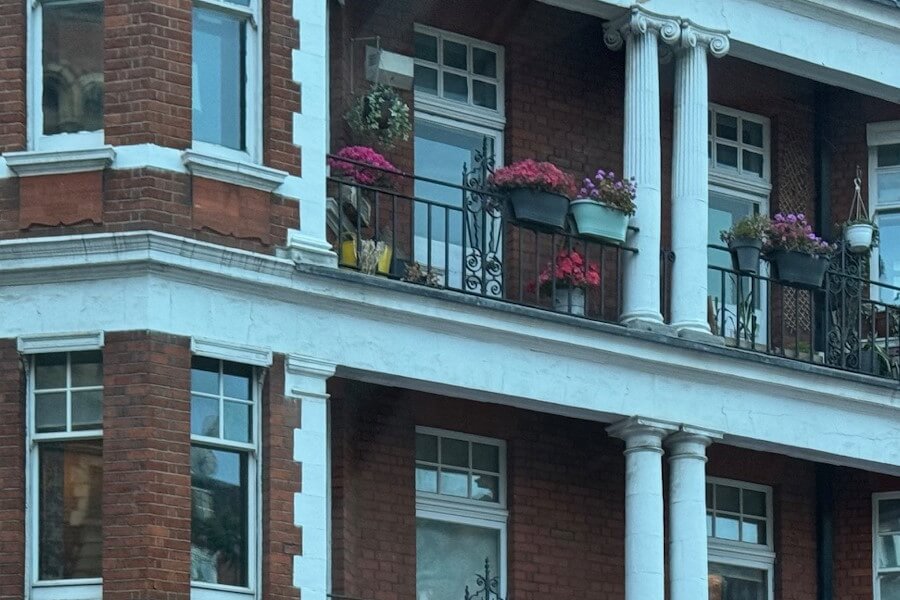
Why it’s important to know the age of your home
One major reason why it’s crucial to know the age of your home is that most buyers will want this information once they’re interested in purchasing the property. As a homeowner you want to be able to provide all the data that a buyer might seek in order to help making sure the sale happens.
Another reason why people will want to know is that, based on the age of a house, it might be a listed property. These are buildings granted a special status that puts certain prohibitions in place against making any alterations, extensions, or demolition work because of what is seen as the property’s historical, cultural, or other significant reason for protecting it. Because listed buildings can have very strong restrictions about what can, and cannot, be done to them, some homeowners might not want to buy a very old listed house that they cannot modify.
Regardless of whether your house or flat is a listed property, the age of the home will be a significant factor in whether certain buyers are interested in buying or not.
How to find out the age of your property
Thankfully, working out when your house or flat was built is relatively easy.
The starting point should always be to visit the website of the HM Land Registry, which is a non-ministerial department of the UK government overseeing the registration of home ownership throughout England and Wales. Although the HM Land Registry’s website can’t identify the specific date every building was erected, it often has enough information to help you find out the age of your home.
HM Land Registry can tell you who owns the land your house is on. If the person who developed the building was the one who sold it then it’s possible to deduce the property’s age by looking at the date of when the ownership was first transferred or leased from the developer.
If you can’t find the information you’re looking for through HM Land Registry, there are other potential ways that you might be able to secure this information.
For homeowners who have a mortgage on your house or flat, you should check your mortgage documents because these sometimes include the age of a property.
Another option that could work is to speak with your neighbours about the house because it’s possible that they might know the age of your home.
Yet another way that you can try to identify the age of your property is by visiting your local authority and asking whether they have any legal paperwork or other documents about your home. There’s a chance that these papers might identify when your home was built.
Your home could still sell even if the age isn’t what a buyer wants
After you have discovered the age of your home, you might find that this fact either attracts certain buyers or makes them less likely to give you an offer on the property.
Newly constructed homes might be an immediate deal-breaker for a buyer that is searching for a property built at least a century ago, whereas someone seeking a house or flat that was built in the 20th or 21st century could be unlikely to have any interest in an older property. But even these outcomes do not always mean such buyers will never make an offer on your home.
Indeed, there are a number of other crucial factors about your property that could keep someone interested in making an offer it, even if the home’s age isn’t what they’re looking for.
Location: This can often be the deciding issue for whether someone makes an offer to buy a house or flat or not, even if the age of the building does not match their preference. Someone could be willing to ignore when your home was constructed, if it is situated in a neighbourhood where demand for properties exceeds the number for sale, and is where they want to live.
Size and layout: These two elements can affect demand for a property, as Winfields Chartered Surveyors says. A larger home might be ideal for a family that’s looking for their next dream property and wants more space, separate from the age of the building.
Fixtures and fittings: Although some people might be looking to buy an older home, they nevertheless could still want it to have the latest appliances and other modern fixtures and fittings. If your flat or house has the newest kitchen, bathroom and other technology installed, you could find that this convinces a buyer to make an offer on the property.
Price: Depending on the asking price that you have set for your home, this could also be one of the deciding factors that someone considers before making an offer on the property or losing any interest in it. If there are similar properties for sale in the neighbourhood that are overpriced, you could attract buyers to yours, regardless of its age, if you set the sale price just right.
That’s because they are renowned for making competitive and swift offers to buy practically any leasehold or freehold home, no matter its age nor its condition, location, shape, size or type. You’ll get to enjoy a fast sale that should be completed within just a handful of weeks, and there’s the extra benefit of not being charged any commission by the quick buyer.
You can find out more about the streamlined, hassle-free and zero-stress process of selling to a quick buyer in the next section of this guide, as well as get all the information you need about the advantages and disadvantages of other strategies to seek a buyer for your property.
Selecting the best strategy for selling your property whatever its age
No matter the age of your home, when it comes to deciding how to find a buyer for it, you will often get to choose from four main options, and they are selling to a quick buyer, selling with an estate agent, selling at an auction, or selling without any help.
Below you can find detailed information about all of the options, and you will find that they have unique pros and cons based on how long they take on average, whether or not they will charge a seller commission, and other issues. For example, no-fee quick buyers like LDN Properties never make sellers pay commission, but estate agents and auctioneers will.
It’s a good idea to make a note of your main aims with selling your home, including your willingness – if any – to pay commission, your preferred sale price, and how speedily you would like to find a buyer. Then you can compare all of these elements against the specifics of the four methods listed in order to discover which one is the best match for your priorities.
Selling to a quick buyer
Quick buyer are companies such as LDN Properties that have the money in place to buy your home immediately. They do not have to wait for weeks or months to first get approved for a mortgage to afford the purchase, and this reduces the typical selling schedule to just a few short weeks, and this covers the final exchange of contracts and paying you the proceeds.
These businesses also make fair and fast offers to buy almost any freehold or leasehold flat house or other property, and they won’t lower their price just because of a home’s age, condition, location, shape, size, type, or if it has some type of ongoing problem, whether that’s structural damage, financial complications, legal fights or anything else.
For example, LDN Properties launched more than 20 years ago and since then it has made many varied purchases throughout the UK regardless of a building’s age or other factors. Some examples include listed properties, inherited homes, flats with asbestos, houses that have solar panels, properties with mortgage arrears, homes with rot problems, flats with a leaking roof, houses of multiple occupancy, properties located under noisy airport flight paths, and other situations.
Another perk of selling your home to a quick buyer is that the honest companies will never charge you any commission, so you are assured of getting the total sale proceeds. Compare that to selling a property through an estate agent or an auctioneer, as you would have to pay them commission and this will increase your costs as it will be taken out of the sale proceeds.
Selling with an estate agent
Estate agents help you avoid putting much work into selling a home, as they handle most of the vital tasks. They will first put together a listing that describes the property and includes photos of the interior and exterior, and then advertise this in their office, in local newspapers and online to get buyers interested. Next, they’ll sort out viewings to give people the chance to tour the property, then hear offers and aim to guide one through to exchanging contracts.
For putting in all of this effort, the typical estate agent will charge a seller commission within a range from 1.15 percent to 1.40 percent of a home’s final sale price. Sometimes they will charge above or below this range, so always check with individual estate agents. This fee will cause your costs to rise because it is taken out of the sale proceeds. If you want to reduce your expenses when selling, consider a no-fee quick buyer like LDN Properties or selling without any help, as these are two methods that mean you will avoid being charged commission.
Selling through an estate agent can also be a lengthy process and you should be prepared to wait for many months or even more than an entire year before you get an offer. Even then, someone can make an offer but later change their mind and cancel it. This would cause the sale to collapse, requiring that you start over with seeking a buyer and delaying a sale further. And there’s nothing you can do to penalise them for doing this unless contracts were exchanged.
Selling at an auction
Auctioneers handle the bulk of the tasks needed to find a buyer for your home, starting with creating and advertising a listing for the property, followed by hosting the auction when people can place bids on it for a limited time, and overseeing the completion of a successful auction. This can be a useful approach for owners that don’t want to put in effort with selling a home.
A significant drawback of selling this way is that you will need to pay an auctioneer commission if they manage to sell the property, as the estate agency Edward Mellor explains. An auctioneer will often set this rate at 2.5 percent of a home’s sale price, and this fee will be subtracted from the auction proceeds immediately, which will increase your overall selling expenses.
You could ask individual auctioneers if they would be willing to reduce the amount of commission that they will charge you, or to have the winning bidder pay a share of your expenses, as these are ways to help reduce your total costs. But just beware that auctioneers are not required to agree to either solution, and may charge higher than 2.5 percent.
Selling through an auction can also have a long schedule, including a waiting period of several weeks or even months between when you opt for selling this way and when the auction takes place. If your house or flat does sell, the top bidder usually has about 28 days to sign all the required papers and complete the other tasks needed to finalise the sale, delaying it further.
It’s possible that some auctioneers could be open to setting a tighter deadline than 28 days for the winning bidder to do these steps, so it’s worth inquiring about this. Note however that auctioneers don’t need to do this, and some may give buyers even more than 28 days.
Selling without any help
One of the most stressful and time-consuming ways to sell a property is doing so without any third-party help, which means that you don’t involve an estate agent or auctioneer. Instead, the burden will be on you to take care of every task needed to search for a buyer.
You’ll have to prepare a listing, advertise it, schedule viewings to give people a tour of the inside and outside of your property, hear offers and try to get one to the exchange of contracts. All of this work can’t just be done in your spare time, and that’s why you should only consider it if you have previously been successful in selling a house or flat, or if you have a suitably qualified family member or friend that is willing to assist with the selling process at no charge.
Even if you have such experience, this can still be a slow process for selling a home and it might take many months or even more than an entire year to get a genuine offer. And the person that makes such an offer might later rescind it, causing the sale to collapse, which they can do without penalty if contracts are not yet exchanged. You would then need to start again with looking for a buyer, delaying a final sale even further.
Selling on your own does have the benefit of not having to pay commission to an estate agent or an auctioneer, which reduces your expenses. But it’s possible that any saving you make as a result is cancelled out by the funds you have to spend on marketing your listing and other tasks.
As an alternative, consider selling to an honest no-fee quick buyer like LDN Properties, as you’ll still avoid commission but also be able to finalise the sale within a few short weeks.
Do you have questions about the age of your property? We have answers
When homeowners contact us about selling their properties they sometimes have questions about the age of their house or flat. These are seven of our most common queries and answers:
Because it’s one of the first questions that buyers will ask. Not only is it a point of interest for many buyers, but knowing the age of a house is also mandatory for a buyer when seeking insurance for your property that they want to buy. And the older a home, the more likely it is a listed building with restrictions on alterations or extensions.
The answer to this question depends entirely on the buyer. Some people want to buy houses that are brand new and in which they’ll be the first people to live, because they typically include the most modern fixtures and fittings. Other people might place a priority on buying a home built many years ago because they like older properties.
If you sell through an estate agent or auctioneer then the buyer will typically be an individual who might have their own preferences for whether they want an old or new home. Alternatively, if you sell to a fast property buying company they will be open to buying houses of any age, with the added bonus of charging you zero fees for selling.
Not necessarily, as there could be one or more other aspects of your property that keep a buyer interested and mean they will still make an offer on it. For example, if your house or flat is situated in a popular neighbourhood with more demand from buyers for properties than available homes, someone may make an offer even if the property’s age is not what they want.
The four usual strategies that are available for selling a home in the UK are often getting in contact with LDN Properties or another quick buyer, using the services of an estate agent, trying your luck at a property auction, or selling without any help. Carefully review what’s involved with each method because they vary in terms of their typical timeline, cost and other factors.
The standard timeline for selling any type of property, no matter how old it is, will vary based on which approach you use to find a buyer. It should only take a few short weeks if you decide to sell to LDN Properties or another quick buyer. But it can take many months or longer should you opt for selling via an estate, at a property auction, or without any assistance.
You might, if you decide to search for a buyer through an estate agent or an auctioneer, as they will charge you commission if they succeed in selling your home and exchanging contracts, and this fee will be subtracted right away from the sale proceeds. But if you sell to a zero-fee quick buyer like LDN Properties or you sell without any help, you can avoid paying such a fee.
No matter the age of your home, LDN Properties can make you a cash offer to buy it
Since launching in 2003, we have bought houses and flats ranging from brand new through to many years old. We’re always looking to chat with homeowners about potentially selling their properties to us in exchange for a fast cash offer without any fees. If this appeals to you, dial 020 7183 3022 or click the "Request Offer" button below to chat with our experts.