Quick navigation
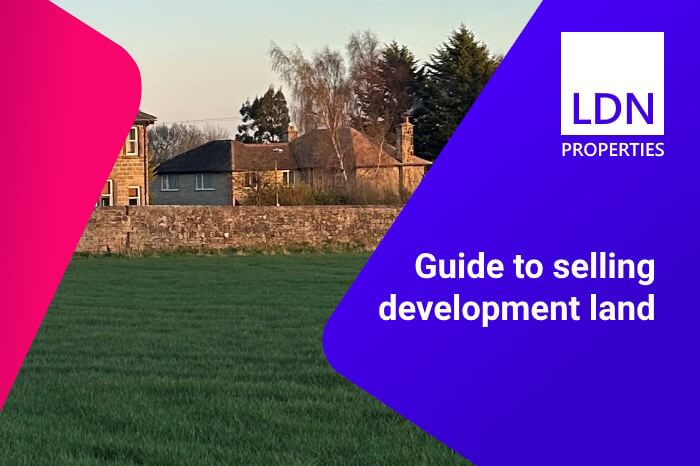
If you own development land then you own a plot of land in the UK that already has planning permission for constructing some type of new property, whether that’s commercial, residential or something else. This guide explains the various varieties of development land that you might own, and it also offers advice on how to best go about getting a fast and fair offer for it.
- The different types of development land in the UK
- Properties that might be built on development land
- Buyers that may be looking for development land
- How planning permission can affect the sale of land
- Will you pay Capital Gains tax when selling development land?
- Deciding how to sell your development land
- Top questions about selling development land
The different types of development land in the UK
Development land is typically seen as a prime investment option by several different types of buyers, because it is valuable open space where various types of property could be constructed.
In simple terms, development land can be either freehold, which means that you own it outright, or leasehold, which means that you own it for a set number of years and pay the freeholder an annual ground rent. Regardless of which type it is, it qualifies as development land if you have already sought and been approved to build some type of property on that land.
Local councils in the UK can designate how certain types of land can be used or restricted from certain types of development. The most common construction zones include:
Residential land: Although demand remains consistent for new homes throughout the UK, many plots of land are restricted from being used to build houses, flats and the like. In many cases you’re only allowed to construct new residential properties close to existing homes.
Brownfield land: This is a type of land that once housed industry, such as large industrial estates that included factories, manufacturing plants and similar facilities. Brownfields might have abandoned structures on them but they are suitable for building new properties.
Contaminated land: Certain types of industries can emit pollution either to the soil, water or air nearby and this can result in the land itself becoming contaminated. This land can be used to construct new properties, but it must first undergo a costly decontamination process.
Commercial land: Just as some land can be designated solely for building new residential property like flats or houses, there are some plots that are assigned just for the construction of new commercial property, which can include shops, offices and similar business spaces.
Greenbelt land: This is perhaps the most restrictive type of development land that you can own, because this type of plot is aimed at protecting green spaces and preventing major urban developments from encroaching too far and closely to nearby towns and villages.
Properties that might be built on development land
The UK property market always has natural fluctuations, as a recent report in The Times notes, but generally there is a consistent demand for land on which developers can build different types of properties.
As the population continues to grow in size, it results in an ongoing need for more houses, flats and commercial space to provide accommodation as well as services and amenities that communities need. Because development land is vacant land that has planning permission, it can be very attractive to builders because they essentially have a blank slate on which they can design almost any type of property that is authorised for construction of that land.
Residential property: This covers a very wide range of various properties that includes detached houses, blocks of flats, semi-detached homes and more.
Commercial property: Many different medium-scale businesses and other services qualify for this category, including schools, gyms, takeaway shops, offices and similar properties.
Industrial property: Properties covered by this category are typically heavy use facilities that might include factories, manufacturing plants and other major industrial buildings.
Buyers that may be looking for development land
When you start to look for buyers for your development land, you will find that there can be several different types of potential buyers who will have different goals in mind.
Developers: When selling, one of the primary groups of people that might be interested in is property developers, who will be thinking about constructing residential or commercial buildings on the land that they can either sell or lease out and earn regular money from. For these prospective buyers, the location of the land, its condition and the amount of space available for building will all be top factors.
Investors: If you have an investor interested in your development land they could be looking to either purchase the land and then wait and see whether it increases in value and can be sold a good profit in the future, or they could buy the land and have tentative plans to construct property at some point in the coming months or years. The potential for still building on the land distinguishes investors from quick buyers, who represent the third category of possible buyers.
Quick buyers: Similar to investors, quick property buyers will be looking to purchase the land with a view to reselling it in the future at a higher price. But although quick buyers might wait for several months or years before deciding the time is right to resell the development land, these companies focus on buying and selling and will never consider making the investment in constructing property of any type on the land.
How planning permission can affect the sale of land
In 1947, the UK government enacted the Town and Country Planning Act of 1947 which effectively established a national right to develop land, as Wikipedia notes. But this law also set the requirement that most development requires planning permission.
Local authorities are responsible for reviewing proposed construction projects and then either approving planning permission to allow the building to take place, or rejecting it, a decision that prohibits the intended construction from continuing but that can be appealed.
Development land by its definition is space where you have already applied for and received planning permission for some type of construction, whether that is residential houses or flats, commercial space like offices or shops, an industrial estate with many large facilities, and other types of property.
The process of obtaining planning permission can be time-consuming and unpredictable, as there is no guarantee that the local authority will automatically grant it. That’s why developers and other potential buyers will look favourably on development land which has already received official approval to build a property that they might be thinking about.
Will you pay Capital Gains tax when selling development land?
Whether you sell to a builder, a private investor, a quick home buying company like LDN Properties or anyone else, you might be liable to pay the UK government a share of Capital Gains Tax.
This is a levy that is imposed on the gain, or more commonly referred to as the profit, that you make when selling a tangible valuable asset like property, artwork, vehicles and many other items.
As discussed in Farmers Weekly, you should consult with a financial expert about the potential Capital Gains Tax liability you might have with the sale of your development land, because there are certain ways that they could be able to either help you eliminate the requirement to pay this tax or lower the charge significantly.
Deciding how to sell your development land
Once you are settled on the decision to sell your development land, a major issue that you’ll have to resolve is which method you would like to use for finding a buyer.
The four methods available generally are selling at an auction, selling to a quick property buyer, selling via an estate agent or selling without any assistance. You will discover that there are specific advantages linked to some of the options, such as quick buyers not requiring that you pay any fees, whereas other methods have some rather clear disadvantages, for example auctioneers or estate agents charging you fees that will increase your selling costs.
You can find out which method is suitable for your situation by first writing down your key goals with selling your development land, including your preferred sale price, whether you are willing to pay any fees, and how long you can wait until you secure a buyer. Compared these details against the information on the four methods below to find the best match for your needs.
Selling at an auction
As discussed by Homeowners Alliance, with a property auction, you’ll set a reserve price for your land, which is the cheapest price at which you concur it can sell. People will then place bids on the land, and if anyone bids at the reserve price or higher than the land is deemed sold – and this is a binding legal agreement to sell the land, so the buyer could sue to enforce it if you try to walk away from the sale.
You could always try asking individual auctioneers about possibly lowering their commission rate, or at least having the winning high bidder pay a certain share of your expenses.
There are two ways of auctioning land; the modern method and the traditional method. With the modern method the auctioneer will prepare a listing the features photographs of your development land and describes it, and advertise it for a set number of weeks or months. During this time people can bid on it 24 hours a day, seven days a week, and the top bid at the expiration of the listing is deemed the winner. With the traditional method of selling your land via auction, the listing will be advertised for many weeks or months but people will not be able to place bids until the auction is held on a specific day for a limited amount of time.
Whichever of the two approaches you decide to use, you can expect the entire process to take a very long time, so it’s not ideal for those landowners looking to sell speedily. There will be a wait of many weeks or longer from when you enter your land for sale and when the auction ends. And if the land does sell then the winning high bidder generally gets about 28 days to complete all of their required steps to finalise the purchase, such as signing legal documents.
You might want to ask individual auctioneers about the possibility of setting a shorter deadline for the buyer to complete their actions, but be aware some companies may give buyers even more time than 28 days, which would make the overall selling process even longer.
Selling to a quick property buyer
Quick property buyers are companies like LDN Properties, which was founded in 2003, that have the funds available to immediately purchase many types of property including homes, businesses and plots of land whether they have planning permission or not.
Because these companies don’t have to wait for several weeks or months to first get approval for a mortgage to pay for buying your property, this speeds up the overall process to just a few short weeks, which includes the time taken to pay you the proceeds and exchange contracts. That usually makes selling to a quick property buyer by far the most rapid selection.
A further pro of selling this way is that the trustworthy quick property buyers will never make you pay any commission, which means that you’ll get to keep the entire sale proceeds. If one of your priorities with selling your development land is paying no fees, this is a great choice.
And whereas some estate agents or auctioneers might not have expertise in buying and selling development land, quick property buyers are used to purchasing almost any age, condition, location, shape, size or type of property imaginable. LDN Properties’ long list of purchases and offers since 2003 includes development land as well as vandalised homes, properties with mortgage arrears, flats with noisy neighbours, houses with septic tanks, homes that do not comply with building regulations, penthouse flats, listed buildings, commercial properties and more.
The process of selling to a quick property buyer is also very streamlined, zero-hassle and no-stress, starting when you contact them for a free quote for purchasing your property. You should be given an initial offer within an hour and then you’ll have at least a week to think about it.
If you decide to go ahead with the initial offer, the company will then usually sent a representative to your land to assess it before they make a final offer. This should be the only viewing that you need to accept, as compared to many viewings with other ways of selling, which can be ideal if one of your major concerns is having to endure multiple viewings.
And if you accept that final offer, the quick buyer will then work swiftly with your solicitor to complete all of the required paperwork and complete the entire process within weeks.
Selling via an estate agent
A pro of using an estate agent is that it can remove a lot of your stress and workload with selling development land, because they will handle the main tasks such as producing and advertising a listing, organising viewings for people to tour the plot, and fielding offers from serious buyers, hopefully being able to take one of those offers through to the crucial exchange of contracts.
But although this can save you a lot of effort, it can still be a very slow way to sell development land and you should not be surprised if it takes more than a year to secure a buyer. Remember also that even if someone makes an offer for the land they could still cancel the purchase right up until just before the exchange of contracts, and do so without facing any penalties.
If that situation happens then you would have to start anew with trying to find a buyer for your development land, and that could add many more months to the overall timeline.
Also, estate agents will make you pay them commission in the event that they are able to secure a buyer for your development land. This will add to your overall selling expenses because their fee will be taking out of the sale proceeds. Usually, estate agents will charge their fees as a percentage of whatever price your land sells for. If you are looking to lower your selling costs then you might want to think about other methods.
You might find that some estate agents don’t have much experience with selling development land because they only really know how to sell conventional houses or flats. If that’s the case then it’s entirely possible that they might not know how to market your development land in the best way to attract potential buyers, which could make it harder to sell the property. Always ask estate agents about their past success with selling land like yours, and avoid using those companies that have no such experience because they might struggle with selling the property.
Selling without any assistance
This is a very time-consuming and stressful way to sell land because you will have the sole responsibility for creating and marketing a listing, organising viewings for potential buyers to see the development land, and hearing offers, ideally taking one through to exchanging contracts.
It’s only suggested for people that have either sold land before or that might have a qualified family member or friend who is willing to help out for free. Otherwise you risk devoting a lot of your energy and money to a process that can take at least a full year or longer.
The only notable benefit of selling on your own is that you will not have to pay commission to a third party such as an estate agent or auctioneer, which can reduce your expenses. But this cost saving may be eradicated by the money you’ll spend on advertising your listing.
Instead, you should think about contacting a quick property buyer like LDN Properties because they promise never to charge you any fees when purchasing your development land. But they also have the added advantage of being able to finalise the process of buying the land within a few short weeks, so you get the ideal combination of a rapid sale without paying any fees.
Top queries and answers about selling development land
Property owners thinking of making a quick sale may have some questions to be answered, ranging from the types of property we can buy through to selling different types of land. Here are a number of questions we’re asked when selling development land:
Your top questions when selling development land
Development land is typically a vacant and unused plot of land that already has planning permission for the construction of some type of property, whether that’s residential such as houses, flats and the like, commercial such as offices, gyms, restaurants and other businesses, or industrial, which is a category that includes large facilities like factories.
Potential buyers are much more likely to be interested in your development land because it has planning permission, and that’s because they’ll know they don’t have to go through the often very lengthy and complicated process of trying to obtain planning permission from a local authority, so you will end up saving them quite a lot of time and effort.
There are mix of development land types in the UK, including residential, commercial and industrial. Other types of land that can be developed, albeit with some restrictions in certain cases, include brownfields which are sites where there was once heavy industrial use, and greenbelt land which refers to areas that try to restrict too much urban sprawl.
You can contact LDN Properties or any other honest fast property buyer because they should be able to finalise the purchase of your development land within a handful of weeks, and this includes the time needed to exchange contracts and pay you the sale proceeds. All other common methods of selling development land will normally take at least several months.
Yes, if you get in touch with an honest no-fee quick buying company like LDN Properties then you do not have to worry about paying any commission. The same outcome will be true if you sell on your own without any third party help. But if you decide to sell the land through an auctioneer or estate agent then you’ll have to pay them commission from the sale proceeds.
You should ask individual quick buying companies if they belong to an organisation called The Property Ombudsman (TPO). This is an independent entity that publishes regulations to guard owners against scams in the quick property buying sector, and all TPO members are mandated to stick to these regulations, which should give you extra peace of mind when selling.