Quick navigation
Owners of leasehold or freehold houses that are within close proximity of an electrical substation can sometimes be much harder to sell compared to a home elsewhere. But although you might experience some additional challenges with the sale of this type of property, there are still ways that you can improve your odds of a buyer making a fair and speedy offer.
- Deciding to sell your house near an electrical substation
- Buyers’ concerns about properties located close to an electrical substation
- Potential advantages of selling a home by an electrical substation
- Steps to mitigate an electrical substation’s impact on your home
- Four methods to sell a property by an electrical substation
- Frequently asked questions about selling a home near an electrical substation
Deciding to sell your house near an electrical substation
Electrical substations are located across the UK and they are an essential part of the national power grid, acting as a point where high voltage electricity from power plants is converted into a different voltage that can be used by houses, flats, offices and many other properties.
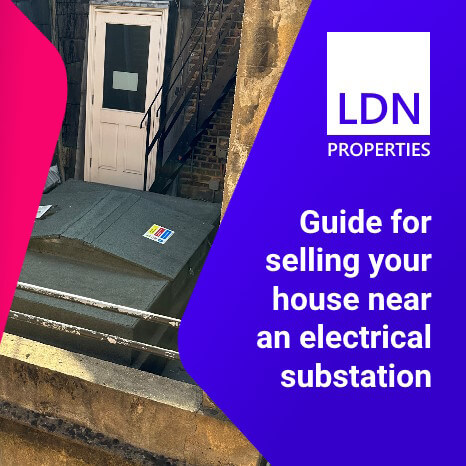
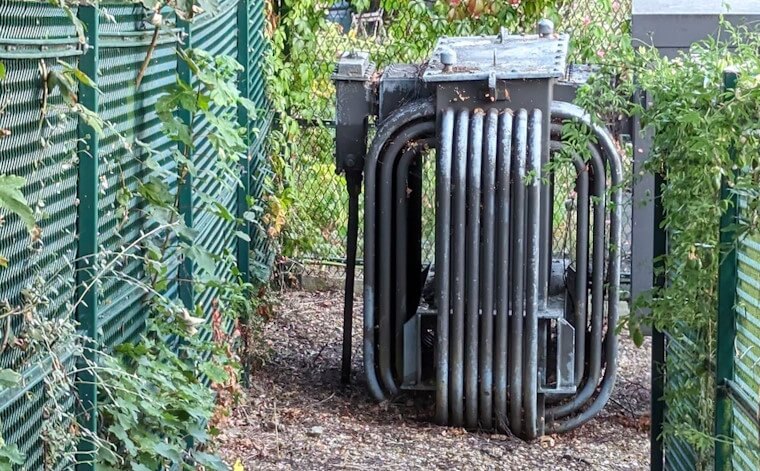
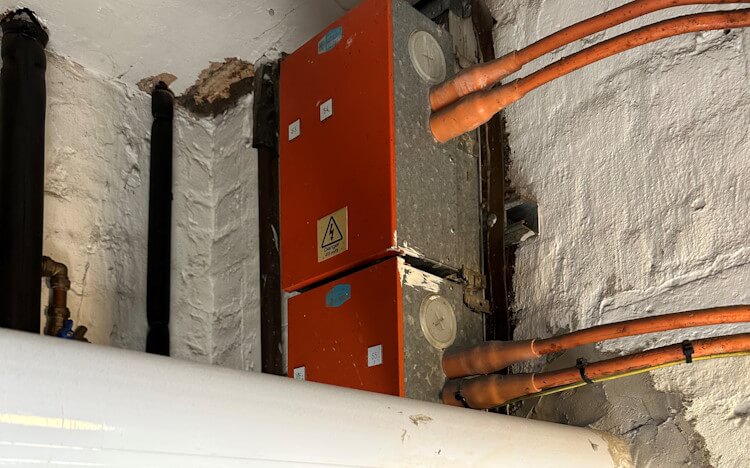
The size of an electrical substation can vary based on several factors, including the number of properties to which it supplies power and the type of equipment that is kept on site. But typically you’ll see large grey boxes that contain the necessary technology, and there could be overhead power lines leading in and out of the site, or it might transfer power with underground cables.
The perimeter around an electrical substation will usually be surrounded by a high metal fence in order to keep the public out of the site, and warning signs will be posted. That’s because interfering with an electrical substation can be very dangerous and even fatal, as the National Grid explains.
Houses located near electrical substations could be freehold, which means that you own the building and the land on which it was constructed completely. Or they could be leasehold, which means that you own the property for a predetermined number of years as set in the lease agreement, and you will also have to pay the freeholder an annual ground rent.
For those owners who are ready to sell their homes near an electrical substation, whatever the reason might be – and that can be anything from dealing with a divorce through to needing to raise funds for retirement – this guide explains the hurdles that you might face.
But it also outlines steps that you could pursue in order to still sell your home quickly and for a fair price, for example by contacting a fast buyer like LDN Properties.
Buyers’ concerns about properties located close to an electrical substation
As you’re trying to sell your leasehold or freehold house, you might find that some buyers are discouraged by its proximity to an electrical substation, for several reasons.
One of the most common concerns that buyers will raise about such a property is the fact that visually, having a large grey electrical substation in close view of a home is not appealing for many prospective owners. It’s the same reason why some houses or flats located near to power lines can also be harder to sell, because many people will prefer to not see these structures from their homes.
Another reason why you might find it more difficult to attract interest from buyers in your property is because they could have fears about health harms associated with living so closely to an electrical substation. Some people have claimed that being exposed to the electromagnetic field at the site can lead to illnesses, such as increased leukaemia risk, as the website EMFsinfo.com notes.
The UK government has established guidelines to try and address such health concerns, for example setting a minimum distance at which an electrical substation must be from the nearest residential property, which is designed in part to address these potential fears.
Even with these guidelines, and no definitive scientific connection between illnesses and living near an electrical substation, this issue might still be a dealbreaker for some buyers.
Some potential buyers could also be wary about making an offer on your property because the electrical substation might generate a significant amount of noise that can be heard inside your home, even when the doors and windows are closed. Noise pollution may be a dealbreaker for a few prospective buyers, particularly if they won’t be able to afford soundproofing the home.
Potential advantages of selling a home by an electrical substation
Although there are distinct drawbacks involved with trying to sell a house close to an electrical substation, you will find that some buyers will see a few benefits with the situation. Talking these points up with buyers can be a good strategy to overcome any concerns that they might have.
One of the main advantages of owning a property close to an electrical substation is that you should enjoy a reliable power supply, even during blackouts or other electricity supply problems. This factor alone can make your home seem more valuable to certain buyers.
A related potential benefit is that your electricity bills could be lower compared to residential properties situated further away, because the connection to the substation is more efficient. Whilst this is unlikely to be a deciding factor for many buyers, it’s nevertheless a welcome aspect of the house’s location that you can tell people who are interested in your home.
Electrical substations can be found throughout the UK, as Wikipedia shows, and some of these facilities are situated close to areas where demand for properties is high. If your house is located in a place where the number of buyers seeking homes exceeds the available properties, then a buyer could be willing to overlook a house’s proximity to an electrical substation.
Steps to mitigate an electrical substation’s impact on your home
If you are concerned that your leasehold or freehold house’s close proximity to an electrical substation may deter buyers, there are some steps to consider for mitigating this situation.
One solution could be to plant tall bushes and trees that will block out the view of the electrical substation, if you have a garden or other type of green space where you can do this. Just beware that planting a sufficient amount of bushes or trees could become quite expensive and take a long time, so this may not be a good idea if you’re trying to sell your home swiftly.
Another possible mitigation measure is investing in soundproofing at your property, if the noise generated by the electrical substation is one of the main reasons buyers are turned off, as the EMF Inspections. website says. But installing soundproofing at your house can also be a lengthy and costly process, so may not be suitable for your selling situation.
The advantage of pursuing mitigation measures before attempting to sell your home is that it could eliminate the scenic or noise concerns that buyers might have about the property. Those concerns could lead buyers to lower their offers or even lose interest in the house altogether. Having mitigation measures in place is one way to avoid either of those outcomes.
But many homeowners will not have the time, the funds or the interest in undertaking such work before trying to sell their property. If you find yourself in such a situation, be assured that you should still be able to find a buyer that is willing to make a swift and competitive offer.
One solution is to get in touch with a quick home buying company, like LDN Properties, because they are experts at making fair and speedy offers to purchase almost any category of leasehold or freehold house, flat or other residential property. And they will give you a competitive offer regardless of the fact that your house is built near to an electrical substation, along with the benefit of being able to finalise the purchase of the property within a few short weeks.
Four methods to sell a property by an electrical substation
One of the most important decisions that you will have to make when selling your leasehold or freehold house near to an electrical substation is which method you’d like to use for finding a buyer, whether that’s selling with an estate agent, selling at a property auction, selling without any assistance or selling to a quick home buying company such as LDN Properties.
You will discover that there are unique pros and cons linked to each of the potential selling methods, for example you can avoid paying any commission when you sell your house to a no-fee quick buyer. But you might face more than an entire year of waiting before you’re able to secure a buyer when suing an estate agent in order to sell your house.
To help in identifying which of the approaches might be most suitable for your needs, write down all of your main aims with selling, such as your preferred sale price, the amount of time you are willing to wait to find a buyer, and the amount of fees, if any, you are willing to pay. You should then compare all of these important details against the specifics of the four methods as outlined below, and this should help in showing you which method best matches your situation.
Selling with an estate agent
Estate agents can reduce your stress when selling because they will take care of most of the tasks involved with finding a buyer. This starts with preparing a listing, which will feature photographs of your house and describe the interior and exterior, and then advertising this in their office, online and in local newspapers. They will also be responsible for organising viewings so that potential buyers can tour your home, and fielding offers from buyers.
For doing this work, estate agents will usually charge commission within a range from 1.15 percent to 1.40 percent of whatever price you’re able to get for your home. This will increase your selling expenses because the fee will be subtracted from the final sale proceeds.
You might find that selling through an estate agent is a very slow process, and you should not be surprised if it takes more than a year before you get a serious offer. Remember also that a buyer can make an offer but then rescind it, without any penalty, right up until contracts are exchanged. If this unfortunate outcome occurs, it can significantly extend your overall timeline with selling your house, because you’ll have to begin again with trying to find a buyer.
Selling at a property auction
Another method for selling your house that’s close to an electrical substation is through an auction. You’ll choose a reserve price, which is the lowest price at which you’re willing to sell your home, and then people will place bids of increasing value to buy the property.
You may only get a single bid at the reserve price, and this is considered a binding legal agreement to sell your house. That’s why you should ensure you select a reserve price that is likely to generate some profit from the sale even after paying the auctioneer’s fees.
Typically, auction houses will charge commission at a rate of 2.5 percent of the price at which your property sells, and this is taken immediately out of the final sale proceeds. With certain auctioneers you might be able to negotiate a lower fee, or have the winning high bidder on your property pay some of your expenses, so always check whether this could be possible.
Selling your house through an auction can take a long time, starting with a delay of many weeks or longer between when you decide to sell the property and when the auction happens. And then if your home sells at the auction, the buyer will usually have about a month to complete all of their required actions to complete the sale, such as signing the legal paperwork.
Some auctioneers could be willing to set a shorter deadline for the buyer to do these tasks, so it’s worth asking, but be aware that other auction houses may give the buyer even more time, so this might not be a great choice for selling if you’re trying to do so as quickly as feasible.
Selling without any assistance
Some homeowners attempt to sell their property without any help, which means they do not use the services of an auctioneer or estate agent when trying to find a potential buyer.
But this can be a very stressful process, because you will have to handle every step of the sale, starting with producing and advertising a listing for your property, then scheduling viewings to show people around the house, and hearing any offers from serious buyers. It’s a significant undertaking and not something that you can simply defer to doing in your spare time.
Selling without any assistance can take a very long time, and it may take more than an entire year before you get a genuine offer from a buyer. Remember also that even if someone makes an offer, they can cancel it without facing any penalties up until contracts are exchanged. Should that happen, you’ll have to start over with finding a buyer, delaying the sale further.
One of the only obvious advantages of using this method for selling a home is that you will not need to pay any fees to an auctioneer or estate agent, which will reduce your costs. But the money that you have to spend on advertising your listing could eliminate this saving.
As an alternative, you could sell your house to an honest zero-fee quick buyer like LDN Properties. Not only will they not charge you any commission, but you’ll also get a much speedier sale, because they can complete the process within a few short weeks.
Selling to a quick home buying company
Or you could consider selling your house near an electrical substation to a quick home buying company, like LDN Properties, which was launched more than 15 years ago. These businesses have the funds available to immediately purchase homes, without having to wait for many weeks or even months to win approval for a mortgage to pay for the transaction.
The result is that they can usually complete the timeline for buying almost any home within a few short weeks, and that includes paying owners the proceeds and exchanging contracts. This is generally much speedier than any of the three other options for selling a property.
Honest quick home buyers will also never make homeowners pay any commission, which means that you can keep your overall selling expenses low. Compare that to estate agents or auctioneers, who will charge fees that will be deducted from your eventual sale proceeds.
Quick home buyers are also renowned for making competitive offers to purchase practically any type of property, regardless of its age, condition, location, shape or size.
As well as houses located near to electrical substations, LDN Properties has purchased and made offers on a broad range of leasehold and freehold buildings throughout the UK that also includes flats with high levels of radon, properties without planning permission, homes where the owner cannot find the title deeds or other important documents, houses with a flat roof, properties with bad wiring, flats without a lift, houses that have a leak, student properties, houses with infestations and other examples.
It’s also incredibly easy to sell your home to a quick buyer, and it starts when you contact them about selling your property. They should be able to make an initial purchase price offer within the first hour of talking with you, and you’ll then have at least a full week to think about it.
Should you accept that initial offer, a representative from the quick buying company will often then visit your property in order to inspect the interior and exterior of it before they make a final offer. This is usually the only viewing you’ll need to have, compared to the potential for dozens of viewings when selling your home through other methods, particularly with an estate agent.
And if you agree with that final offer, the quick buyer will then move swiftly to work with your solicitor or other legal representative in order to sign all of the relevant documents, exchange contracts and finalise the purchase of your property, all within just a handful of weeks.
For your additional peace of mind, you can ask individual quick buyers if they belong to The Property Ombudsman (TPO). This is an independent entity that publishes policies which shield homeowners from fraud in the quick buying industry, and all true TPO members must follow these regulations. That’s why you should only ever sell your home to a proven TPO member, because a company that does not belong to the organisation may be a scam business.
You can check the membership status of any quick buying company by visiting TPO’s website, clicking on the tab labelled "Find a Member" on the website’s main page, and then typing in the name of a specific business. If they are truly registered with TPO then you will next be shown their membership details, and if they’re not registered then you will get zero results.
Top queries and answers about selling a house near an electrical substation
If you are a homeowners thinking of selling quickly you may have a few questions for us, ranging from the work to be done before selling through to selling a home near power lines. Here are some of the questions we’ve been asked when selling near an electrical substation:
Your top questions when selling a house near an electrical substation
Across the UK, electrical substations are an essential part of the power grid, and they are used to convert high voltage electricity from power stations into something that residential properties and other buildings can use. Because they play such a central role in the power grid, there are many houses, flats and other properties that are located close to these facilities.
It can complicate the sale of a leasehold or freehold house for a number of reasons, starting with the fact that some prospective buyers might not want to own a property where they can see a large electrical substation from inside their home. Other reasons why someone may dislike your property include concerns about electromagnetic and noise pollution from the substation.
Yes, properties that are constructed close to an electrical substation are generally considered to have a much more reliable power supply than homes located further away. Similarly, a house that is located near to an electrical substation could also have lower power bills than a property elsewhere, because it has a more efficient connection to the electric grid.
There are some steps that you could consider to reduce the impact of an electrical substation on your home. For example, planting tall trees and bushes can help with blocking out the view of the facility from your property. And if the substation generates a lot of noise, installing soundproofing at your home could be one way to address this issue before selling.
If you sell your property through an estate agent or an auctioneer, you will have to pay them commission for the work that they doing in finding a buyer, and this will be subtracted from your eventual property sale proceeds. But if you sell to a zero-fee quick home buying company or you sell without any third party help, then you will not have to pay any commission.
The speediest way that you sell almost any type of home is by contacting LDN Properties or another quick buyer, because they should be able to complete the entire process of purchasing your house, including exchanging contracts and paying you the proceeds, in a few short weeks. By contrast, it can take many months to sell via an estate agent, auctioneer or on your own.
You should ask individual quick home buyers if they are registered with a third party entity known as The Property Ombudsman (TPO). This organisation writes rules, which all TPO members like LDN Properties must follow, that guard homeowners against scams in the quick buying industry, which should give you extra peace of mind when selling your house.