Quick navigation
If you have a home that is situated near to a mineshaft, you might discover that this creates some additional hurdles with trying to generate interest from potential buyers. This guide provides useful advice on how to address concerns that people may have about this type of property, so that you can better attract a competitively priced and speedy offer.
- Finding out if your property is located near a mineshaft
- How a mineshaft could complicate the sale of your home
- Mortgage problems for houses by a mineshaft
- Do you have to disclose a mineshaft near your property?
- Four options for selling a home near a mineshaft
- Selling a home by a mineshaft: Frequently asked questions
Finding out if your property is located near a mineshaft
Mining has a strong association with the UK, starting with tin and copper mining in the Bronze Age to the more recent history of the coal mining industry. And mining isn’t localised to a single location because there are deposits of the various minerals found across the country.
And because mines are found in many areas, this increases the prospects that your freehold or leasehold property could be situated within a short distance of a mineshaft – whether that’s a mine that has since been closed, or whether that’s a mine that is still in operation.
Wikipedia suggests there are still at least 2,000 active mines throughout the UK, including quarries and offshore drilling, so when this is combined with the large number of closed mines, it suggests that many properties could be located close to a mineshaft, with implications when it’s time to sell those homes.
If you are own a house or flat that is located near to a mineshaft, this guide is useful in explaining the potential problems that you might experience with trying to sell this type of property. There are usually no legal reasons causing a problem when selling but some issues can include subsidence, soil erosion and sinkholes, contamination of the nearby surface water and other drawbacks that could discourage some buyers.
But this guide also offers important tips on steps you can consider taking to boost your chances for a buyer making a speedy and fair offer without making any changes to your home before you sell it.
How a mineshaft could complicate the sale of your home
If your house or flat is located within the vicinity of a mineshaft, this raises potential questions about whether it could cause structural problems at your property in the future.
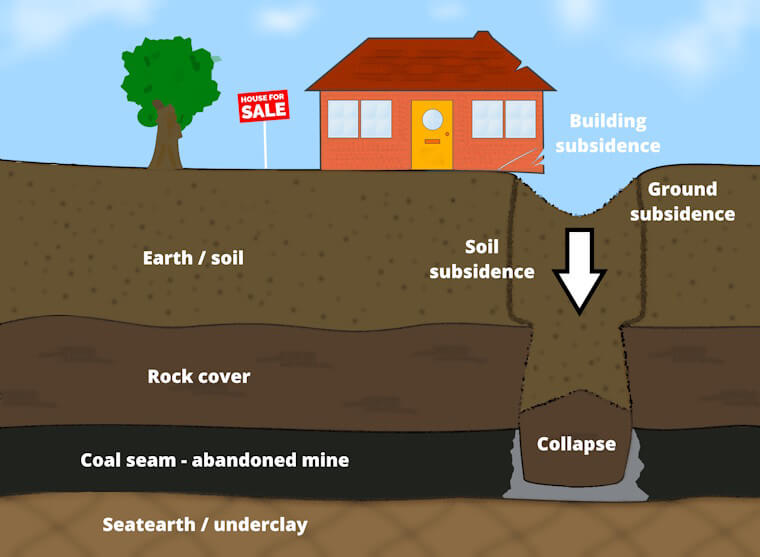
With rare exceptions, mineshafts do not create major physical issues for nearby homes, but the risk is still there and it’s something that buyers will likely worry about. And the problems stem from the fact that mines are underground and could destabilise the ground nearby.
In particular, some closed mineshafts have been linked to causing soil erosion and subsidence at nearby properties.
Even decades after a mine was last used, there have been reported instances of the mineshaft collapsing as the materials used to originally construct it start to degrade. This in turn poses the danger of damage to properties that are located within close distance of the mineshaft, with another threat being the potential for flooding if a mineshaft collapses completely.
There’s also the chance that environmental releases a nearby mineshaft could contaminate the air, groundwater and surface water by your property, which is another concern for buyers.
If degradation at a disused mineshaft near your house has caused subsidence or other damage to your home, you might be able to get some compensation for it, as the UK government’s website notes.
But even if damage has not already happened at your property, the fact that it’s situated so close to a mineshaft can cause many prospective buyers to lose interest entirely.
Mortgage problems for houses by a mineshaft
An additional barrier that you could face with selling your property near a mineshaft is that a mortgage lender might not approve a buyer’s loan to fund the purchase of the home.
A buyer’s chances of getting approved for a mortgage for the house could drop if it’s located fewer than 20 meters from a mineshaft, as the Loan Corp website says.
With a mortgage, the lender always has the right to try to repossess a property if a buyer defaults on their monthly loan repayments, and the lender can then try to recoup the outstanding amount of debt from the resale of the home. But mortgage providers may fear that it’ll be hard to attract a buyer to a property close to a mineshaft in the event that they have to repossess and sell it, and this could be sufficient grounds to deny a loan application.
Mortgage lenders may have concerns about the potential future damage that the mineshaft could cause to your property through soil erosion, subsidence and other issues. And if a buyer can’t get a loan to afford the purchase, that means the sale will not happen.
Thankfully, you don’t need to rely on buyers obtaining a mortgage to make an offer on your home because alternative options exist. One approach could be contacting a quick buyer such as LDN Properties, because they have plenty of experience making fair and swift offers to purchase almost any home no matter its age, condition, location, shape, size or type.
You’re also guaranteed a speedy sale because the timeline should only be a few short weeks, and a further advantage is that you will not be required to pay any commission, so overall using a quick buyer can be the best way to get a fast, no-fee and zero-hassle sale of your home.
Do you have to disclose a mineshaft near your property?
If you have a mineshaft close to your house and are concerned that this fact may make it harder to attract buyers, you could be wondering whether you can withhold it when trying to sell – but the answer is that no, you cannot conceal it and you must disclose to potential buyers.
Part of the process of selling a home is conveyancing, when a legal professional collects the extensive paperwork necessary for the sale of your property. During this period, you will be asked various questions about your home, including any potential problems, and this is when you must disclose the mineshaft.
No matter how small the possibility that the mineshaft could cause structural issues at your property, you’re still required by law to tell buyers about it. That’s because they deserve to have the fullest amount of information when deciding whether to make an offer on your house, and once they learn about a mineshaft they could be the fact that causes them to lose interest.
If you withhold the existence of a mineshaft from a buyer and they discover it after purchasing your property, they could sue you and you might end up facing significant penalties.
For those owners that do not know whether there is a mineshaft near their property, there are steps you can take to find out before you try to sell, as Inside Conveyancing explains, by contacting a government department known as the Coal Authority.
You can search the Coal Authority’s website for free to see if your property might be affected by a mineshaft and whether you should order a coal mining report. For a small fee, starting at £25, you can request a report that will tell you about any mine entries that are within 20 metres of the boundaries of your property, any coal mine gas emissions, and other hazards.
Note that this report is specific to coal mines, and you may have to research other methods to find out about the existence of mines used for other minerals near your home.
Four options for selling a home near a mineshaft
One of the final stages of selling your house near a mineshaft is choosing how to search for a buyer. The typical options available are selling to a quick home buyer like LDN Properties, selling at a property auction, selling on your own or selling with an estate agent.
There are pros and cons linked with each of the selling methods, for example you might have to wait more than a year to find a buyer when you try to sell without any assistance. Or you could enjoy the benefit of not having to pay fees when you sell to a zero-commission quick buyer.
Consider noting down your main priorities with the sale of your home, including whether you are open to paying any commission, your ideal asking price and how long you are willing to wait to sell. Then compare these factors against the details of the four selling methods outlined below, and this should help you to more easily identify the most suitable match for your needs.
Selling to a quick home buyer
If you want to avoid paying any commission when selling your home, contact a no-fee quick buyer such as LDN Properties, because you’re guaranteed to get the full sale proceeds. This can be a great way to reduce your costs compared to selling via an auctioneer or estate agent.
As their name implies, quick buyers are also perhaps the fastest way to sell any type of home, because the schedule should only take a few weeks, and this includes the last steps of paying you the proceeds and exchanging contracts. You will find this is typically must speedier than the three other approaches for selling, which can all take several months at least to complete.
LDN Properties’ long list of purchases and offers made throughout the UK includes not only houses near a mineshaft but also flats without a Leasehold Property Enquiries form, houses of multiple occupancy, properties with solar panels, converted flats, homes with spray foam insulation, bungalows, mixed-use properties, houses that have council tax arrears, homes where there is a boundary dispute, flats situated close to a petrol station, inherited retirement houses, tenanted properties, flats with high service charges, properties that have legal problems and other scenarios.
Selling to a quick buyer is one of the most stress-free, streamlined and no-hassle ways to sell a property. It begins when you contact the company about selling your home and within an hour you should get a tentative offer on your property, with at least a week to think about it.
Then the quick buyer will send one of their team members to your home so that they can assess it in person, before they make a final offer. This is the only type of viewing you will need to agree to, compared to potentially dozens of viewings when selling through other options.
And the final step is when the quick buyer makes a final offer – if you accept it, they move speedily to work with your solicitor or other legal professional on signing all of the relevant papers and completing the sale. The entire process should only take a few short weeks, and this timeline includes the last steps of exchanging contracts and paying you the proceeds.
For your additional peace of mind, you can also ask individual quick buyers if they belong to The Property Ombudsman (TPO), which is an independent organisation that writes rules to guard homeowners against fraud in the quick buying industry. All TPO members, such as LDN Properties, must follow these rules, which offers you more protection when selling.
It’s fast, free and simple to check the TPO status of a quick buyer – just visit the organisation’s website, click on the "Find a Member" tab and type in the name of a company. If they are truly a member then you’ll be shown their full membership details, and if they are not a member you’ll get no results. Don’t sell your home to a non-TPO member because it may be a scam.
Selling at a property auction
Or you could try your luck with a property auction, where you will choose a reserve price – the lowest price at which you agree to sell your home – and then people can place bids on it of ever-increasing value. The top bid at the end of the auction is the winner and buyer.
You might only get a single bid at the reserve price, and this is a binding legal agreement to sell your property that the buyer can sue you to enforce if you try to back out of it. That’s why it’s vital to choose a reserve price that should make a profit even after you pay the auctioneer’s fee, which is usually charged at 2.5 percent of your house or flat’s eventual sale price.
You could find that some auctioneers may be willing to have the buyer pay some of your costs, or they might reduce their rate of commission, so it’s worth asking about these options. Just beware that other auctioneers could charge an even higher rate than 2.5 percent.
The auctioneer charges this fee to cover their work in selling your property, including the creation and marketing of a listing that describes the home and features photographs of the interior and exterior, along with hosting the auction and overseeing a successful sale.
But it can be a slow way to sell your home, with lots of waiting – including many weeks or longer between when you select this method and when the auction happens. If your property manages to sell at the auction, the buyer then has an average of a month to sign their legal papers and complete the other steps necessary to formalise the sale of your property to them.
There is also the chance that you will not receive any bids on your home at the auction, in which case it goes unsold. As a result, you would have to start again with the process of trying to find a buyer, and this could potentially add many more weeks or months to your selling timeline.
Selling on your own
This selling option puts a lot of pressure on the homeowner because you will have to take care of all the steps involved with attracting buyers, including the listing, advertising it, viewings and hearing offers, so it can be by far the most stressful of the four choices.
One of the only obvious advantages of selling this way is that you will not have to pay an estate agent or auctioneer any commission, so that helps with reducing your expenses. But the funds that you have to spend on the various selling steps may cancel out this saving.
And it can take more than an entire year to sell your home this way, particularly if you have no experience with selling a property near a mineshaft, or you do not have a suitability qualified family member or friend that is willing to help for free with the selling process.
Someone could also make a genuine offer to buy your house but later change their mind and cancel the offer, which they can do without facing any penalties, if you have not already exchanged contracts. This would extend your selling schedule much further because you would then have to start anew with the process of trying to find a buyer for your property.
For a stress-free but still zero-commission alternative, consider selling your home to a quick buyer like LDN Properties. These companies promise to never charge owners any fees when purchasing their homes, but you’ll also get an additional benefit of a much more rapid sale. Quick buyers can usually complete the purchase of any property within a handful of weeks, so you will only get to enjoy a no-fee sale but on a much faster timeline than selling on your own.
Selling with an estate agent
You will have minimal work to do when selling this way, because the estate agent is responsible for all the tasks, from the initial creation and advertising of a listing through to scheduling viewings and hearing offers from buyers, hopefully taking one to exchange of contracts.
But for putting in all of this effort, the typical estate agent will charge you commission at a range anywhere from 1.15 percent to 1.40 percent of your home’s final sale price. And this will add to your expenses because the fee is deducted right away from the sale proceeds. If your top aim with selling is to keep your costs low, you may want to review some other options.
This also is not the ideal choice for homeowners who are looking to sell in a hurry, because selling via an estate agent can take many months and even more than an entire year in certain cases. Even if you get an offer, the buyer could then rescind it and make the sale fall apart, delaying a sale further because you’d need to begin again with seeking a buyer. And the person that made the offer can do this without penalty if you haven’t yet exchanged contracts.
Some estate agents may also have never sold a house or flat near a mineshaft before, which suggests that they could find it difficult to get buyers interested in your property. You should ask estate agents if they’ve ever managed to sell a home like yours before and avoid using the services of a company with no such experience, as they may struggle to sell yours.
Top queries and answers about selling a house near a mineshaft
If you have questions about selling a house close to a mineshaft, here you’ll see LDN Properties’ answers to common queries that we get on this topic from owners:
Your top questions when selling a house near a mineshaft
There are believed to be about 2,000 active mines throughout the UK, and many more that have since been shut down, for example coal mines closed in the 20th century. Your property could be located close to an active or inactive mineshaft, with some closer than 20 meters although the mineshaft can be further away and still considered to be near your house.
Whether a mineshaft is still active or long-closed near your house, there are several structural dangers that it could create for the property. There’s the risk that a mineshaft could collapse as the materials used to build it start to degrade, creating the potential for soil erosion and subsidence affecting your home, and this may be a dealbreaker for many potential buyers.
Possibly, but there’s no guarantee that a prospective buyer will be able to secure approval for a mortgage to purchase your house. Many home loan providers might worry that the potential for future structural damage to the home linked to the mineshaft could make it impossible for them to resell the property if needed, should the buyer end up defaulting on the mortgage.
Yes, by law you must disclose the presence of a mineshaft near your property if you aware of it. Deliberately failing to tell potential buyers about this aspect of the home could result in you facing a legal challenge and penalties once the new owner discovers it. A potential buyer’s conveyancer is also likely to uncover the existence of the mineshaft as part of their work.
The four standard choices for selling a property include quick buyers such as LDN Properties, trying your luck with an auction, selling on your own or selling with an estate agent. You will find that there are distinct advantages and disadvantages associated with each of these options, depending on your particular needs on costs, how quickly you want to sell, and more.
The fastest option for selling almost any category of home will usually be getting in touch with a quick buyer like LDN Properties, as the entire timeline should only be a handful of weeks, and this includes exchanging contracts and paying you the proceeds. But selling your home through an estate agent, an auctioneer or without any assistance might take at least many months.
You could sell your home without any assistance, or you could contact LDN Properties or another legitimate quick buyer because these companies never charge fees when purchasing homes, so sellers are ensured of receiving the full proceeds from the sale. But you will need to pay commission if you decide to use the services of a property auctioneer or estate agent.