How title deeds might affect the sale of your property
Selling a property can often involve a lot of paperwork, and that includes title deeds, which document who is the legal owner of a particular property and any relevant land.
Title deeds are kept by the HM Land Registry, which is a non-ministerial UK government department that registers such ownership for properties in England and Wales. Homes that have title deeds are therefore known as registered properties, and you are required to register a house or flat if you buy it, inherit it, are gifted it, or got in exchange for another property.
Although the Land Registry maintains a scan of the title deeds for newly registered properties, the original title deeds are usually given back to your conveyancer or solicitor after this is done, as Haart’s website says.
Therefore, when you’re preparing to sell your property, one early step that you need to take is assessing whether your home is registered or unregistered. And a complication that can arise happens if you have a registered property but find you have lost the title deeds.
This guide explains the potential hurdles that missing title deeds can create for a homeowner trying to sell their property, and also outlines some solutions – including advice on the various ways that you could sell your house or flat, with options that are fast and don’t charge any fees.
Is your property title registered?
If your property is registered, you won’t need to worry about lost title deeds as Land Registry will hold the necessary official copies of all the documents required to sell a property.
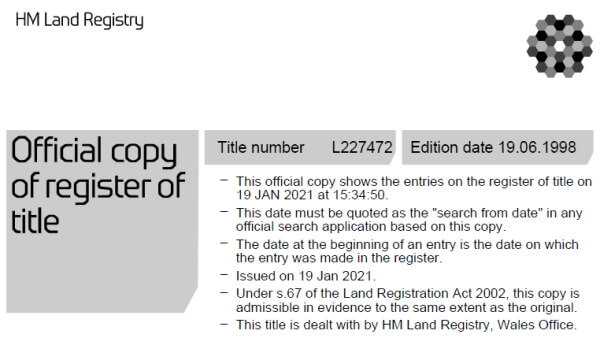
If you have lost your title deeds it is not impossible to sell your house, although there are several steps you will need to go through in order to re-construct the title.
What options are available for finding missing deeds?
If you have had a mortgage on the property in the past, you might be able to contact the lending company to see if they are in possession of the deeds. Often lenders will take the deeds for the duration of the mortgage, and it’s possible through oversight they neglected to give them back to you once the loan was paid off. Getting the documents back can be as simple as giving the lending company a call. And the same applies if you currently have a mortgage with a firm, because you can get in touch with them to ask whether they have your home’s deeds.
Before selling your home
If your property is not registered with HM Land Registry and you, your lawyer or mortgage company are in possession of your deeds, you can go through the process of registering the house or flat before selling your property.
If your deeds are missing, you can make a reconstitution of title with HM Land Registry, a process that in effect creates new deeds listing you as the owner. This can take a long time and is not ideal for homeowners who might be looking to sell their property quickly.
There are many homeowners that could experience such a scenario – where their title deeds are missing but they are trying to sell their house or flat on as fast a schedule as possible. This might make these sellers worried that not having the title deeds will prevent a fast sale.
One significant complication that can arise is that many buyers might be unable to get a mortgage to afford the purchase of your property because you don’t have the title deeds. When a home loan provider approves a mortgage, the borrower agrees to repay it on a monthly basis plus interest. If they default on these repayments for an extended amount of time, the lender could move to force the sale of the home in order to recoup their debt owed from the proceeds.
Yet many mortgage companies might consider a home without title deeds to be a risky purchase, and they could worry that the property might have some undisclosed problems that will make reselling it to recover the outstanding debt impossible if that need arises.
As Ringrose Law notes, taking out a loan to purchase a property without title deeds is not impossible, but it could be prohibitively expensive. And if a buyer is relying on the mortgage in order to fund the purchase of your house or flat, this will inevitably mean that they won’t be able to follow through with the transaction.
But rest assured that you will still be able to sell your property speedily even without title deeds, depending on the approach that you end up taking to find a buyer.
One such solution is contacting LDN Properties or another honest quick home buying company, because they are known for making fast and fair offers to buy practically any property, even if it has a potentially negative issue that deters other buyers, such as lacking title deeds. The selling timeline should be a handful of weeks and you won’t have to pay any commission.
Keep reading this guide to learn more about the process of selling your property without title deeds to a quick home buyer, as well as other choices for trying to find a buyer.
What are your options for selling a property with or without title deeds?
Whether or not your home is unregistered or registered, and whether you have the title deeds or have lost them and can’t replace them before selling the property, a significant decision you will have to make it selecting which method to use in order to find a buyer.
The typical choices are selling to a quick home buyer, selling at an auction, selling with an estate agent, or selling without any assistance. There are pluses and minuses to all four of these approaches based on important issues such as how long they take, how much commission they might charge, and other factors to consider before choosing.
It might be helpful to write down your top goals with selling, which may include your preferred selling price, whether you are willing to pay commission if necessary, and how fast you would like to secure a buyer. Then you should compare these aims against the details of the four selling strategies below, as this will narrow the choices down to your best match.
Selling to a quick home buyer
Often the fastest way to sell a home is by contacting a quick buyer like LDN Properties, as they should take a few short weeks to complete the purchase, exchange contracts and pay you the full proceeds. They are able to move so rapidly because they already have the funds to buy your home, without needing to wait weeks or months to get a mortgage for the purchase.
Another great perk of selling your flat or house to a quick buyer is that the legitimate companies will never make you pay any commission, which helps with lowering you costs. For many sellers that is favourable compared to selling through an auctioneer or an estate agent, as those two approaches will require that you pay commission that is deducted from the sale proceeds.
If you have misplaced your title deeds, a quick buyer is also a wise choice because they are experts are making fair and speedy offers on all types of leasehold and freehold properties even with potential problems such as no title deeds. You’re guaranteed to get a competitive price for your property regardless of its age, condition, location, shape, size, and type.
For example, LDN Properties has been buying and making offers for homes throughout the UK since 2003, with some of the varied examples including houses without a kitchen or bathroom, penthouse flats, uninsurable properties, eco homes, houses of multiple occupancy, flats that have a short lease remaining, mixed-use properties, homes with spray foam insulation, houses that have dry rot, and many other scenarios.
Selling at an auction
Or you might want to attempt an auction, where people will get the chance to place bids of increasing value on your property, with the top bid at the time the auction ends being deemed the winner and the person buying your home. Bids start at the reserve price, which is the lowest price you can accept your home selling, and you agree this with the auctioneer in advance.
It’s vital that you choose a reserve price that is calculated to generate a profit from the sale, after deducting the commission that the auctioneer will charge. This is usually 2.5 percent of your home’s final sale price, although the exact rate could be lower or higher. Failing to choose a suitable reserve price risks selling your home a loss or only just breaking even on the sale.
Auctioneers charge commission to cover their cost of selling your property, which begins with putting together a listing that describes your home and features photographs of the interior and exterior, followed by advertising this and promoting the auction to get buyers interested, then hosting the auction itself and overseeing the completion of a successful sale.
These steps take a long time and you’ll have plenty of waiting, including many weeks or longer between when you choose this method and when the auction takes place. Should your home sell, the winning bidder will then have about 28 days to sign all of the mandatory legal documents and finish the other tasks that are necessary to complete the sale.
Selling with an estate agent
Selling your property using the services of an estate agent can be a good choice if you want to put in minimal effort with seeking a buyer, as that will be their responsibility. They’ll create and advertise a listing for your home and then arrange viewings to give anyone interested a tour of the flat or house, then they’ll hear offers and try to get on to the exchange of contracts.
Whilst this approach saves you a lot of work, it can also be quite expensive because you will need to pay commission to the estate agent if they are able to sell your home. This is often charged at rate anywhere from 1.15 percent to 1.40 percent of a property’s final sale price, and the fee will increase your total expenses as it will be subtracted right away from the proceeds.
It’s also not an ideal choice if you’re trying to sell on a fast timeline because it could take a number of months or even more than an entire year to find a buyer. If you have identified selling on the speediest schedule feasible as one of your priorities then you may want to review faster ways of selling your home – like selling to a quick buyer, which will only take a few weeks.
And there’s the potential danger that someone can make a valid offer on your home but then for whatever reason change their mind and rescind the offer. As this would make the sale collapse, you will then have to restart the search for another buyer, delaying a sale even further.
Selling without any assistance
Yet another option for selling your home is to do so on your own, putting the onus on you to handle all of the tasks required to find a buyer. You will need to make and advertise a listing, schedule viewings and give potential buyers tours of your flat or house, then hear offers from serious buyers and aim to get one of them to the last stage of exchanging contracts.
This entire process will take up much of your time and it could be full of stress, so only think about selling this way if you have managed to sell a property before or if you have a suitably experienced family member or friend that can assist you with the sale at no charge.
Plan on this taking a long time to sell, possibly many months and in some cases more than a year. This method also shares a problem with selling via an estate agent, in that someone can make an honest offer on your home but then change their mind and cancel it, making the sale fall apart. They can do this without penalty if contracts are not yet exchanged. And you would have an even slower selling schedule because you’d have to look for another buyer.
One of the only clear benefits of selling on your own is that you would avoid having to pay commission to an estate agent or an auctioneer for selling your property, and this helps with reducing your expenses. But you might find that any saving you make as a result is eliminated by the money that you have to spend on promoting your listing and various other tasks.
If you are determined to avoid fees but want a faster sale, consider contacting LDN Properties or another reputable no-fee quick buyer. You would achieve the same aim of not having to pay any commission but you’d get the extra advantage of completing the sale of your home within a handful of weeks, and that includes the last step of exchanging contracts.
Top questions about selling a house with lost title deeds
We have a long list of very highly satisfied homeowners who have sold their houses and flats to us, both with and without title deeds. Some of the top questions that people ask us when trying to sell with missing title deeds include:
If your property title is registered with HM Land Registry there is no need for you to provide your title deeds. If your title is unregistered, there are some additional steps that you will need to go through as part of the sale process.
If you aren’t in possession of your title deeds personally, we would suggest contacting the solicitor that assisted in the purchase of your property or your mortgage company.
If that’s the case then the sale process can be a little more complicated, but it’s still possible. We would suggest giving us a call to discuss your personal situation further.
Possibly, although they are likely to face very expensive interest rates and other charges that could make it impossible to afford the repayments. The reason is that many mortgage providers are wary about approving loans for homes without title deeds, because they fear it may be hard to resell the property if needed should the buyer end up defaulting on the repayments.
Regardless of whether you do or do not have title deeds for your house or flat, the usual options for seeking a buyer will be selling to a quick home buying company like LDN Properties, selling at an auction, selling with an estate agent or selling without any assistance. All four selections have their own drawbacks and benefits in terms of their duration, cost and other factors.
You will need to pay an estate agent or an auctioneer commission if you decide to sell your property using their services, and this fee will cause your costs to rise because it will be subtracted from the eventual sale proceeds. But you won’t need to pay any fees if you sell on your own or you sell to a zero-commission quick buyer such as LDN Properties.
The typical schedule will vary based on which strategy you choose for selling, with the swiftest often being selling to LDN Properties or another quick buyer because the entire process should only take a handful of weeks. The other three methods of selling via an estate agent, selling at an auction or selling without any help can all take several months to complete at least.
Call LDN Properties to discuss selling your house even with lost title deeds
Since launching in 2003, LDN Properties has helped many homeowners eager to sell by making fast and competitive offers to buy without charging any fees. If you want to sell an unregistered property and have lost your title deeds, please get in touch with us to discuss the next steps.
You can chat with our friendly team of experts by calling 020 7183 3022, or alternatively click the "Request Offer" button below for a no-obligation, no-cost quote for selling your home.