Quick navigation
Although there are certain clear benefits of owning a penthouse flat, there are also some drawbacks that can sometimes increase the difficulty of trying to sell such a property. Below you will find more information on the possible hurdles involved with attempt to find a buyer for a penthouse flat, along with helpful tips on the best steps to take to sell profitably and speedily.
- What type of property qualifies as a penthouse flat in the UK?
- Your potential tax liability when selling a penthouse flat
- Telling buyers about the pros of owning your penthouse flat
- Concerns you may have when selling a penthouse flat
- Four methods for selling your penthouse flat
- Frequently asked questions about selling a penthouse flat
What type of property qualifies as a penthouse flat in the UK?
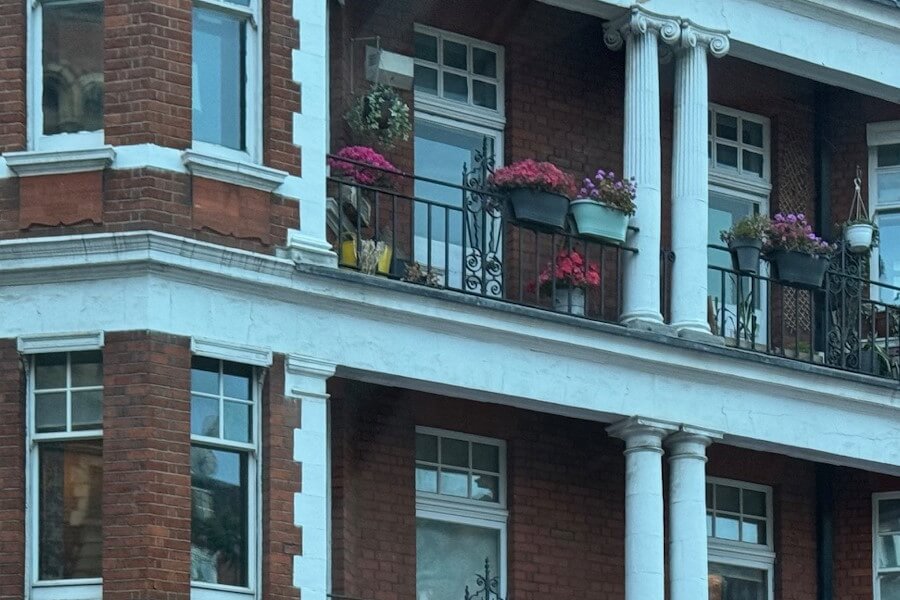
In any block of flats or other high-rise building that might mix commercial and residential units, you’ll often find a penthouse flat, which is the home that typically occupies part or all of the roof as it the largest in the building.
Penthouse flats can have any different sizes, styles, fixtures and fittings, but more often than not they are considered to be more luxurious than other flats in the same building. In some expensive properties, the penthouse flat might have unique features such as its own lift that can only be used by the homeowner.
The definition of a penthouse is usually reserved for those types of properties, for example the top floor of a block of council flats would not typically be referred to as penthouse units, because they would have the same basic dimensions and features as all other flats in the building.
You’ll find that most penthouse flats have walls that reach the exterior of the building, rather than having interior walls set further back. This is why some penthouses, particularly those in busy city centres like London, might attract buyers by offering floor-to-ceiling clear windows.
Unlike maisonettes, some penthouses might just be one floor, whereas others could have two or more floors. There are no strict requirements for the size that a penthouse must be, nor the amount of bedrooms or bathrooms that it might have, or even the types of appliances and other fittings it needs.
As this guide explains in detail in later sections, if you’re the owner of a penthouse flat or new build flat who is looking to sell their property, you might find it can be complicated because prospective buyers will be weighing the specific pros and cons of owning this type of flat. Further complicating matters, the method you use for selling can also affect how long it takes and how much profit you might make – but the good news is that making a fast sale is often possible.
Your potential tax liability when selling a penthouse flat
Before elaborating on the advantages and disadvantages of penthouse flats and how that can affect the sale, it can be helpful for owners to know about their potential tax liability when selling.
Whenever someone sells a valuable asset, such as a car or house, they might have to pay the UK government some money as Capital Gains Tax, a fee that’s charged as a percentage of the amount of profit, also known as gain, that they make on the sale. Note that the tax is only ever imposed on the gain, and not on the larger overall price you get for the asset.
It’s important to understand that there are certain exceptions to paying Capital Gains Tax that you might be able to use, or to reduce the amount you owe. You might want to consider contacting a tax expert or other financial professional who will be able to offer clear advice on the amount of Capital Gains Tax you might have to pay when selling.
Understanding your potential tax liability when selling your penthouse flat can help with overall budgeting for the sale and the purchase of whatever your next dream property might be.
Telling buyers about the pros of owning your penthouse flat
There’s a definite market for penthouse flats, with near-constant news reports about luxury penthouses throughout the UK.
And when you’re getting ready to sell your penthouse in Mayfair or indeed anywhere in the UK, whether that’s through an auction, estate agent or any other method, it can be useful to know all of the advantages of owning such a flat, because you can then discuss these benefits with potential buyers and hopefully convince them to make an offer on your home.
Luxurious living: Penthouse properties are almost always the largest residential unit within a building, and also often come with the most modern appliances and other fixtures and fittings. Some even have private entrances, offering perks that other homes simply can’t provide. That can help to make your property stand out from other flats when trying to appeal to buyers.
Reduced noise: Because most penthouse flats are situated many dozens of storeys above street level, the noise of traffic and pedestrians is very faint, resulting in a much quieter atmosphere, which can be ideal if you want to live in a city centre but without the noise. That might appeal particularly to families or professionals who also work in the same city.
Greater security: Being located at the top of buildings means that penthouse flats are among the most secure units in the property. In addition, the fact that these units often have their own private and locked access further enhances the sense of security living in them. This can help to make your flat more appealing to those potential owners who place a priority on a secure home.

Concerns you may have when selling a penthouse flat
Whilst there are several advantages of owning a penthouse flat that you can tell potential buyers in an attempt to persuade them to make an offer on the property, there are also some disadvantages that could lead some people to lose interest in wanting to buy the flat.
Understanding these possible cons of owning your penthouse flat can also be useful when trying to sell it, because you might be able to counter some of those concerns based on your experience in owning the property. Alternatively, you might have to accept that some of these negative factors will be dealbreakers for some buyers, and you’ll never change their minds.
Prohibitive price: Penthouse flats tend to have much higher sale prices than other units within the same building, and this can cause many buyers to lose interest. You could consider selling to a fast buying company, because they will not be deterred by the elevated price of the flat, instead of having to consider lowering your asking price to convince a private buyer.
Weather damage: As the top unit in a building, a penthouse flat is the most exposed to the elements and can be at highest risk of suffering severe damage during a major storm. If this in turn causes flooding in flats below, the penthouse owner might possibly face some liability. You might be able to offer proof to buyers of measures the building has taken to curb these risks and that you are not selling a flat with a leak.
Expensive upkeep: Just as penthouse flats can be attractive for having the most modern appliances and most space, this can also result in the owner facing significantly increased bills to keep it clean and to cover utility costs, which could be discouraging to some buyers. Still, if someone can afford to buy the flat, this might be among the least of their concerns.
Four methods for selling your penthouse flat
If you are prepared to sell your penthouse flat, you will next have to make a decision on which method of selling you would like to attempt. The usual four choices are selling on your own, selling at an auction, selling with an estate agent, or selling to a quick property buyer.
There are benefits associated with each of the four methods, and also rather significant drawbacks that come with some of the choices in terms of slow sales or high fees. Consider all of the information on the options below and then prepare a budget for the sale of your flat that lists important factors such as how fast you want to sell and how much profit you want to make. Compare that against the different approaches to find the best match for your situation.
Selling your penthouse flat on your own
You could attempt selling your penthouse flat without any help, which means you will have the duty of creating and advertising a listing that features photographs and a description of the property, organising viewings for potential buyers to tour the home, and hearing any offers.
This is a large amount of work and not something that you’ll be able to put aside until you have spare time to do it, and it can require a lot of time and money, and be quite stressful. That’s why it’s only recommended as an option for those people who might have past experience with selling penthouses, or that have an experienced friend or family member willing to help for free.
It’s also perhaps one of the slowest methods for selling a property, and you should not be surprised if it takes more than an entire year to secure a serious buyer for your home.
Selling this way does have the obvious benefit that you won’t have to pay an estate agent, auctioneer or other third party any commission for finding a buyer for the property, which means that you can hopefully make as much profit as possible when selling your penthouse flat.
However, you can achieve a zero-fee sale but with no stress involved at all if you decide instead to use a quick home buyer when selling your penthouse flat. These companies make fast and competitive offers to purchase a wide range of freehold and leasehold properties, and the trustworthy quick buyers never charge sellers any commission, so you get to keep all the proceeds. That’s perfect for those people who prioritise profit when selling their homes.
Selling your penthouse flat at an auction
Auctioning your penthouse flat is risky, because you do not know what final sale price it might achieve. It’s also possible that nobody bids on your flat, which means that it does not sell, and you’ll have to start over with trying to find a buyer, delaying the process even further.
When selling this way, you will have to select a reserve price, which is the lowest possible value at which you’re willing to sell the flat. Always opt for a value that gives you a suitable return, even after you deduct whatever fees the auctioneer might charge. Otherwise, there’s the risk that you only break even on the sale, or even sell at a loss.
The commission auctioneers charge covers the auctioneer’s cost of creating and advertising your listing, and hosting the auction. This charge is subtracted from the sale proceeds after the auction, which means in turn that you’ll make less net profit.
You might be able to negotiate a lower rate of commission or even have the winning high bidder pay some of the fees, so always ask auctioneers whether this might be a possibility. But also be prepared that many companies might reject this idea and want to charge you the full rate.
Selling this way can take quite a long time, because there’s a wait of many weeks or longer between when you first list your penthouse flat for sale and when the auction happens, and then if the home does sell, the winning high bidder often has about 28 days to complete all of their mandatory paperwork and other required steps to complete the sale. You may be able to have an auctioneer impose a shorter deadline for this work, so it’s worth inquiring about this.
Auctioneers may give you the choice of selling via the traditional method or modern method, so it can be useful to know what they are. The traditional method involves advertising a listing for your flat over several weeks, and then an auction occurs on a specific day for a limited amount of time during which people can bid on the property. With the modern method, the listing is live for a set number of weeks or months, and people can place bids on the flat 24 hours a day, seven days a week, with the top bid at the time the listing expires being declared the winner.
Selling your penthouse flat with an estate agent
Estate agents will handle the vast majority of the work involved in selling your penthouse flat, including the creation and marketing of the listing, organising viewings, and hopefully fielding offers through to completion – but they also expect to be paid for all of this effort.
Selling this way can take a very long time, and you should be prepared for your penthouse flat to remain unsold on the market for many months, or over a full year in worst case scenarios.
Beware that some sneaky estate agents might try to trick you by telling you an overly optimistic sale price for your penthouse flat, despite them secretly understanding that the home will only find a buyer at a much reduced value. They do this in order to secure your business, so that you sell using their services and they can profit from the commission that they’ll charge you.
To avoid falling this routine, there are some simple steps to take – first look on property sales websites like Rightmove or Zoopla and write down the past and present prices of penthouse flats like yours. Next, ask several different estate agents to give you free quotes for the price at which they think your flat will sell. Finally, calculate the medium value of all those prices, and that should give you a more accurate estimate of your flat’s sale price.
Selling your penthouse flat to a quick property buyer
Another way to sell your penthouse flat is to get in touch with a quick home buyer. These companies have the financial ability to immediately purchase your flat without having to wait for many weeks or longer to initially win approval for a mortgage to pay for the transaction.
This cuts the typical timeline for selling this way to just a handful of short weeks, and that covers all aspects of sale, including paying you the proceeds and also exchanging contracts. It’s often more rapid than the average sale via an estate agent, auctioneer, or on your own. If your main target with selling is finding a buyer as speedily as possible, a fast buyer is a great choice.
Also, the legitimate quick home buying companies will never make you pay any commission, so you’re guaranteed to receive the entire proceeds from the sale, helping your increase your profit. Compare that to selling through an auctioneer or estate agent, who will charge you commission and take that out of the sale proceeds, leading to you making less net profit.
In addition to penthouse flats, the long and varied list of purchases that LDN Properties has considered and other swift home buyers can make includes houses of multiple occupancy, properties without planning permission, plots of land, Laing Easiform homes, houses with solar panels, flats that have existing tenants with very lengthy rental agreements, properties that have large amounts of asbestos, houses located close to railway lines, flats without External Wall Fire Review forms, and more.
For your reassurance, only ever sell your flat to a quick buyer that can prove it is a member of The Property Ombudsman (TPO) – an independent organisation which writes policies that all members must follow to protect owners against fraud in the speedy buying sector. Be cautious if selling your flat to a quick buyer that cannot prove it’s a TPO member.
It’s fast, free and easy to verify the registration status of a specific fast buyer by visiting TPO’s website, clicking on the "Find a Member" tab on the left side of the main welcome page, and typing in an individual company’s name. If they are truly part of TPO, you’ll get to see their membership details, and if they’re not registered then you will get zero results.
Top queries and answers about selling a penthouse flat
When homeowners are considering selling their home fast, they often have a series of questions for us ranging from the level of works required before selling through to selling house of flat with problems. Here are some of the top questions we’re asked when someone is selling a penthouse flat:
Your top questions when selling a penthouse flat
There is no single rigid definition of a penthouse flat, but the usual property that qualifies is one that is built on the top floor of a building that is many storeys high, possibly all residential or with some commercial and office units on lower floors. Typically found within major cities, penthouse flats might have certain luxury features and much more space than other units in the building.
Penthouse flats are often luxurious properties that have plenty of living space, several bedrooms and bathrooms, and modern fixtures and fittings. Depending on the location of the building in which the flat is located, they might have excellent views of a major city, and they can also be very relaxing because the units are situated high up away from street noise.
Yes, and you should be aware of some of the negative aspects of owning a penthouse flat so that you can understand them if potential buyers raise these concerns, and possibly try to address those issues. The higher cost of a penthouse flat can be a major factor making a sale harder. Some of these units can also be at greatest risk of storm damage in the building.
Possibly, and you should consult with a financial professional who can let you know with certainty whether you’ll be liable for paying this tax, which applies on the profit that you’d make from the sale, and not the greater penthouse sale price.
You might not have to pay any fees, depending on how you try to sell your property. If you sell on your own or use a fast buyer like LDN Properties, you will not have to pay any fees, which means you get to maximise your profit. But estate agents and auctioneers will may you pay commission, which is taken out of the sale proceeds right away, reducing your net profit.
Using a quick home buying company such as LDN Properties is your best choice, because they can complete the process of purchasing any home within a few short weeks, and that covers the time it takes for exchanging contracts and paying you the proceeds. By contrast, auctions take at least a few months, and selling on your own or via an estate agent may take over a full year.
The trustworthy quick home buying companies tend to be registered with a third party entity called The Property Ombudsman (TPO), which issues regulations that are crafted to protect homeowners from falling victim to scams in the speedy buying industry. All TPO members must follow those regulations, which should give you extra peace of mind when selling your flat.