Quick navigation
If you own a house or flat that has the textured plaster Artex on the ceiling, this can make it harder to sell the property for several reasons, including that it might contain asbestos. This guide explains why Artex can be a problem in the home selling process but it also provides insight on steps to take for increasing your odds of receiving a quick and fair offer.
- What does it mean to have Artex at your home when trying to sell?
- Health concerns with Artex at your house or flat
- Why buyers may not want a home that has Artex
- Should you tell buyers about having Artex at your property?
- Removing Artex before trying to sell a property
- Your options to find a buyer for your house or flat with Artex
- Top queries and answers about selling a home with Artex
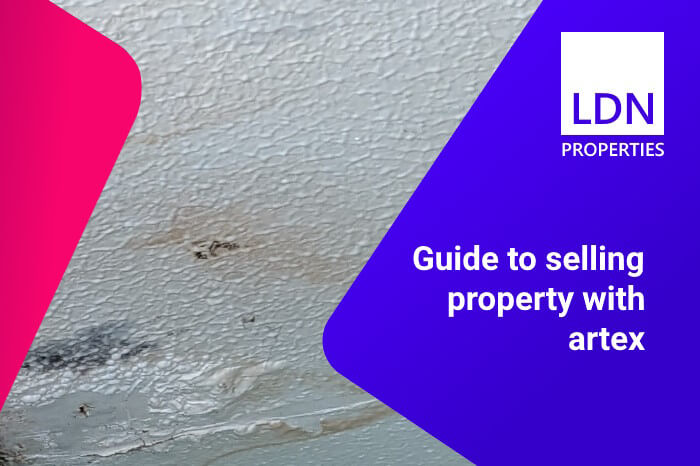
What does it mean to have Artex at your home when trying to sell?
Whether you own a house, flat or any other type of property, you’ll have artistic flourishes throughout the building – and Artex ceilings were once a very popular type of feature.
Artex is a variety of textured plaster that was popular to use on ceilings in properties throughout the UK from the 1950s through to the 1980s, as explained by Homebuilding & Gardening. Instead of a simple flat plaster ceiling, Artex could be used to create swirls, shells and other artistic designs for the finish.
Applying Artex was a straightforward process and the material was not too expensive, and that’s how it quickly established its popularity during the peak period that it was used.
But, as you’ll learn in this guide, a few developments happened that caused interest in Artex to drop significantly, including concerns about potential health threats from asbestos in the material, and the fact that tastes change and the designs are often now seen as outdated. Therefore, having Artex at your home could make it harder to get buyers interested.
Whatever your reason for wanting to sell your property – such as needing to raise funds for your retirement, selling in order to buy your next dream home, or anything else – you don’t need to worry that you’ll never manage to get a competitive and fast offer from a buyer due to the presence of Artex.
Keep reading to learn how to overcome the potential challenges to selling this type of property, as well as the best strategies for accelerating the sale and attracting a decent offer.
Health concerns with Artex at your house or flat
As you’ll see in more detail in the next section of this guide, one of the leading reasons why a home with Artex can be harder to sell is that the presence of the material may be a health risk.
Artex is named after the English building material company Artex Ltd., which for many years until 1984 produced the textured plaster by using white asbestos, also known as chrysotile, as a component, as Wikipedia notes.
But as health concerns about asbestos became more widespread and well-known, it led to efforts to get asbestos out of construction materials and building properties.
Exposure to asbestos has the potential to cause a wide range of health problems, including an increased risk of developing lung cancer, respiratory harms and other issues. Asbestos fibres get in the body by being inhaled, which happens when a building material containing the substance is disturbed – for example, by drilling or sanding it – and releasing miniscule fibres.
That’s why any effort to remove Artex from your property before attempting to find a buyer for it must be done carefully and ideally with an expert, because it could release these fibres.
Why buyers may not want a home that has Artex
You might find that it’s harder to generate interest from potential buyers in your property because of the Artex on the ceiling, and there are two main reasons that explain why.
Asbestos concerns: As more information became known about the harms of asbestos in the 1970s and later, the UK government in 2000 eventually moved to ban the use of the substance in any building materials. Although new build properties should not have any concerns about asbestos, many homes built before the ban can struggle to sell if there’s the potential for them to have high levels of the substance. Buyers’ fears about health issues linked to Artex containing asbestos may be a dealbreaker.
Outdated design: For a long time, Artex was a popular feature to use for giving ceilings at properties a unique look with the creative designs available. But regardless of the asbestos concerns about Artex, peoples’ tastes change and from the 1980s onward the use of this material can make a property seem outdated. And that could cause a buyer to lose interest if they worry that it would cost too much time and effort to remove it as the next owner.
Just because buyers might have one or both of these concerns with your home, that doesn’t mean you’ll never be able to sell it. But you may have to consider other options for selling beyond the conventional approach of using an estate agent to find a buyer.
One such solution is contacting a quick home buying company like LDN Properties that has decades of experience with making fast and fair offers to purchase homes that other buyers might view as problem properties, including those that have Artex ceilings.
Should you tell buyers about having Artex at your property?
An important part of the process of selling your home is conveyancing, when the buyer’s solicitor or other legal representative will collect a large amount of documentation about the house or flat, including the Property Information Form, also known as a TA6.
This form asks the current owner many questions about the property, including whether there is asbestos present. If you know for certain that your home has Artex containing asbestos on the ceiling then you must disclose this on the TA6 form. Failing to do so can put you at risk of legal action from the buyer if they purchase your property and then discover the asbestos later.
If Artex was applied at your house or flat between 1985 and 2000 – the year that the ban on building materials containing asbestos was adopted – then it may be unclear whether or not the ceiling includes asbestos, as Checkatrade says. And you may not know how to address this on the TA6 form.
For this reason, you may want to either get a testing kit to check the Artex for the chemical, or pay for a professional survey of the ceiling. But the latter option can typically cost between £200 and £250, which isn’t ideal if you are trying to cut costs when selling your home.
Instead, you could consider selling your home as is without getting a survey or doing any testing. The easiest way to do this is by getting in touch with a quick home buying company that has plenty of success with making fair and fast offers to purchase properties like yours that may have asbestos-containing Artex. The next section expands on exactly how this streamlined approach to selling works.
Removing Artex before trying to sell a property
One way to resolve buyers’ concerns about Artex at your home would be to hire a professional to remove the material and replace it, sealing over any Artex that might remain.
This can be a complicated process that involves several stages, but it would have the benefit of removing the issue of Artex from potential buyers’ considerations. That could help if there are buyers that would otherwise lose interest in your home or greatly reduce the price that they could offer for it should you decide to just leave the Artex in place and look for a buyer.
The cost of removing Artex from your home will depend on how much there is, but HomeHow suggests it could range anywhere from £400 to £1,950, and it could be even more. That amount of money might be more than you are prepared to spend, or can afford to spend, before attempting to seek a buyer for your property.
Many homeowners will not want to go through the steps of removing Artex before selling, and if this applies to your situation then you can still achieve a fast and fair sale.
One approach would be contacting a quick home buying company that has purchased homes with Artex in the past for competitive prices. These businesses, like LDN Properties, are often able to finalise the process of buying a home in a handful of weeks, and this covers the important steps of exchanging contracts on the property and paying the seller the full proceeds.
Your options to find a buyer for your house or flat with Artex
You will also need to decide which method to use to attract buyers to your home, and typically the selections are selling with an estate agent, selling at an auction, selling to a quick buyer or selling without any third-party help, with notable pros and cons for the different options.
For example, a benefit of selling your home to a quick buyer is that you will not have to pay any commission if you contact an honest no-fee company like LDN Properties. And a drawback of selling via an estate agent or without any help is that it might take more than a year to sell.
One useful tip is to make a note of your top aims with selling, such as your preferred sale price, whether you are open to paying any fees, and how fast you want to sell. Then compare these factors against the information about the four methods in this section of the guide, and this should help you in identifying which of the choices is the closest match for your needs.
Selling with an estate agent
Using an estate agent can help to lower your stress with selling because they will do most of the work to find a buyer. This starts with preparing a listing that describes the home and includes photographs of the interior and exterior, advertising this listing in their office, online and in local newspapers, arranging viewings so people can tour your property, and hearing offers.
It’s a long process and can take several months or even more than an entire year before selling. And someone can make a serious offer but then change their mind and withdraw the offer, which they can do without facing any penalties, so long as contracts haven’t been exchanged. This will delay a sale much further because you’ll need to start over with seeking a buyer.
And you will also need to pay an estate agent commission if they succeed in selling your house or flat. Usually, they will charge this at a rate of 1.15 percent to 1.40 percent of the property’s eventual sale price, and this fee will be taken out of the final sale proceeds.
You may also find that some estate agents are not well experienced at selling a home that has Artex in it, and this could suggest that they will find it difficult to know how to get buyers interested in your property. Always ask estate agents if they have sold a property like yours before, and don’t use the services of an estate agent that lacks this experience.
Selling at an auction
An auction is another selling option that can reduce your workload because the auctioneer will handle most of the steps, such as creating the listing, advertising it, hosting the auction and then overseeing the final paperwork and other tasks involved with a successful sale.
But they’ll charge commission to cover the costs of this work and you can expect to pay about 2.5 percent of your home’s final auction sale price. The fee is subtracted straight away from the sale proceeds, so if you want to reduce you costs you may want to consider some zero-fee options for selling your property, such as contacting a quick buyer like LDN Properties.
Auctions are unpredictable and you might not get a single bid on your home, which means it doesn’t sell and you’ll need to begin again with looking for a buyer, delaying the process further. Or you could just get one bid at the reserve price – the lowest price at which you are willing to sell your home – and this is a binding legal agreement for you to sell your home.
This is why you must calculate a reserve price that should produce a profit from the auction, even after you have deducted the commission that you will be charged. If you do not do this in advance, you might end up only breaking even on the sale or possibly selling at a loss.
Using an auction to sell your home may also be a slow choice, because there is a lot of waiting involved, including several weeks or longer between the day that you decide to use this option and the day that the auction is held. Even with a successful sale, the top bidder usually has about 28 days to sign all the required papers and do their other tasks to finish the sale.
If you are looking to reduce your costs but still use an auction, you could try asking individual auctioneers whether they might be open to reducing the rate of commission that they will charge you if your home sells, or to have the buyer pay a share of your expenses. But note that certain auctioneers could charge an even higher rate of commission than 2.5 percent, which would further reduce the potential profit that you might be able to make when selling this way.
Selling to a quick buyer
Quick buyers like LDN Properties have the funds available to purchase your home immediately, with no waiting for many weeks or months to get approval for a mortgage to pay for the transaction. This cuts the typical timeline for selling a home to just a handful of weeks, including paying the seller the proceeds and exchanging contracts, when using a quick buyer.
These companies are also experts at making competitive offers for almost any property no matter is age, condition, location, shape, size or type, nor whether it has an element that other buyers could consider to be dealbreaking problems – and that includes the presence of Artex.
LDN Properties has been buying homes across the UK for more than 15 years, and its long list of purchases and offers made includes properties with Artex, as well as houses with a heat pump, leasehold flats, houses that have lapsed planning permission, million pound properties, flats with a share of the freehold, buy to let property portfolios, homes that have a defective lease, duplex flats, eco properties, houses that have old or defective wiring, flats with high ground rent, homes with spray foam insulation, mixed-use properties, flats that have a broken boiler and many other situations.
Honest quick buyers will also never charge owners any commission when purchasing their properties, which can be a great way to keep your expenses low with selling. And many sellers find this preferable to the fees they would otherwise have to pay an estate agent or auctioneer.
Selling without any third-party help
Yet another option for selling your house or flat that has Artex is to do so on your own, which puts the burden on you to handle all of the tasks, which includes putting together a listing, advertising it, scheduling viewings, hearing offers and ideally taking one to completion.
This is a lot of work and will take up much of your time, and unless you have experience with selling properties you could be looking at more than a year before you find a buyer. Even then, the buyer could make an offer but later rescind it, making the sale collapse and setting you back to the start of the selling process – thereby extending the timeline much further.
That’s why this method of selling is only suggested for people who have managed to sell homes in the past, or have a skilled friend or family member that is able to help them for free.
A clear advantage of selling without the help of a fee-charging estate agent or auctioneer is that you will not have to pay any commission when you sell your home, which lowers your costs. But this saving could be eliminated by the funds you have to spend on marketing your listing.
As an alternative, you may want to think about selling your home to a legitimate no-fee quick home buying company like LDN Properties. Not only will you get the same benefit of not paying any commission, but you will get an extra advantage of completing the sale of your property at a much speedier pace. Quick buyers are so-called because they can usually complete the process of purchasing a home within a few weeks, and this covers the vital steps of paying the seller the full sale proceeds along with exchanging contracts on the home.
Top queries and answers about selling a home with Artex
The team at LDN Properties gets many questions about how to sell a property with Artex, so here you can read our responses to some of the queries that we receive most frequently.
Your top questions when selling a property with Artex
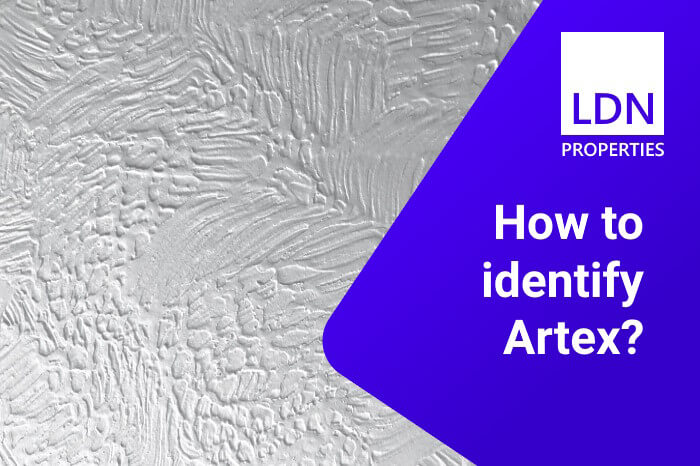
You can check your ceilings, and very occasionally your walls, to see if they are finished with a textured white plaster – this is Artex, a product that was popular several decades ago. It allowed builders to finish plastering ceilings by adding creative flourishes like swirls, wavy lines and more, although use of Artex has plummeted since then throughout the UK.
Artex was produced using chrysotile, also referred to as white asbestos, as a component. If the Artex is disturbed or damaged, for example by drilling into it, tiny fibres of this substance can be released and inhaled by people living in the home. This in turn can significantly increase the risk of developing serious illnesses including respiratory diseases and lung cancer.
Possibly and that’s because people may have one or more concerns about making an offer to purchase a flat or house with Artex. Some prospective buyers could see the Artex as being very outdated and worry that it will cost too much to remove and replace it. Others may be mostly fearful about the possible health harms from exposure to Artex containing asbestos.
Yes, if you know that there is Artex on your ceilings and that it might contain asbestos, you must disclose this on your Property Information Form that is part of the home selling process. Failure to tell a buyer about the presence of asbestos-containing Artex at your property could lead to them suing you for penalties once they own the flat or house and discover the material.
You’ll have to make this decision based on whether you are willing to invest the effort, money and time necessary to remove and replace the Artex from your ceilings, and depending on the scope of the work it could quickly become very expensive. If you do not want to remove the Artex before selling then you still have options available, like selling to a quick buyer.
Should you decide to sell your home using the services of either an auctioneer or an estate agent then you will have to pay them fees, which will be charged as a percentage of the property’s final sale price and deducted right away from the sale proceeds. But if you sell without any help or sell to a no-fee quick buyer then you won’t have to pay any commission.
If you opt for selling your property on your own, with an estate agent or through an auction then you should be prepared to wait at least several months to find a buyer. But if you choose to sell to a quick home buyer such as LDN Properties then it should only take a few short weeks to complete, and this includes the final steps of exchanging contracts and receiving the proceeds.