Quick navigation
Heat pumps can be useful for improving the energy efficiency of a property, but it’s important to know the full range of pros and cons about these devices, along with how that might affect your attempt to find a buyer for your house. This guide explains those aspects and also provides useful advice for boosting your prospects of having a buyer make a fair and speedy offer.
- What does it mean to have a heat pump at your house?
- The different types of heat pumps available for properties
- Reasons why buyers could want a home with a heat pump
- Potential problems with having a heat pump when selling your property
- Information you’ll have to give buyers about a heat pump
- Your options to sell your house with a heat pump
- Top queries and answers about selling a home with a heat pump
What does it mean to have a heat pump at your house?
Energy bills have been increasing throughout the UK for several years, and the trend doesn’t show any signs of stopping, as Energy Live News notes in a recent story. That makes the energy efficiency of a home a key issue when trying to sell it.
One of the most expensive ways to provide heat for a home is with a traditional gas boiler, as these are not highly efficient devices and they can be very costly to operate.
Indeed, the UK government has issued a ban on installing gas boilers in newly built properties starting in 2025, and many builders are looking to heat pumps as an alternative to a boiler. And the government has been providing certain incentives to help with installing heat pumps at homes.
Heat pumps operate on electricity in order to draw from an energy source in order to transfer that outside heat inside a property. Any excess heat that the pump does not need to provide to the house will be stored for later use, making these very efficient ways to heat a home. Some estimates say that heat pumps can slash an average energy bill by almost 40 percent.
Although there are clear advantages to having a heat pump at a property, there are also some potential concerns that buyers could have with this type of device. And that might negatively impact your ability to get people interested enough in your home to make an offer.
Keep reading to learn all about the various types of heat pumps, their pros and cons, and how to best attract a competitive and quick offer when trying to sell this type of property.
The different types of heat pumps available for properties
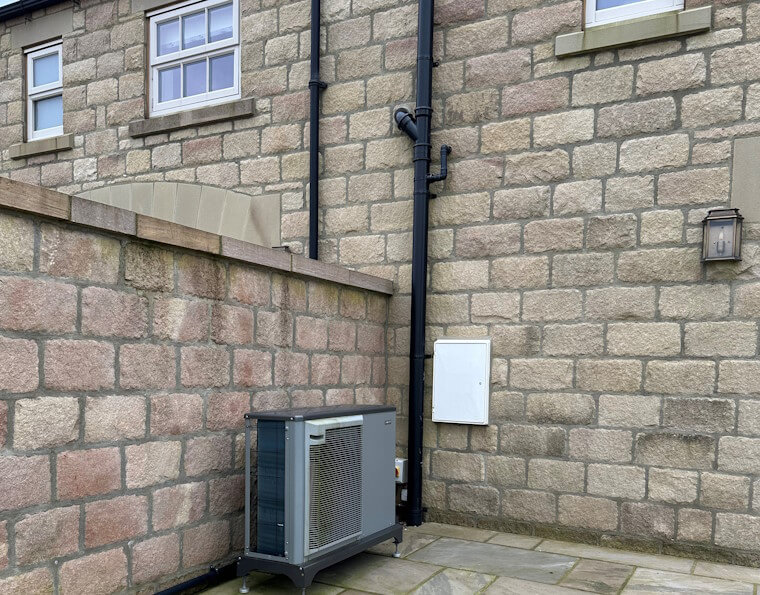
If your property has a heat pump, it will fall within one of three typical categories, as the website GreenMatch notes. The types of heat pump that are available include ground source, air source and water source heat pumps.
Ground source
As their name suggests, these heat pumps draw energy through drilled holes in ground outside your home in order to extract the necessary energy. Although the upfront installation price can be higher than other types of heat pumps, the ground source method is generally considered to be among the most energy efficient.
Air source
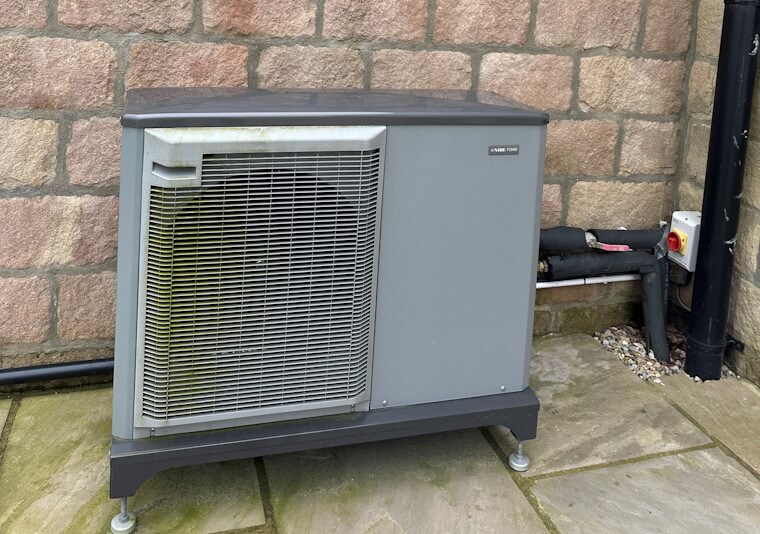
This type of heat pump is the one you are most likely to find at properties throughout the UK, and they work by drawing in air from outdoors to heat a home. Although they are not always as energy efficient as ground source heat pumps, the air source variety nevertheless has low installation costs and can still help with reducing energy bills.
Water source
If your property has this type of heat pump then it operates by taking energy from a water source located nearby, like a river or a lake, and uses this to produce the heating needed for the home. Some people believe that these are the most energy efficient of the three types of heat pumps, but the installation costs are often the highest.
It’s important to know which type and make of heat pump that you have at the property you’re selling, because buyers will want to know this information, as they may prefer to own a home with a certain type of heat pump.
Reasons why buyers could want a home with a heat pump
Homeowners that have a heat pump at their property can enjoy the good news that many prospective buyers will view the house more favourably because it has that device.
There are several beneficial features of a heat pump that can be enticing to buyers, as the website Checkatrade says. When you are preparing to sell your home, it’s helpful to grasp all of these positive aspects so that you can promote them to anyone interested in the property.
Long life: If your heat pump has been correctly installed and is operating without any issues, it should have a lengthy life, and this reliability can be appealing to potential buyers.
Environmental benefits: Because heat pumps operate far more efficiently than gas boilers, they are better for the environment and this may a major advantage for certain buyers.
Safe operation: The process through which a heat pump operates is safe and free of any of the risks of boilers, such as carbon monoxide poisoning or the potential for fires.
Energy efficiency: And perhaps the most obvious benefit of a heat pump is that it should reduce your home’s energy bills, which will attract buyers who are looking to cut costs.
Potential problems with having a heat pump when selling your property
Whilst heat pumps can have some or all of the benefits described in the previous section of this guide, there are also some potential cons that you should learn, as detailed in an article on This Is Money. Some buyers might focus on these drawbacks when making a decision on whether to purchase your house.
For certain people, the disadvantages associated with a heat pump might outweigh the advantages. Understanding these factors can be useful in knowing why some buyers will lose interest in your home because it has a heat pump, or why other people could lower their offer price because of their concerns about the presence of the device at your property.
Excess noise: There are many varieties of heat pumps that produce a lot of noise when they’re operating, and this could be a dealbreaker for buyers who are looking for a quiet home.
High cost: Depending on the type of heat pump that you have at your property, it might require a lot of electricity to run, which can have the countereffect of driving up energy bills.
Reduced heat: Some homeowners find that heat pumps do not produce as much heat for a property compared to a gas boiler, which could make some buyers lose interest.
Potential eyesore: This drawback will vary from home to home, but heat pumps can sometimes be very large and ugly, and if it’s an eyesore then this might turn off a buyer.
Information you’ll have to give buyers about a heat pump
Whatever the reason for selling your home with a heat pump – whether that’s because it’s an inherited property you don’t want, you are moving overseas, downsizing to a smaller house or any other reason – you will need to give potential buyers certain information about this particular device.
Someone that is thinking about making a serious offer to purchase your house will need to be told about the presence of a heat pump at the property. And they will likely want to see various details about the heat pump before they proceed with their offer.
The information that a buyer may want can include the instructions that the manufacturer of the heat pump provided about how to operate the device, the warranty and related paperwork covering the unit, details about the last time that the heat pump was serviced as well as any maintenance that has been done to the device, energy efficiency certificates, and more.
When you are getting ready to sell your house, you should set aside some time to collect all of this information. Having the details available upfront to give buyers immediately when they ask for it will likely make them look more favourably on your property, compared to having to wait weeks or months before you are able to locate all of the various documents.
Your options to sell your house with a heat pump
One of the most important choices you will make when selling a home is deciding on how to seek a buyer. The four standard ways are selling to LDN Properties or another quick buyer, selling at an auction, selling without any third-party help or selling with an estate agent.
To help with identifying the ideal method for your needs, write down your top goals with selling, such as your preferred sale price, whether you can accept paying any fees and how long you can wait before finding a buyer. Then compare these facts against the details of the four selling approaches outlined in this section and you should find the best match for your situation.
Be aware that all four methods have their own advantages, for example you can escape paying any commission if you sell your house to a no-fee quick buyer such as LDN Properties. And the options also have some disadvantages, like potentially having to wait more than a full year before you are able to attract a serious offer when you sell without any assistance.
Selling to a quick buyer
If you’re looking to sell your house with a heat pump in a hurry, a quick buyer can be a great choice because it should only take a handful of weeks – and that includes the time needed to exchange contracts and pay you the full proceeds. This is on average many weeks or even months faster than it will take to sell your property using any of the other three methods.
Quick buyers are known for making fair and fast offers to buy properties, regardless of any structural problems and no matter their age, condition, location, shape, size or type.
LDN Properties has been buying and making offers for a wide range of homes across the UK for more than 15 years, including not only houses with a heat pump but also properties near a mineshaft, Airey homes, penthouse flats, new build properties, houses that have low Energy Performance Certificate rankings, flats with high levels of radon, properties that have structural damage as a result of severe storms, houses located near to cliffs, flats that are close to traffic junctions, properties with a short lease and more.
And these companies also promise to never charge homeowners any commission, which means that you can keep your costs low and count on receiving the entire proceeds. That compares favourably to using an auctioneer or an estate agent because you would have to pay them commission that would be subtracted right away from the eventual sale proceeds.
Just beware to never sell your home to a quick property that cannot prove it belongs to an independent entity known as The Property Ombudsman (TPO). That’s because TPO issues rules to guard homeowners against scams in the quick buying industry, and all legitimate members – including LDN Properties – must follow these policies, which protects your sale.
You can check the TPO membership status of any quick home buying company by visiting TPO’s website, clicking on the "Find a Member" button and then typing in the name of a specific company. If they are genuinely registered with TPO, you’ll next be shown their membership details. But if you get no results then the company is not part of the organisation, and you should not sell your property to them because it could potentially be a scam.
Selling at an auction
Auctions can take quite a long time because there is plenty of waiting involved, starting with many weeks or months between the day that you decide to sell this way and the day that the auction is held. And if your home sells, the buyer then has about a month to sign their required legal papers and complete their other necessary tasks to finalise the purchase.
You’ll also need to pay the auctioneer commission for the work that they do in selling your home, and this starts when they create and advertise a listing that describes your property and includes photographs of the interior and exterior. They’ll also host the auction, as well as overseeing the final steps if someone successfully bids to purchase the property.
The average commission rate is 2.5 percent of your home’s final sale price, and this will be immediately subtracted from the auction proceeds, which will add to your expenses. It’s always worth asking individual auctioneers if they might be willing to reduce their rate of commission or to make the buyer pay some of your expenses, because this can help to lower your costs.
When you auction a home, you will need to choose the lowest price at which you are comfortable selling your property – this is known as the reserve price. A bid at this amount is deemed a legally binding agreement to sell your home and the buyer could sue you to force the sale to happen if you try to walk away from it. That’s why it’s important to calculate a reserve price that should generate a profit for you, even after you pay the auctioneer their fees.
Selling without any third-party help
You could consider selling your home without any assistance, which will put the burden on you to handle every aspect from the initial production and marketing of a listing through to scheduling viewings and giving people tours of your home, and hearing offers from buyers.
This is a huge amount of work and it will not be something that you can only do in your spare time, so you should plan accordingly. It’s only recommended for those owners who have past experience with successfully selling a property with a heat pump, or for owners who have a suitably qualified friend or family member that could help you for free with selling. If not, you might be waiting for many months or even an entire year before you are able to secure a buyer.
And someone could make an offer but then cancel it, which they can do without any penalties if you have not yet exchanged contracts. This will cause the sale to fall apart and require that you start over with searching for a buyer, extending the total schedule much further.
The only clear advantage of using this method to sell your house is that you will avoid having to pay commission to an auctioneer or an estate agent, which helps to reduce your expenses. But the money that you have spend on advertising your home could eliminate this saving.
If you are committed to not paying any fees with the sale of your property, you could instead consider selling your home to a zero-commission quick buyer such as LDN Properties. You’ll not only get the same benefit of avoiding being charged any commission, but you will get an extra advantage of securing a much speedier sale. That’s because quick buyers can typically finalise the purchase of most properties within a few short weeks, and this speedy timeline includes the important final steps of exchanging contracts and paying you the full sale proceeds.
Selling with an estate agent
When you sell a home with a heat pump using the services of an estate agent, you won’t need to put in much work, because they’ll handle most of the important steps. This includes making and advertising a listing, organising viewings and hearing offers from buyers. For some owners, not having to do any of these tasks can help to reduce their stress with the sale of their home.
For doing all of this work, the typical estate agent will charge you commission within a range of 1.15 percent to 1.40 percent of your property’s final sale price. This will add to your costs because the fee is deducted from the final sale proceeds immediately. If you are aiming to reduce your expenses with selling, you may want to review the zero-fee alternatives.
Some estate agents might be open to negotiating a reduced rate of commission when selling your home, so it’s worth asking about this possibility. Just beware that other estate agents could charge an even higher commission than 1.40 percent, increasing your expenses further.
Using an estate agent can also be a slow way to sell your house because it might take more than a full year to find a buyer. Remember also that someone could make an offer on your property but then change their mind and rescind it, causing the sale to collapse. They can do this without the risk of any penalties so long as contracts have not been exchanged. And you’d need to start over with seeking a buyer, delaying the selling schedule even further.
Top queries and answers about selling a home with a heat pump
Founded in 2003, LDN Properties has plenty of experience buying houses with a heat pump. Here are our answers to some frequent questions that we get about these homes.
Your top questions when selling house with a heat pump
Heat pumps are increasingly being installed at properties throughout the UK, and they are a more energy efficient way to heat a house compared to a gas boiler. Given concerns about the high costs and electricity usage of gas boilers, the government has issued a prohibition on new build properties from having these devices installed as of 2025.
Yes, if you have a heat pump at your house then it will be one of three different types, either using a ground source, air source or water source in order to extract the energy that the device needs to power your property. There are benefits and drawbacks linked with each of the three types of heat pump, including varying installation costs and levels of energy efficiency.
If the house that you are attempting to sell has a heat pump, buyers could associate several advantages and disadvantages with this device. Reasons why they might like having a heat pump include increased energy efficiency and reduced utility bills. But buyers could also have concerns that certain heat pumps may be very noisy when running, or create an eyesore.
If a potential buyer expresses an interest in making an offer to purchase your property, they could want to know certain details about the heat pump, so it’s a good idea to collect all of this information early in order to quickly provide it to them. These facts include the manufacturers’ operating instructions, the date the unit was last serviced, and various other issues.
You will usually be able to choose from one of four approaches to sell a home that has a heat pump, and they are selling to a quick buyer like LDN Properties, selling at an auction, selling without any help or selling with an estate agent. Some of these methods have prominent benefits, like quick buyers not charging any fees, and others have notable disadvantages.
On average, the speediest method to sell almost any type of property – including those with a heat pump – is to contact a quick buyer such as LDN Properties, as the process will only take a handful of weeks, and this includes exchanging contracts. Otherwise, you can expect to wait at least several months if you choose any of the other three options for selling your home.
If you choose a quick buyer to sell your property, you will not have to pay any fees, so you can count on receiving the full sale proceeds, and the same is true if you sell without any third-party assistance. But if you choose to sell your home via an estate agent or an auctioneer, you’ll need to pay them commission that will be deducted immediately from the final sale proceeds.