Quick navigation
Built in the tens of thousands throughout the UK mostly from 1956 to 1979, Wimpey No-Fines houses and flats used a special type of concrete that was more economical than other types of construction material. You might find that there are some additional complications with selling this type of home, but the good news is that these properties can still sell fast.
- What are Wimpey No-Fines properties?
- Problems with selling a Wimpey No-Fines house
- Getting your Wimpey No-Fines house or flat ready for sale
- Mortgage and tax implications of selling a Wimpey No-Fines home
- Your choices for how to sell a Wimpey No-Fines property
- Top queries and answers about selling a Wimpey No-Fines home
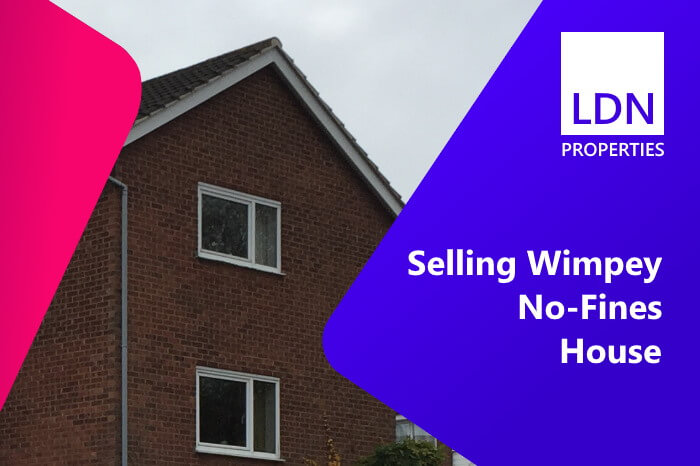
What are Wimpey No-Fines properties?
Wimpey No-Fines properties are leasehold or freehold houses or flats that are built from a certain type of concrete and were produced starting in the 1850s, with the final such homes being built around 1979.
They were the creation of the George Wimpey construction company, which touted the unique type of concrete as an affordable material that could help with quickly building many properties for people across the UK. They are called “No-Fines” properties because they were constructed using that type of concrete, which is a mixture of cement and aggregates, or component materials, without the use of sand or other fine aggregates used in other concretes.
Although historical records suggest that the first home to use No-Fines concrete was built on the Isle of Wight in 1852, construction of these properties accelerated in the 20th century.
In particular, it’s believed that the George Wimpey company built more than 72,000 of these houses throughout England, Scotland and Wales from 1945 until at least 1960, with an additional 128,000 of the same type of homes built from 1964 until 1979. Some other companies built a few of these properties, and the vast majority of these homes were medium or low rise.
Whilst the lower cost of developing Wimpey No-Fines properties helped to explain their popularity and demand for them over many decades, public opinion started to turn against this type of construction in the 1980s. The UK Parliament conducted an investigation into the homes, given some concerns about the long-term viability of the concrete, and it was found that although the properties were structurally sound, they had poor insulation.
The advent of more construction methods and a shift to building high-rise flat complexes – of which very few were ever made with No-Fines concrete, eventually led to a shift away from building this variety of home and today there are no new homes erected via this method.
Problems with selling a Wimpey No-Fines house
Although Wimpey No-Fines homes were somewhat economical to build, they eventually fell out of demand due to a combination of factors including a change in the type of properties being built, other approaches of building homes becoming available, and concerns about the structural integrity of the properties, as well as problems with them having poor insulation.
If you own a Wimpey No-Fines house or flat and would like to sell it, you should know about the potential negative issues associated with these properties. This will help you to be informed for answering any questions that potential buyers might have, and a faster answer could help to make a sale more likely. Selling a Wimpey No-Fines home is similar to selling a Laing Easiform property – our guide discusses this at length.
The longer that someone has to wait for information about the potential cons of owning your home, the greater the risk that they will lose interest in wanting to make an offer on it. And if that happens, you’ll face even more delays with selling your home. Below you’ll find some of the common problems with Wimpey No-Fines homes that buyers might want to discuss with you.
- Increased heating costs due to the poor insulation of the property because of the No-Fines material used in construction. The result of bad insulation means that heat escapes from the house or flat, and it can quickly lead to expensive energy bills in trying to keep these types of properties sufficiently heated to a comfortable level.
- The sometimes bad insulation in a Wimpey No-Fines home can also raise the potential for the property developing excess condensation that can lead to mould, which can be expensive to remediate depending on how widescale the problem becomes.
- Rainwater can also penetrate the exterior walls of these houses or flats, which can lead to a number of problems that might be expensive if you try to repair them.
- Wimpey No-Fines properties are also known to suffer from cracked walls, which can lead to damaged and disjointed window frames and other structural damage, and this in turn can be something that might discourage some prospective buyers.
Getting your Wimpey No-Fines house or flat ready for sale
When you’re preparing to find a buyer for your Wimpey No-Fines home, you should make every effort to tidy the interior and exterior. If you have a garden, mow it and remove and weeds, and fix any chipped outside paint, missing roof tiles, broken windows and the like.
Inside your home, you should aim to declutter rooms and make them look as large and as bright as possible in order to give the appearance of a more spacious house or flat, which will be more valuable in the eyes of most buyers. And also ensure that the interior is clean, because potential buyers who might come to tour the property could see a dirty home as being less valuable.
These are relatively easy, quick and no cost or low-cost steps that you can take to increase the perceived value of your home. But there are also some more expensive and time consuming steps that you might want to consider, such as funding a new extension or renovation, like updating the fixtures and fittings in your bathroom or kitchen. This however can be an expensive move, and if you can’t afford such work, you may still be able to find a buyer.
Some people might consider Wimpey No-Fines homes to be problem properties because of the potential for poor insulation and other issues, and this could make them hesitant to buy your home.
Alternatively, they might still be interested in purchasing your property, but might want to reduce their asking price. They could have the intention of spending money on fixing any insulation flaws or other problems after buying the property, and will want to reduce their asking price by the amount that this work will cost, and in some cases you might have to accept this.
Or you could consider spending time and money in fixing any such problems, so that they are no longer an issue with the home – and some work to remediate issues might even help to increase the value of your property, for example if you make it more energy efficient.
However, not all homeowners will have the funds or time available for this work, particularly if you are selling your house during a recession, but the good news is that they can still likely sell their Wimpey No-Fines home quickly if they get in touch with a fast property buyer.
Mortgage and tax implications of selling a Wimpey No-Fines home
There are two important financial considerations when it comes to attempting to sell a Wimpey No-Fines home – the difficulty a buyer might have getting a mortgage, and the potential Capital Gains Tax that you might have to pay depending on the profit, or gain, you make from the sale.
As described earlier in this guide, it can be useful to know about the potential problems associate the process of selling this type of house or flat, so that you can be informed about how it might delay your ability to find a buyer and how much tax you’ll be liable for paying.
Problems buyers might have obtaining a mortgage
It’s possible that many mortgage lenders might not be willing to approve a loan for someone to buy your Wimpey No-Fines home because they might have concerns about the structural integrity of the property, in particular its poor insulation and unique construction. These lenders might be nervous that they will not be able to get their money back from such a loan.
If a buyer is unable to get a mortgage to pay for the cost of buying your house or flat, the sale may then fall through, and you will have to wait for even longer to locate a successful buyer.
One way to avoid this problem affecting the sale of your house or flat is to contact a fast buyer like LDN Properties about selling the property. They have the financial ability to immediately purchase homes without having to get approved for a mortgage to fund the sale. This removes the potential risk of the sale falling apart based on the buyer’s inability to get a mortgage.
Your possible liability for paying Capital Gains Tax
When you sell your Wimpey No-Fines home, you may be liable for paying Capital Gains Tax, which is a fee charged on the gain, or profit, that you earn from the sale, with some exceptions and conditions. Be sure to consult with a professional tax advisor when the time comes.
Your choices for how to sell a Wimpey No-Fines property
Regardless of the reason for selling your Wimpey No-Fines home – whether that’s downsizing to your next property, dealing with financial problems, or anything else, you will generally have to choose between four main methods of finding a buyer. These are selling on your own, using an auction, using an estate agent, or using a fast property buying company such as LDN Properties.
Selling on your own
This can be a stressful way to try finding a buyer for your property, because you will be responsible for every step of the process with no support from a third party. It’s common for properties sold this way to remain on the market for at least an entire year or even longer.
You’ll have to prepare a listing that features photographs of the home and a description of its main features, and then you will have to pay to advertise this listing online and in local media. Then you will have to organise viewings where potential buyers will get to tour the interior and exterior of your home, and you’ll have to hear offers and hopefully see one to completion.
Because of the sheer amount of time and effort involved with selling a home, this isn’t something you will be able to do just in your spare time. Therefore, you should only really consider this option if you have experience with selling properties quickly, or you have an experienced friend or family member who may be willing to help you for free.
The only obvious advantage of selling this way is that you won’t have to pay an estate agent or auctioneer any fees, so you’ll get to keep all of the sale proceeds. But the cost of advertising and selling your home alone might reduce the amount of profit that you make.
Instead, consider selling your Wimpey No-Fines home to a fast property buyer, because they can complete the purchase within weeks and they will not charge you any fees, so you can obtain a profitable and speedy no-fee sale of your property without any stress.
Selling using an auction
Property auctions work the same as auctions for other items – people will have the chance to make a purchase price offer, or bid, for your home, and your hope is that many others will want to buy the property, so that they keep placing bids of ever-increasing value.
But there is no guarantee that this outcome will happen, and you should be prepared for your home receiving zero bids. If that happens, the property is considered unsold, and you will have to start over with trying to find a buyer for your home, delaying the process even longer.
The typical time to sell a home through an auction is at least several months, including a delay of many weeks between when you decide to sell your property this way and when the auction happens. If your property does sell, the buyer usually has about 28 days to then complete their paperwork and other required steps to finalise the purchase. It’s possible that some auctioneers might give the winning bidder more or less time, so always ask about this schedule.
You’ll have to choose the lowest possible price at which you’re willing to sell your home, which is known as the reserve price. It’s important to select a value that will still result in you making a suitable return from the sale, even after the auctioneer has deducted their commission. Otherwise, there’s the danger that you might only breakeven on the sale, or even worse make a loss.
Auctioneers often charge commission as a percentage of a property’s final sale price, and because this fee is subtracted immediately from the sale proceeds, you’ll get less net profit. Always ask individual auction houses whether they might be willing to charge a lower rate, or pass on the duty to pay some fees to the buyer.
The fees that auctioneers charge pay for the work that they do in preparing and advertising a listing for your property, hosting the auction, and overseeing the completion of any sales.
Check with specific auctioneers to find out their success rates with selling Wimpey No-Fines homes. If the auctioneer tells you that they have never managed to find a buyer for this type of property, it implies that they may not know how to attract any interest in your flat or house.
You may also be asked to choose between the modern and traditional methods of auction. With the modern method, your listing will be active for a number of weeks or longer, and people will be able to place bids online 24 hours a day, seven days a week. With the traditional method, the listing will be advertised for a long time, but bids can only be placed on the day of the auction. It’s also possible that some auctioneers might not give you a choice of either method.
Selling using an estate agent
Estate agents are a traditional method for selling a home, and they will handle most of the steps for finding a buyer. This includes creating and advertising a listing for the property, organising viewings for anyone interested in your home, and seeing serious offers through to completion.
For this work, estate agents usually charge commission based on a property’s final sale price. This charge will be taken out of the sale proceeds immediately. It’s possible that some estate agents might be willing to negotiate lower fees, so always ask. And avoid any companies that insist on charging fees that far exceed the typical range.
Selling through an estate agent can also take a long time, and it’s not unheard of for some properties to remain on the market for over a full year. That’s particularly true if you have a more unusual home such as a Wimpey No-Fines house, or a property that has a major flaw, such as one suffering from extensive dry rot, subsidence, or a large infestation of Japanese knotweed.
You should ask individual estate agents whether they have successfully managed to sell a Wimpey No-Fines home in the past, and how quickly. If an estate agent has never been tasked with trying to sell this type of property, or they have tried and failed to do so, it could be a strong signal that they might also struggle in generating any interest from buyers for your home.
Note also that some estate agents use a sneaky trick of quoting you an elevated sale price for your property, even if they know that you’re only going to be able to attract buyers at a much lower price. The reason why they do this is to entice you into selling your home using their services, because then they will be able to profit from their fees if they find a buyer.
It is relatively easy to avoid falling for this trick with some simple steps. Start by asking multiple estate agents for sale price quotes. Next, look on property sales websites to compare the prices of Wimpey No-Fines houses or flats like yours in the same neighbourhood or nearby. Then calculate an average of all these costs to get a more accurate estimate of your best sale price.
Selling using a fast property buyer
Perhaps the speediest option for selling your Wimpey No-Fines house or flat is to contact a fast buyer, such as LDN Properties. These companies provide homeowners with a streamlined, no-stress and zero-commission option to receive quick and fair offers for selling their properties.
They are called fast buyers because they can typically finalise the process of buying a home within a handful of weeks, and that includes the time it takes to pay you the full proceeds and exchange contracts – often a speedier schedule than using an estate agent, auctioneer, or selling on your own, and a great choice for those owners who want to sell as fast as feasible.
Quick property buying companies also never make homeowners pay any fees for selling their properties, which means that you can count on receiving the full sale proceeds. That’s a positive contrast to the fees you’d have to pay when using an auction or estate agent to sell your home.
Another advantage of selling to a quick buyer is that they are willing to make competitive offers to buy almost any property, no matter its age, condition, shape, size or type. For example, LDN Properties has experience with making many varied offers made, including Wimpey No-Fines homes, properties where the owner has lost important documents like the title deeds, storm damaged flats, houses of multiple occupancy, properties with solar panels, guest houses, vandalised homes, plots of land, commercial buildings, listed buildings, and much more.
You also get additional security when selling to a legitimate fast buyer, because they will be registered with The Property Ombudsman (TPO), an independent organisation that publishes regulations which aim to protect homeowners from falling victim to scams in the quick property buying industry, and which all genuine members of TPO must commit to following.
Always ask fast buyers whether are registered with TPO, and be wary of selling your property to a company that either refuses to join the organisation, or that claims to be a member but cannot prove this status, because they could be fraudulent businesses that will cost you money.
To check whether a company is actually part of TPO, visit the organisation’s website and then click on the “Find a Member” tab on the left side of the main page, and then type in the name of a specific fast buyer – if they’re truly registered with TPO, you’ll get to see their membership details, but if the company is not a genuine member then you will not get any results.
Top queries and answers about selling a Wimpey No-Fines house
Homeowners considering selling their home quickly may have questions for us, ranging from the amount of repair work they should do before selling through to selling a home in bad condition. We consider some of the main questions we’re asked about selling a Wimpey No-Fines property:
Your top questions when selling a Wimpey No-Fines property
These are primarily houses, but also some flats, that were constructed mostly in the middle of the 20th century and were built using a special type of concrete that combined cement with materials known as aggregates but no use of very fine aggregates or sand. The concept for these properties was developed by the George Wimpey construction company.
Some buyers might be wary about purchasing this type of home, because they are known to be at a greater risk of poor insulation, which in turn can mean significantly increased energy bills as it takes more time to heat the house or flat. There can also be some other concerns about a Wimpey No-Fines property, such as being more susceptible to damage from rainwater.
Yes, if a buyer is interested in your property but needs to first get approved for a mortgage to fund the purchase, they might struggle to find a lender who is willing to provide the loan, because of the poor insulation and other issues with Wimpey No-Fines homes. You may consider instead selling to a fast buyer who can purchase your property without needing a mortgage.
Potentially, depending on the amount of profit that you might make from the sale. Capital Gains Tax is charged on the gain that you make from the sale of an asset, such as a house. It only applies to the actual profit, and is not charged based on the bigger property sale price. There are situations in which you might be able to reduce, or not need to pay this tax.
No. You will be expected to pay commission if you use an estate agent or auctioneer to sell your property, and this fee will be subtracted from your final sale proceeds, which will leave you with less net profit. However, you won’t have to pay a third party any fees if you either try to sell the property by yourself, or if you contact a no-fee fast home buyer like LDN Properties.
Contact a quick property buying company, because they should be able to complete every step required for purchasing your home within just a handful of weeks. That’s much faster than the typical timeline when selling through an auction, which can take at least several months. And it might be even longer when using an estate agent, possibly even a full year before selling.
Ask individual companies whether they belong to The Property Ombudsman (TPO), which is a third party entity that protects homeowners against scams by issuing rules for the quick buying sector that all TPO members must abide by. Be wary of trusting the sale of your Wimpey No-Fines home to a company that is not a TPO member.