Quick navigation
Some property developers are interested in developing airspace, which mostly means adding another floor or more to an existing property like a block of flats. If you are the owner of this type of building and are looking to sell the roof space, this guide offers tips on how to best go about searching for a buyer and increase your odds of a competitive and fast offer.
- What are airspace property developments?
- The government’s latest rules on selling airspace
- Do you need planning permission before selling airspace?
- Leaseholders’ rights when roof space is up for sale
- Issues developers might have with your airspace
- How to find a buyer when selling your roof space
- Top queries and answers on selling airspace

What are airspace property developments?
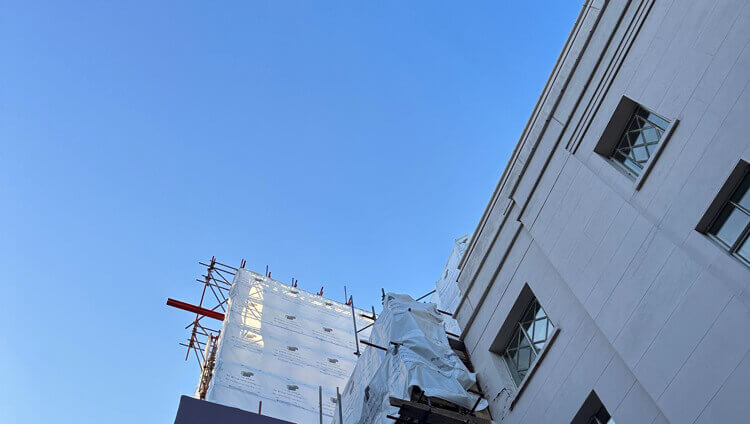
Airspace, also referred to as roof space, is the space above existing properties that some developers are increasingly look to fill by adding storeys that they can sell or rent.
Building in airspace (according to BBS Law) is becoming more popular given the fact there are housing shortages in some parts of the UK and ongoing demand for new properties. Currently, the issue mostly affects blocks of flats where one or two new floors are being developed in the airspace.
Typically, a block of flats has a freeholder who owns the building itself and the land on which it is located. The flats might be rented out to tenants or sold to leaseholders, who will have legal ownership of their individual units for a set number of years whilst paying the freeholder an annual ground rent.
One of the leading reasons why a freeholder may want to sell the airspace at their property is that they hope a developer will buy it at a price that will generate a decent profit. Or there might be other reasons for wanting to sell the roof space, for example if you have made the decision to move to another part of the UK or overseas and no longer want to own the property. Whatever the reasons for selling, there are some crucial steps that you should understand.
The government’s latest rules on selling airspace
As with any type of property development, there are UK government laws and regulations that prescribe what can and cannot happen when it comes to building on a property’s airspace. Be sure to read latest guidance and legislation as this is a continually evolving topic.
The most recent update to these rules (discussed on The Land Site), enacted in August 2020, were designed to encourage more development of roof space in response to a slowing property market as well as a lack of housing inventory. The goal was to trigger redevelopment of thousands of new homes on top of existing blocks of flats.
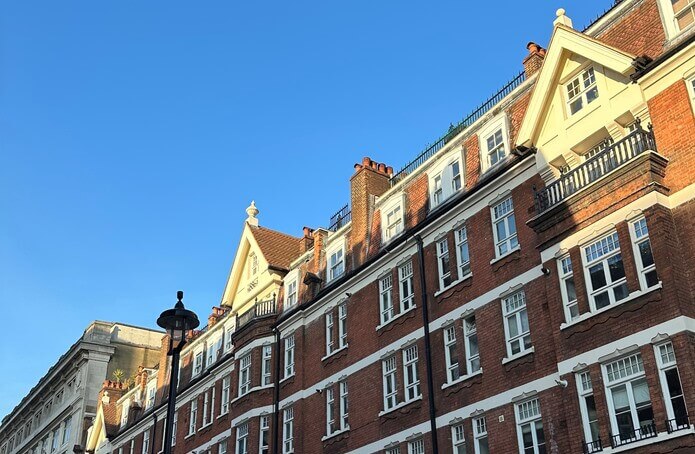
Airspace property developments currently can only be one or two storeys that will be constructed on top of an existing block of flats, and the addition cannot extend the height of the existing building beyond 30 meters. A further condition of any roof space development is that it is currently restricted to properties, like a blocks of flats, that are already at least three storeys tall.
There are a number of other restrictions that apply, including the fact that each individual new storey that is added to an existing building cannot be over 3 meters tall.
The property additions must also be individual flats, such as a penthouse flat, and the ability to build in the roof space is restricted to buildings that were constructed after July 1, 1948, and before March 6, 2018.
If the block of flats is located within a site of special scientific interest, which is a specific type of conservation designation for certain areas in the UK, then development of roof space is not allowed, so you will not be able to try selling it to developers. You also need to obtain prior approval for building in air space, and the next section of the guide addresses this issue.
Do you need planning permission before selling airspace?
Planning permission is an important part of the property development process, and it refers to legal authorisation from a local authority for the owner of a house, flat or other property to make significant physical changes to it. This can cover a renovation, extension, building new floors in roof space, and more. See this Wikipedia article for more information on planning permission in the UK.
It can be a very time-consuming and expensive process to obtain planning permission no matter the property, but even more so if your block of flats is a listed building. For developers interested in buying your roof space to construct new flats, they will be interested in knowing what kind of legal permission, if any, exists to convert the space into additional flats.
The rule changes that the government implemented in August 2020 said that development of roof space does not need full planning permission, but it does need planning approval which is similar and reflects that specific conditions have been met to allow building in the airspace.
When you are looking to sell your airspace, having prior approval secured can be a great way to make the property more attractive to developers. They will know that if they buy the roof space, one of the most important hurdles for building new flats will already have been cleared.
Leaseholders’ rights when roof space is up for sale
As the freeholder of a block of flats who is looking to sell your airspace for development, one major barrier that you’ll have to overcome is possible opposition from the leaseholders who own flats within the property, and they have certain rights when it comes to the planned sale.
You may find that the residents of your flats will have concerns about any development on top of the building, such as the noise that the construction work will generate, the disruption to their daily lives during the time that the new flats are being built, a possible drop in the potential sale value of their individual units, making it harder to find car parking space, and other reasons.
One step you can take is to offer the existing residents certain incentives for not fighting the sale of the airspace, such as offering to renovate the communal areas of the building. For example, this could include installing new lifts or refurbishing certain shared rooms. If such an agreement is reached, you should tell potential buyers about when trying to sell your airspace.
You should review your leaseholder agreements to see whether they include conditions that would restrict your ability to sell the airspace for development. If you identify any such limitations, you might have to enlist the support of a legal professional to address them.
Leaseholders have a right under a law known as the Landlord and Tenant Act 1987, section 4, that says current leaseholders have the right of first refusal – meaning they need to be offered the chance to purchase the leasehold on the airspace before it’s offered to anyone else. And you have to offer this leasehold at the same price and conditions as you’d set for property developers.
It is a legal requirement for freeholders to give the flat leaseholders this right of first refusal, and they could sue you in the event that you do not comply, which could result in expensive penalties if they succeed with such litigation. Violating the law’s mandate also means that the leaseholders might be able to take ownership of the airspace lease from whoever ends up buying it, and only having to pay that buyer whatever their price was for the roof space.
In those situations where you have current leaseholders, you must also give them at least two months advance notice about your plan to sell the airspace. One of your priorities should include making sure that you have satisfied all your legal obligations when selling airspace./
Issues developers might have with your airspace
When a property developer expresses interest in potentially buying your roof space, there are a number of potentially complicating factors that they will consider which could make or break the sale.
It can be useful to know about the various elements that will affect whether or not someone makes an offer to purchase your roof space, because even if you can’t change specific issues about your property, you might be able to answer questions that potential buyers have. This can make them look much more favourably on the purchase of your airspace, compared to a situation where they have to wait weeks or longer to get answers. The longer that someone has to wait to get answers about your roof space, the more likely they’ll lose interest in it.
Here are some of the top issues that potential buyers might raise:
- Having concerns about the structural integrity of the building
- Needing a comprehensive report on the feasibility of the development
- Knowing if it will be logistically possible to pursue new construction
- Finding out whether the property has cladding or other fire protection
- Wanting answers to questions about the building’s acoustics
- Understanding whether there’s demand for new flats in the area
How to find a buyer when selling your roof space
One of the most important choices that you will have to make when preparing to sell your property’s airspace is deciding on the method that you’ll use to find a buyer for it.
The typical choices come down to selling on your own, selling to a quick property buyer, selling at an auction, or selling with an estate agent. There are some negative aspects associated with a few of the methods, such as requiring that you pay commission or taking many months to sell. Finding the right approach to selling will generally be a very case-specific decision.
But you can help to narrow down your options by writing down your biggest goals with selling your airspace, such as how much you might be willing to pay in commission and how long you are prepared to wait before receiving a serious offer from a buyer. You should compare all of these details against the specifics of the four methods below, and that will assist you in identifying which of the choices is the most suitable match for your own needs and wants.
Selling on your own
Selling without any assistance means that you will have to handle every step of the process, starting with preparing a listing that describes your airspace and features photographs of the interior and exterior of the existing block of flats. You’ll also have to pay to advertise this listing in local media and online, host viewings for people to tour the property, and field any offers.
It’s a tremendous amount of work, time and money required to sell airspace on your own, and it will not be a task that you can simply do whenever you have spare time. That’s why it’s really only suggested for those people that either have experience with selling roof space, or that have a qualified family member or friend who might be open to assisting you at no cost.
You might be waiting quite a long time to sell your airspace this way, so you should not be surprised if it takes more than a full year before you are able to receive a serious offer. That makes selling solo one of the slowest methods, and not ideal if you’re trying to sell fast.
There is a clear benefit to selling on your own, in that you can keep your costs down by not having to pay an estate agent or auctioneer any commission. However, the money that you will have to spend on advertising the roof space could cancel out this saving.
Instead, you could consider selling your airspace to a quick buyer like LDN Properties, because the trustworthy fast buying companies never charge any fees, whilst also being able to typically complete the purchase of any type of property within a handful of weeks. That means you could not only avoid paying commission but still also often obtain a very speedy sale.
Selling to a quick property buyer
A quick and no-cost option for selling your airspace is to contact a quick property buyer. These companies have the financial power to purchase all ages, conditions, shapes, sizes and types of properties right away, without having to wait weeks or longer to get approval for a mortgage. That results in them usually being able to complete the purchase of a property, such as roof space, within a few short weeks, which is perfect when you’re trying to sell quickly.
Another advantage of selling to a quick property buyer is that the legitimate companies will never make you pay any commission, which helps you reduce your costs when selling. By contrast, selling at an auction or via an estate agent will require that you pay the fees, which will be subtracted straight away from the sale proceeds, therefore adding to your costs.
Quick buyers can also be a great choice for a more unique type of property sale like roof space simply because they have the ability to make competitive and rapid offers to buy practically any property. LDN Properties, for example, has been buying properties throughout the UK for 15+ years and some of its purchases include roof space, lock-up garages, half-finished houses, houses with solar panels, properties near mobile phone masts, homes that have large amounts of asbestos, listed properties, flats that have extensive dry rot, and many other varied examples.
Selling at an auction
Another way that you could sell your airspace is through an auction, where people will place bids of ever-increasing price value for it. Your goal is to have several buyers interested in purchasing the roof space so that they try to outbid each other, pushing up the final sale price.
Still, there is no promise that this outcome will happen, and you could end up with no bids which means that your roof space will not sell and you’ll have to start over with trying to find a buyer, which will add many more months to the process. Alternatively, you could get a single bid at the reserve price, which is the cheapest price at which you can accept selling the airspace. A bid at this value is a binding legal agreement to sell your roof space and the winning high bidder can sue to enforce the sale, so be sure to select a price that will generate a profit for you.
In calculating your ideal auction price, you will have to take account of the commission that you will have to pay the auctioneer. Generally they’ll charge you fees based on the sale price you are able to secure for the roof space, and this commission will be subtracted from the proceeds immediately, which will create another selling cost.
You might possibly be able to negotiate with the auctioneer to set a lower commission rate or have the buyer pay some of your costs with selling, so ask companies about this option.
Selling this way can be a slow process that takes many months, starting with the wait time of many weeks or more between when you enter your roof space for sale and when the auction happens. And if you manage to sell the airspace at the auction, the buyer will normally have a further 28 days to complete their paperwork and other mandatory steps.
The exact deadline for the buyer to complete their tasks can vary from auctioneer to auctioneer, and some might set longer or shorter deadlines. If you’re trying to sell fast, you can also ask specific companies if they would be willing to set a tighter deadline for the buyer’s tasks.
Selling with an estate agent
Another way that you can sell your roof space is by using an estate agent, who will prepare the listing and advertise this in their office, online and in local media. They will also organise viewings and hear offers from potential buyers, hopefully taking one to completion.
Although this can significantly reduce your workload with selling, just remember that estate agents will charge you commission if they are able to find a buyer for your airspace. Usually they will impose fees that will be subtracted from the sale proceeds immediately, which will add to your expenses.
This is also not the speediest way to sell airspace, and you should not be surprised if it takes more than a full year before you get an offer that goes up to exchange of contracts. That’s not a great outcome if your top priority when selling is finding a buyer as quickly as possible.
Beware also that some estate agents are only specialists in selling conventional houses and flats, and they might have never successfully sold any airspace before. If that’s the case, they will likely struggle to know how to best promote your roof space to build up interest from prospective buyers. If you decide to pursue this option for selling your airspace, be sure to ask individual estate agents about their track records with this specific type of sale.
Top queries and answers about selling airspace and roof space
Property owners wanting to sell quickly may have specific questions for us, ranging from the types of property we can buy through to selling without planning permission. Theses are some of the key questions we’re asked about selling airspace and roof space:
Your top questions when selling airspace or roof space
They do, thanks to a law known as the Landlord and Tenant Act 1987, which says that leasehold owners of existing flats within your property must be given the right of first refusal, meaning that they are first in line to be given a chance to make an offer on buying the airspace. This is a legal requirement and therefore you should ensure that you comply with it.
It can vary depending on the method that you choose for finding a buyer. Trying to sell the roof space without any assistance might take more than an entire year, and using an estate agent could take a similar amount of time. Selling through an auction will take at least many months, whereas selling to a quick buyer like LDN Properties should only take a handful of weeks.
Not necessarily, and it will depend on the method that you choose for finding a buyer. Selling on your own or selling to a legitimate no-fee quick buyer will not require that you pay any fees, which will keep your costs low. But if you sell through an auction or estate agent, you will have to pay them commission that will be taken out of the sale proceeds, adding to your costs.
Yes, you can ask individual companies if they are officially members of a third party entity known as The Property Ombudsman (TPO), which publishes regulations to shield owners from fraud in the fast buying industry, and all TPO members must follow those policies. For your peace of mind, you should consider only use fast buyers that can prove they are TPO members.