Quick navigation
A flying freehold property is one where part of the house stretches over to a neighbouring home or land, and this can create certain legal responsibilities and other complications. This guide walks you through the potential challenges that you might encounter when trying to sell this type of house, but also offers tips on how to possibly get a buyer to make a fair and fast offer.
- What type of property is a flying freehold?
- Potential problems selling homes with a flying freehold
- Can buyers get a mortgage for a flying freehold house?
- Getting indemnity insurance for your flying freehold property
- Four methods to sell a home with a flying freehold
- Top questions about selling a flying freehold house
What type of property is a flying freehold?
There are many shapes, size and types of freehold houses throughout the UK, which refers to properties where you own the home and the land on which is was built outright. They differ from leasehold homes, which are properties that someone owns for a specific number of years whilst paying the freeholder an annual ground rent, as stated in the lease agreement.
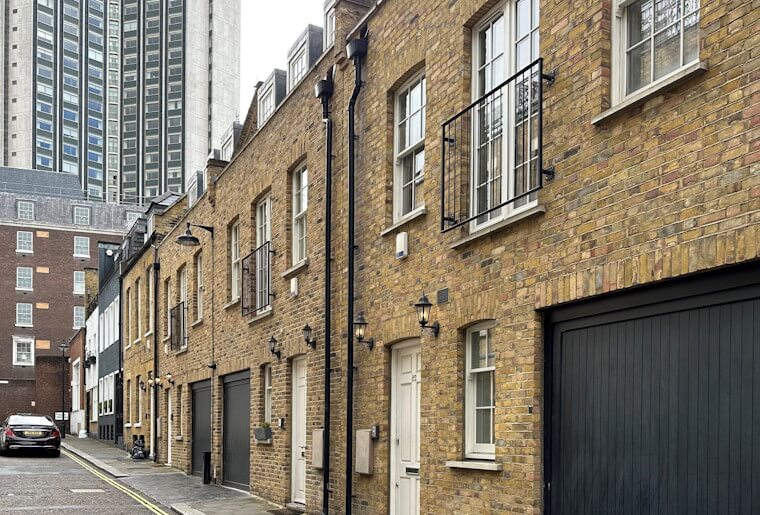
One category of freehold properties is a flying freehold house, which refers to a home where part of the building hangs over a neighbouring property, as Wikipedia explains.
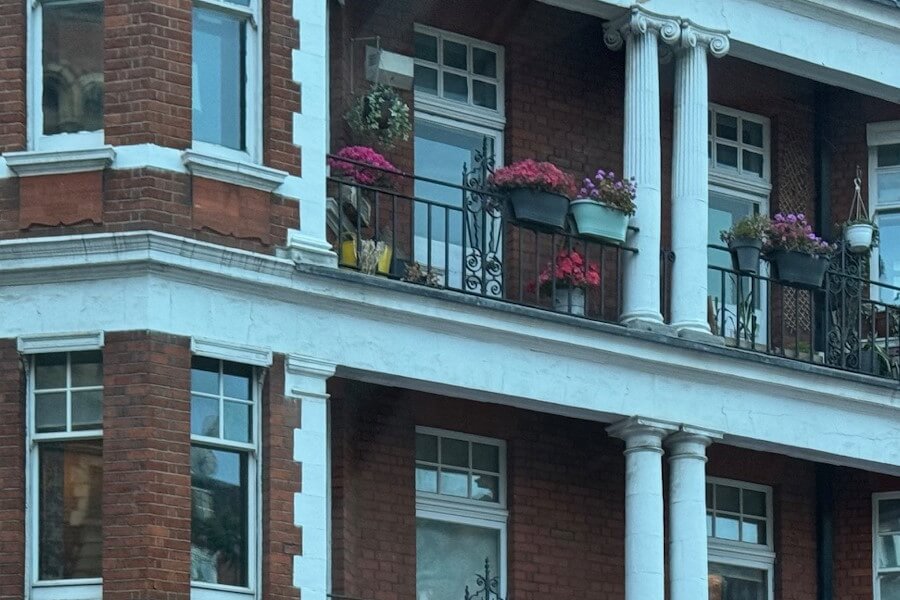
There are many situations where you could have a flying freehold house, including owning a home where part of the property spans across the neighbour’s house, garage or other structure; a house where you have a balcony that extends over the neighbour’s garden or building, a property that spans across an access route such as a shared right of way that both homes share, or even a room that is located underneath a floor of part of the neighbour’s house.
Owning a flying freehold house should not create any issues with your neighbour on a daily basis, unless there is a dispute about an issue such as the overhanging part of your home being unsafe, a fight about access issues related to the flying freehold, or other problems.
Where you might experience some complications with being the owner of a flying freehold house is when you eventually try to sell the property. This guide will explains the possible hurdles that you might face when attempting to attract buyers’ interest in your home, as well as suggesting ways that you could increase your odds of receiving a quick and fair offer.
Potential problems selling homes with a flying freehold
Compared to a conventional freehold house, you might find that there are certain aspects of your flying freehold home that make it harder to sell. None of these factors should completely prevent a sale, but you should be aware of them in planning your strategy for selling.
A top reason why a potential buyer could be reluctant to make an offer on a flying freehold house is the legal complication involved with maintaining the property, says the website of the law firm Winckworth Sherwood. It could be difficult to determine whether you or the neighbour are responsible for whatever area of the two properties both owners share, and this may lead to disputes in the future. Some buyers will be reluctant to make an offer on a home that has the potential for such fights later on.
Beyond the possible legal fight that could ensue with a neighbour, some prospective buyers could simply not want to purchase a property where there is any legal uncertainty about the flying freehold. They may want a simple and straightforward purchase of a home, and they can avoid any issues like this by instead pursuing a home that is not a flying freehold.
As the next section of this guide explains, another problem can arise for those buyers that will have to rely on getting a mortgage to buy your flying freehold house.
Can buyers get a mortgage for a flying freehold house?
When you’re looking for buyers for your flying freehold house, you might find that that will only be able to afford the purchase by getting a mortgage to cover the cost of the transaction.
Unfortunately, some home loan providers could be wary of approving mortgages for buying flying freehold houses. That’s because the lender will have concerns about the potential legal issues involved with the flying freehold. They may worry that these issues will make it much harder, if not impossible, to resell the property to recoup their costs in the event that the buyer purchases your home, defaults on the mortgage repayments, and the lender repossess it.
Not every mortgage lender will take this position, as Thomson Reuters Practical Law explains. But the concern from home loan companies is widespread enough that it can create another barrier to selling your property.
Instead of having to deal with this possible hurdle, you could consider alternative methods for selling your home than the traditional options such as using an auctioneer or an estate agent. For example, you are able to contact a quick home buying company like LDN Properties, which can make a fast and fair offer to buy your flying freehold house and complete the process within just a few short weeks.
These companies have the funds available to buy properties immediately, without having to wait for weeks or even months to secure a mortgage that can pay for the transaction. That’s how they’re able to reduce the timeline for finalising the purchase of any home so speedily.
Unlike mortgage lenders, quick home buyers will not be concerned about purchasing a flying freehold house, because they are known for making competitive and speedy offers to purchase almost any age, condition, location, shape, size and type of home. It’s a streamlined, no-stress and hassle-free free to sell your home that sidesteps the hurdles outlined in this guide.
Getting indemnity insurance for your flying freehold property
Before trying to sell your flying freehold house, you might want to consider a possible solution to the legal and other issues involved, by obtaining indemnity insurance.
This is an insurance policy that sellers can purchase for a relatively low amount, typically a few hundred pounds, but possibly more depending on your type of property. This insurance policy would cover any expenses that might be incurred due to disputes with your neighbours or other problems that might arise as a result of the flying freehold, as the website for the mortgage broker Think Platus explains.
If you have paid for this type of insurance policy, you will have the ability to transfer it to the next owner of your home. This should help to address any concerns that they might have about liability or any other legal and other issues stemming from the flying freehold.
But buying this insurance isn’t mandated for whatever reason you might be looking to sell your house, from looking for a second home through to dealing with a move to somewhere else in the UK, needing to raise funds to pay for your retirement plans, or anything else.
Instead, if you are unable or unwilling to pay for indemnity insurance for your flying freehold house, you can still get a fair and swift offer by getting in touch with a quick home buyer.
These companies, which include LDN Properties, are known for making competitive and fast offers to purchase a very wide range of homes throughout the UK, including flying freehold houses. You can get an offer that can be completed within just a handful of weeks, and that includes the time it takes to pay you the proceeds and for exchanging contracts – all without having to purchase an indemnity insurance policy.
Four methods to sell a home with a flying freehold
When you are preparing to sell your flying freehold house, you’ll have to make a choice on how to find a buyer. Typically, the methods are selling with an estate agent, selling to a quick property buyer, selling without any assistance or selling at a property auction.
There are certain pros and cons linked with each of these approaches, for example you could finalise the sale of your property within just a few short weeks if you sell to a quick buyer, and that includes the time needed to exchange contracts and pay the full proceeds. But if you decide to sell at an auction, you will need to pay commission, which will add to your selling expenses.
Consider writing down your top goals with the sale of your home, such as your preferred sale price, how long you are willing to wait to sell, and whether you can accept paying any commission. Next, compare this information against the specific details of the selling options below and this should help you find the choice that best matches your unique needs.
Selling with an estate agent
A traditional way of selling a property is to use an estate agent, who will take care of most of the steps involved. This starts with preparing a listing that describes the property’s main features and includes photographs of the interior and exterior, and then advertising that listing in their office, online and in local newspapers, followed by organising viewings for potential buyers to you’re the home and then finally guiding a serious offer through to exchange of contracts.
Although this can help with reducing your workload when selling, it can still cause some stress, for example there could be many viewings that will disrupt your daily routine.
This process of selling a home can take a very long time, often many months and sometimes even more than a full year, so if you’re looking for a speedy sale then you might want to consider some of the other options that are available, such as using a quick buyer.
You will also have to pay commission if you sell your home through an estate agent, and this is usually charged within a range of 1.15 percent to 1.40 percent of the property’s sale price. This fee is taken out of the sale proceeds immediately, so it will add to your selling costs.
Another potential concern with selling this way is that a buyer can make an offer but then withdraw it and make the sale fall through, and they can do this without penalty any time up until just before contracts are exchanged. If that happens it would be a major setback as you’d have to start over with looking for a buyer, possibly adding much more time to the process.
Selling to a quick property buyer
Alternatively, you could consider selling your flying freehold house to a quick home buyer. These are companies like LDN Properties that don’t need to wait weeks or months to get a mortgage to buy your home, because they have the funds available for the purchase.
This reduces the time it takes to complete the sale of your home to a quick buyer to just a few short weeks, and this includes paying you the proceeds and the exchange of contracts. It’s often by far the speediest method of the four approaches for selling any type of property.
Quick home buyers are also able to make competitive and fair offers to purchase almost any type of leasehold or freehold house, flat or other type of property. They can consider making offers no matter a home’s age, condition, location shape, size or type.
For example, LDN Properties has made many varied purchases and offers since launching more than 15 years ago, including not only flying freehold houses but also flats with a very short lease remaining, business centres, homes without a structural warrant, off-plan properties, houses near an electrical substation, flats, investment properties, houses that are located close to railway lines, flats that have a leaking roof, homes with a right of way, and various other scenarios.
Another benefit of selling your flying freehold house to a quick buyer is that the honest companies will never charge you any fees, which helps to lower your overall expenses. That can make them a preferable choice for owners looking to sell without paying commission, which you will have to pay if you sell your home through an auction or estate agent.
The process of selling a property to a quick buyer is also very simple, hassle-free and no-stress. It starts when you contact the quick buyer about selling your home, and within the first hour they should be able to make an initial offer that you will have at least a full week to think about.
If you accept that initial offer, the quick buyer will send one of their representatives to your property in order to inspect the interior and exterior before they make a final offer. This is the only viewing you’ll need to agree to, compared to many viewings with other selling methods.
And if you agree to the final offer from the quick buyer, they will move quickly to work with your solicitor or other legal representative to exchange contracts and complete all of the other required steps w9thin a few short weeks, at which time you’ll be paid the proceeds.
Selling without any assistance
Perhaps the most stressful option for selling your house with a flying freehold is doing so on your own, because you will have to take care of each step – from the initial development and advertising of a listing through to organising viewings and fielding buyers’ offers.
This is a significant amount of work and it is not something that you will be able to only do in your spare time. For that reason, selling on your own is only suggested for those people with experience of selling properties or that have a qualified friend or family member that is willing to help you out for free. Otherwise it can be a very long process full of hassle.
The average timeline when selling a property without any third party help can be up to a year or even longer, making it often one of the slowest of the methods in this guide. Should you be looking to sell your property as quickly as feasible, you may want to review other options.
One of the only clear advantages of selling on your own is that you will not have to pay any commission to an estate agent or auctioneer for finding a buyer, so that can help to reduce your expenses. But you will have to spend money on advertising your listing and other steps involved with selling, and these costs could eliminate any saving you make by not paying any fees.
As an alternative to selling on your own but still avoiding having to pay commission, you could consider getting in touch with LDN Properties or another quick home buying company. The legitimate quick buying businesses never charge homeowners any fees when purchasing their properties, but you’ll also have the added benefit of getting a much speedier sale. The typical timeline for selling your home to a quick property buyer is about a few weeks, and that includes all the important steps of the process like exchanging contracts and paying you the proceeds.
Selling at a property auction
Yet another option for selling your flying freehold house is doing so at an auction, where you will select a reserve price – the lowest value at which you agree to sell your home – and then people will place bids starting at that price, but hopefully increasing to a much higher value.
Even a single bid at the reserve price is considered a binding legal agreement to sell your house, so you need to select a reserve price that should still produce a profit from the sale, even after you have paid the auctioneer their commission for their work in selling your home.
If your home does not receive any bids that reach at least the reserve price then your property is deemed unsold, and you will have to begin again with trying to find a buyer.
Auctioneers usually charge commission at a rate of 2.5 percent of the property’s final sale price, and this will increase your expenses because it will be taken out of the sale proceeds. You can always ask individual auction houses whether they could be open to either lowering their rate of commission or having the buyer pay some of your fees, in order to reduce your costs.
Selling through an auction can be a somewhat slow process, as it will take at least several months. You will have a delay of many weeks or more between the day on which you decide to sell your home and the day on which the auction occurs. Then, if your property sells at the auction, the buyer will have an average of 28 days to complete all of their required tasks, such as signing the paperwork and anything else needed to finalise the purchase of your home.
There are some auctioneers who might be willing to set a tighter timeline for the buyer to complete their tasks, but beware some auction houses may give the buyer even longer. If a fast sale is your top aim, you should review some of the speedier methods in this guide.
Top queries and answers about selling a flying freehold house
Homeowners thinking of selling their home fast may have some questions to be answered, ranging from the type of property they can sell through to selling a home with a basement. Here are some of the top questions we’re asked about selling a flying freehold house:
Your top questions when selling a flying freehold house
A freehold house is one where the owner outright legally possesses the property and the land on which it was constructed, compared to a leasehold home where someone owns it for a set number of years and pays a freehold a yearly ground rent. A flying freehold means any part of the property that extends over a neighbouring house or land in any way.
There are many different types of houses that could be considered flying freeholds, and they include properties where a balcony hangs over a neighbour’s land; where part of the home covers a shared right of access with someone living below; where your living room or another part of your house is underneath another property, and several other situations.
You could find that there are some additional challenges involved with trying to attract a buyer to your flying freehold house compared to a more conventional property. That’s because prospective buyers might worry about legal issues involved with the upkeep of both properties, along with concerns over how to resolve disputes that might happen, and other issues.
Not always, because some mortgage lenders will worry that it’ll be hard for them to resell the property in the future due to the legal issues associated with this type of property. Mortgage providers have the ability to try repossessing homes and selling them in the event that the borrower, meaning the buyer of your property, defaults on their home loan repayments.
One option that you could consider for addressing potential buyers’ concerns about your flying freehold house is purchasing an indemnity insurance policy that you could transfer to the new owner, and that would pay for any legal expenses and other costs that might arise from the property’s unique status. But it’s not necessary to get such a policy before selling.
A speedy method for selling almost any type of house that has a flying freehold is reaching out to LDN Properties or another quick home buyer, as they have the ability to finalise the purchase of almost any property within a handful of weeks. If you sell on your own, via an estate agent, or using an auctioneer, then it could take many months or even an entire year.
If you decide to sell your property using the services of either an auctioneer or an estate agent, then you will have to pay them their commission, which will be subtracted straight away from the final sale. But you can avoid having to pay any fees if you either sell to a zero-commission quick home buyer such as LDN Properties, or you sell the property without any third party help.