Quick navigation
The guide below offers an important briefing on what exactly constitutes hoarding, and the several ways in which it can negatively impact a house or flat, including efforts to sell the property. But it also offers helpful advice on how to tackle a hoarder’s home prior to seeking a buyer for it, including tips on using a fast buyer to complete the sale in just a few short weeks.
- What is hoarding?
- What are the potential problems with hoarding?
- Hoarding can make it much harder to sell a property
- Should you clear a hoarded home before selling it?
- Options for selling a hoarder’s property
- Questions and answers about selling a hoarder’s house

What is hoarding?
Before analysing how hoarding can potentially negatively affect your attempt to sell a house or flat, it’s important to first have an understanding of exactly what is meant by the term "hoarding" because what might be considered hoarding by one person could differ from another person’s view of hoarding.
The World Health Organisation (WHO) in June 2018 issued what’s known as an International Classification of Diseases that identified hoarding as a mental or physical disorder. The relevant section of the report says that hoarding is a medical condition that meets this description: "Hoarding disorder is characterised by accumulation of possessions due to excessive acquisition of or difficulty discarding possessions, regardless of their actual value. "
When it comes to someone’s property, hoarding can manifest in many different ways. Someone might have a condition that makes them feel it is impossible to throw out empty food packaging, and it accumulates to the point where it obstructs doors or windows. Or perhaps a person believes they have a sentimental attachment to almost any object that comes into their possession, for example newspapers that they then pile high in their rooms. Hoarders will collect huge amounts of possessions even if the net value of the items is almost nothing.
The WHO report adds, "Excessive acquisition is characterized by repetitive urges or behaviours related to amassing or buying items. Difficulty discarding possessions is characterized by a perceived need to save items and distress associated with discarding them. Accumulation of possessions results in living spaces becoming cluttered to the point that their use or safety is compromised. The symptoms result in significant distress or significant impairment in personal, family, social, educational, occupational or other important areas of functioning. "
Hoarding can vary in severity, ranging from some clutter to potentially hazardous amounts of accumulated possessions. There are groups that offer support for hoarders, such as Hoarding Disorders UK – Community Interest Company, using mental health practices and other approaches to encourage an end to hoarding behaviour.
What are the potential problems with hoarding?
Because hoarding can seem so unusual to people that do not have the disorder, the condition has spawned interest from television producers. The Channel 5 television show ” Hoarder Homes: No Room To Move” shows some of the negative sides of hoarding, including episodes highlighting how hoarding caused one man’s house to burn down twice, another person who has spent more than £25,000 on clothes that they do not wear, and a third homeowner whose hoarding turned into a rat infestation.
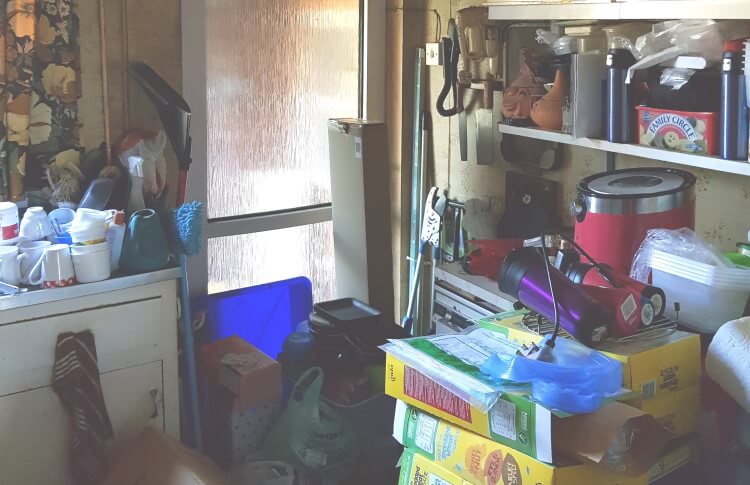
Therefore, problems with hoarding can be multiple, and they include health problems, worsening mental health, dangerous obstruction of access points within a property, structural damage, and more. This section delves briefly into further detail on each of these negative issues, ahead of a broader discussion about how hoarding also complicates home sales.
Physical and mental health problems
As noted earlier in this guide, hoarding is considered to be a mental health disorder and people who are suffering from it deserve to get the support they need. Without any intervention they are liable to continue their hoarding behaviour, which can worsen their mental health and create a cycle of exacerbating the situation. Hoarding can also cause physical health problems if the clutter includes rubbish that starts to rot or attract vermin.
Dangerous obstruction of access points
You’ve probably seen television shows or newspaper articles about hoarders where certain rooms, such as the living room, are almost entirely taken up with junk that the owner has accumulated. This can pose significant safety risks in the event of a large fire or other emergency, because clutter that obscures access points such as exterior doors or windows can create potentially lethal delays in entering or exiting the home.
Structural damage to a property
This is not a problem that happens in every hoarder’s home, but it’s not unheard of for some hoarding to lead to structural damage of a property. This can occur for example when someone hoards items that are very heavy and puts them all in an attic with weak flooring. Because floors can only take a certain amount of weight, too much hoarding could cause the floor to collapse, creating a very expensive problem to repair.
Encouraging infestation and other issues
This adverse impact of hoarding is tied to the physical health problems that accumulating clutter can create. If a hoarder’s belongings include perishable items, they will eventually start to rot. This can encourage vermin, insects and other creatures to enter the home and feed off the rubbish. The owner is then exposed to pollution from the clutter as well as the insects and animals from outside that enter the home.
Hoarding can make it much harder to sell a property
Because of the sheer amount of clutter, and sometimes health and environmental hazardous consequences, that result from hoarding, it can be very difficult to find a conventional buyer for such a property unless some work is done to remove the hoarded items from the home.
This can particularly be an issue if someone was a hoarder and left their house or flat to a relative or other person in their will, and that person does not want to keep the home. They will have the usual complications of trying to sell an inherited home with the added problem of needing how to proceed with addressing the bulk of hoarded items within the property.
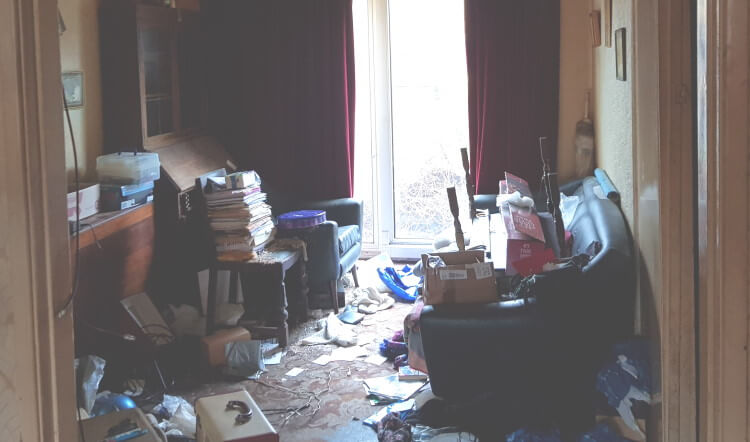
Viewings are usually a key component of selling a home, where prospective buyers come to tour a house and see the inside and outside. The viewing is often the final event before someone decides whether to make an offer to buy a property or loses interest in it completely. If a prospective buyer visits a cluttered hoarder’s home then they are likely to be immediately turned off by the sight of hoarding and will leave the property quickly and not want to buy it.
For example, imagine that a homeowner has a chronic problem with hoarding cardboard boxes that they receive through the post. They pile these boxes on top of each other in every room of the house, feeling for whatever reason that they cannot throw the boxes away. Eventually these piles reach the ceiling and fill up all available space in the room, and so the hoarder starts to build the piles up in another room. Soon entire windows and even doorways are blocked by the boxes, even though they serve no practical use and have absolutely no value. Someone who comes to see this type of home on a viewing is very unlikely to consider buying it.
Even after clutter is removed from a hoarder’s home, the items that were stored there could have caused damaged to the interior – everything from causing permanent scratches or indents on the floor or walls through to being the source of infestation from insects, and other issues. These are all negative factors that will further discourage someone from being interested in buying the property, unless they are willing to pay for efforts to remediate those issues.
You could try to sell a hoarder’s home "as is" without touching any of the accumulated belongings inside or trying to clean or repair the property, but you should be prepared for either little interest or getting offers at very low levels. And that might simply not be a viable option if you need to make a profit from the sale for financial reasons.
It may be difficult to make a decent profit off a hoarder’s home when selling via an estate agent or auctioneer should you decide to sell the home as is, although you might still be able to attract a decent price for the property by choosing a cash home buyer — with the added benefit that the quick buyer will handle the work of clearing the home after buying it.

Should you clear a hoarder’s home before selling it?
Any homeowners that are hoarders but who would like to sell their properties, whether the house or flat is leasehold or freehold, needs to consider clearing out all of the clutter prior to trying to find a buyer.
But it’s not as easy as simply telling a hoarder that their stash is discouraging buyers, because everyone has varying interpretations of what constitutes clutter. HoardingUK is a charity that works to help hoarders “make spatial and personal change to improve their health and wellbeing, ” according to its website, and it notes the differing views of what clutter can be.
HoardingUK’s website also includes a Clutter Image Rating that asks people to look at nine pictures of the same room, all with varying amounts of clutter from empty (level 1) to almost impossible to enter (level 9). It says that any room deemed by someone to be level 4 of higher causes enough problems for a person’s daily life that if they live in such a property they should seek help for their hoarding disorder, where level 3 or lower are not considered to be hoarder’s homes.
There are professional companies that will do the hard work of decluttering a hoarder’s house, meaning you don’t have to exert any physical effort – although you will have to pay for the cleaning to be done, and the costs will vary depending on the scale of the hoarding problem.

Alternatively, if you would like to declutter a hoarder’s home before trying to sell it but lack the funds to pay someone for the work, you could attempt to do it yourself.
This shouldn’t cost you anything beyond cleaning supplies, but it will require a significant amount of hard work. You’ll be responsible for sorting and removing all of the hoarded items from the property, as well as ensuring that the items are also disposed of properly. Most people who clear out hoarder’s homes need to hire skips to handle all of the items that they remove.
Once a house or flat has been decluttered, you’ll have to assess any cleaning and/or repair work that needs to happen. It’s highly possible that the sheer amount of items stashed inside the property have obscured serious problems that need to be addressed, such as dry rot, broken windows, subsidence, and a number of other structural and aesthetic issues.
You’ll have to decide whether to invest the time and money in fixing these problems before selling the home. Not everyone can afford to wait to find a buyer for a property until such work is done, and that is a completely normal situation. But if that’s the case you will have to prepared to accept a lower asking price for the home than you might prefer. That’s because potential buyers will do their own calculations of how much it will cost to the do the cleaning and/or repair work, and subtract that amount from your current asking price for the property. This happens often because the would-be homeowner is accounting for the fact that they will have to spend the money they are taking off the asking price on the repair work if they purchase the home.
Options for selling a hoarder’s property
You might be the owner of a hoarder’s home because of an inheritance, or you might have been tasked with selling the property of a living hoarder who cannot handle the sale themselves, or you may be a hoarder yourself who wants a fresh start by selling their home as is — whatever your situation there is no need to be embarrassed about it nor about wanting to find a buyer.
Instead, focus your attention on how you plan on selling the house or flat, because you will have to choose between using an estate agent, using an auctioneer, or using a fast home buyer like the London-based company LDN Properties. All three methods have unique advantages, and a couple of the options also have some potential disadvantages that are important to know.
When you are ready to sell, you should create a comprehensive plan and budget for the sale that includes such important factors as the amount of time that you are willing to wait to find a buyer, how much profit you hope to make from the sale, whether you want and are able to pay any fees to sell the home, and any other expenses and priority issues that you might have. Compare these factors against the pros and cons of the three different selling options listed below in order to get a good idea about which method might be the best for your situation.
Using an estate agent to sell a hoarder’s property
The first method available for selling a hoarder’s home is using an estate agent. These professionals will craft a listing that features text descriptions of your property’s main features, such as the total square footage and number of bedrooms and bathrooms, along with photographs of the interior and exterior that aim to make the home look its best. This can be tricky if the hoarder’s items are still inside the property, because people who see the listing are likely to be discouraged by the pictures and have no further interest in the home.
Estate agents advertise the listing in local media, in their office and online, and any interested buyers will request a viewing to tour the home ahead of possibly making an offer. Again, viewings can be complicated significantly if the property is still cluttered with a hoarder’s belongings, making an estate agent a far from ideal choice for selling this type of home.
And if an estate agent has no experience with selling a hoarder’s house or flat then they might not know how to attract any interest in it from potential buyers. Be honest with the estate agent about the state of the home and ask if they have any past success selling such properties, because you will want to avoid a company that does not know how to sell a hoarder’s home.
Even if the estate agent is able to find you a buyer for the hoarder’s home, you will still have to pay them fees for their work. This commission is usually charged as a percentage of the property’s final sale price, so you’ll have to deduct that from the sale value before you can get the true idea of how much profit that you might be able to make from selling the home.
Using an auctioneer to sell a hoarder’s property
You could try your luck with using a property auctioneer to sell a hoarder’s house. When listing your home for an auction you will have to set a reserve price, or the lowest value at which you can accept your property selling. You must choose a price that will make you a profit even after the auctioneer’s fees are subtracted, otherwise you run the risk of selling your home at a loss. If you get even one bid at the reserve price then legally your home is sold and the buyer can sue to enforce this agreement.
The aim is for many people to be interested in buying your home, which should lead to bidders offering ever-escalating prices for the property. Just note that auctions can be considered a gamble because this might not happen and you might not get any bids. If the home doesn’t receive any bids then it is deemed unsold and you’ll have to start afresh with trying to find a buyer for it.
When you sell via an auction you can expect to wait several weeks between the date on which you list your property for sale and the date on which the auction occurs. If your home successfully sells at auction, the buyer will have a set amount of time to complete the process, including signing all of the mandatory legal documents and paying the proceeds to you. This takes an average of 28 days but can take more or less time with certain auction houses.
The commission that auctioneers charge is usually based on a percentage of your home’s final sale price plus VAT. To get your final net sale profit you’ll have to subtract these fees from the final sale price. Also, an auctioneer might allow you to pass on some costs to the winning high bidder, so you should always ask to find out what a specific company’s policy is when it comes to commission.
If you have decided to try selling the hoarder’s home in its current state without removing the clutter, some auctioneers might not have the skills or knowledge to sell such a property. If that’s the case then they will find it difficult to attract potential buyers. Ask auctioneers whether they have sold hoarder’s homes in the past to find out whether they are a good fit for your sale.
Using a fast home buyer to sell a hoarder’s property
The third method is to get in touch with a fast home buying company such as LDN Properties, which has been buying houses and flats throughout London since 2003. We give homeowners a no-hassle, streamlined and stress-free way to receive competitive and swift offers for selling their leasehold and freehold homes no matter their age, size, shape, type or condition.
For example, some of the many different homes that we have bought in areas across London are houses of multiple occupancy, properties built from non-standard construction material such as steel or cement, flats that have tenants with very lengthy rental agreements remaining, dilapidated properties, homes that are located in high risk flood zones, properties that have solar panels, listed buildings, inherited retirement houses, and even hoarder’s homes.
That means fast buyers will not be turned off if you contact them and let them know you need to sell a hoarder’s home that is still filled with clutter. Indeed, we can make you a fast and fair offer for selling the property without you having to spend and time or money on removing the clutter. Our experts will handle that work as part of the process of buying the home.
And as our name suggests, we are able to complete the purchase of your property very quickly, usually within a handful of weeks. And that includes every step required, such as paying you the proceeds and exchanging contracts. This compares very favourably to the average time it takes to find a buyer through an estate agent or an auctioneer, and it makes using a fast buyer the perfect choice for those homeowners who need to sell a property as quickly as they can.
A further benefit of using a fast home buyer is that the legitimate companies, like LDN Properties, never charge owners any fees when buying their properties — unlike estate agents and auctioneers who will require that you pay them commission for their work selling your home. This means you are guaranteed to receive the full proceeds from whatever price we offer for your property.
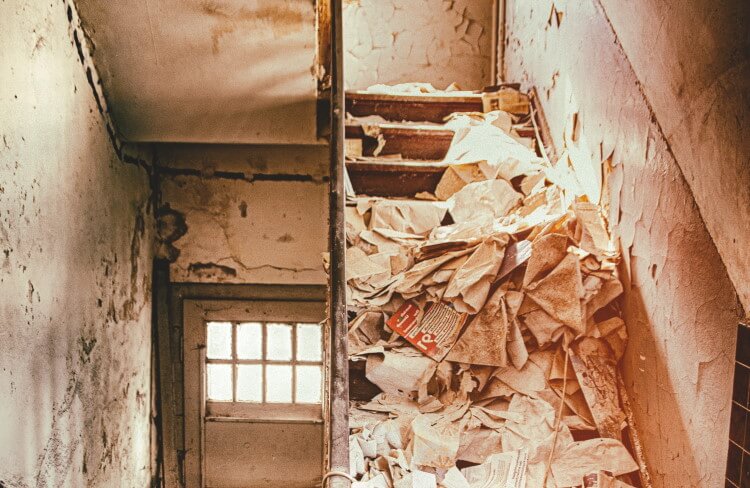
Top queries and answers about selling a hoarder’s house
Property owners thinking of selling their home fast often have a few questions for us, ranging from the how much cleaning and tidying should I do before selling through to selling a house near power lines. Here are some of the main questions we’re asked about selling a hoarder’s property: