Quick navigation
Converting the loft space in a typical leasehold or freehold house can be a great way to make your property appear more valuable to potential buyers, as it can provide an extra bedroom, bathroom, office space and more. This guide walks you through what you need to know about selling a house with a loft conversion, and how to best secure a competitive and quick sale.
- What are property loft conversions?
- How a loft conversion can affect your home’s value
- Preparing your house with a loft conversion for sale
- Selling a half-finished or problem loft conversion as is
- Capital Gains Tax and the sale of your house
- Your choices for selling a home with a loft conversion
- Top queries about the sale of a house with a loft conversion
What are property loft conversions?
A freehold or leasehold house that has loft space, which is room above the existing bedrooms, might be suitable for a loft conversion (See this article by Which). As the name suggests, this involves work to reconstruct the loft space into a useable room, such as another bedroom, bathroom, home office, play area for your children, or any other type of extra room.
If your property is freehold this means that you outright own the building and the land on which it was constructed, and the only legal barrier to pursuing a loft conversion will likely be whether the work needs planning permission and whether you’ll be able to get it. If you live in a leasehold house this means you own the property for a set number of years in exchange for paying the freeholder ground rent annually, and you might need their permissions before you embark on the process of a loft conversion under the terms of your lease agreement.
Whichever type of property you own, there can be several reasons for pursuing a loft conversion. Perhaps your family has grown in size and you need to add another bedroom to your property. Or your job might have changed and now you require a home office because you’re mostly working remotely.
Spending time, money and effort on a loft conversion can be a great way to reclaim otherwise unused space – many residential property’s lofts are used for storage or even kept empty – that won’t be as large-scale or costly as building an extension on to an existing house.
How a loft conversion can affect your home’s value
One of the biggest questions that homeowners have before embarking on a loft conversion is how the work might affect the eventual value and sale price of their property, and whether buyers will see the change as something good or bad – discussed at length in this Chancellors article.
Some estimates suggest that a good loft conversion that creates a welcoming, useful additional room at a house might add roughly 20 percent to the sale value, depending on the property. This is only a guideline and the exact impact on a home’s value will vary widely.
As you’ll see later in this guide, if you haven’t completed work on the loft conversion before trying to sell your house then this could make buyers view your property less favourably and lead to them reducing their offer prices. Situations where the work is not considered finished would include a loft conversion that does not comply with building regulations and other similar scenarios.
Preparing your house with a loft conversion for sale
Part of the process of selling a freehold or leasehold house with a loft conversion is getting the property ready for sale, and this will require some effort but hopefully not too much money.
Start by tidying up the interior of the property, including the loft conversion but also every other room in the house. Remove as much clutter as possible because the more spacious that rooms appear to buyers, the more valuable they will likely consider your property to be. And make sure that the house is clean throughout, because a dirty property will turn off many potential buyers.
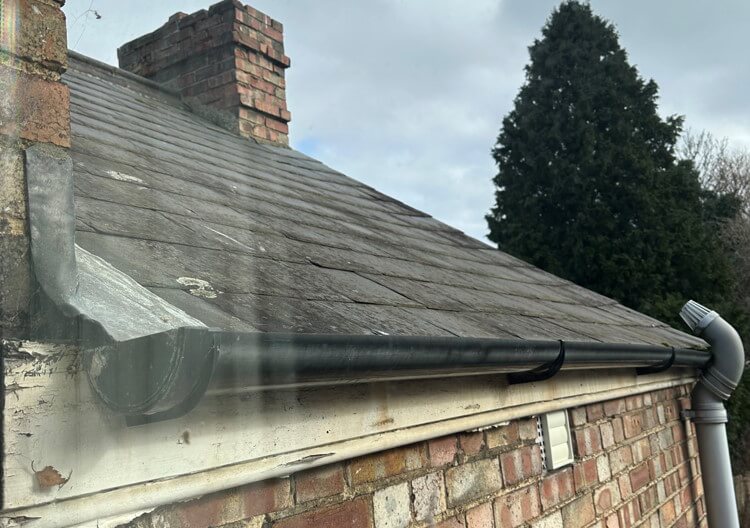
For the exterior of your house, you should also assess for any work that needs to be done quickly to improve the appearance, such as replacing any missing roof tiles or broken windows, or giving the window ledges and front door a fresh coat of paint. If you have a garden or any other green space you should also mow it and remove any weeds.
Making a strong first appearance is essential when trying to sell a property, and a home that appears well-maintained inside and outside is far more likely to be considered as a valuable property by buyers than one which is not looked after and is a shabby condition.
Selling a half-finished or problem loft conversion as is
One situation you might find yourself in is launching a loft conversion but not either not being able to complete the work before selling, or suffering a problem with the work when trying to sell.
There can be many reasons why this outcome might happen, for example you might have recently obtained a new job that requires you to quickly move to another part of the UK or overseas and you don’t have the time to finish the loft conversion. Another reason could be that you have run into financial difficulties and can’t afford to finish the conversion before selling.
Those are both situations where the unfinished work could effectively make buyers view your property as a half-finished house because they’ll know that if they purchase the home then the burden will shift to them to invest the time, effort and money to complete the conversion.
A half-finished loft conversion might also not yet be in compliance with various building regulations (read more at Resi), and some people may be wary of buying your house because of the remaining work left to be done.
Another scenario that can create issues with trying to sell your house is if you have completed a loft conversion but there has been a problem with it since. Issues that can arise include storm damage, dry rot, discovering high levels of asbestos in the loft, and potentially dozens of other problems that many buyers could consider to be dealbreakers with your house.
You’ll have to make a decision on whether you can afford to pursue whatever repair work needs to be done to correct the problem, or whether you need to sell the house "as is" without making any fixes. Key factors that will help you make a decision include whether you can afford the money and time involved with fixing the problem, and how fast you need to sell the house.
If you correct whatever problem exists with your loft conversion then this would have the benefit of removing the issue from the list of potential negative factors that buyers might have for your property, as they won’t have to worry about the cost of fixing the issue as the next owner.
However, many people will not have the funds, energy to time available to embark on a potentially costly and lengthy repair project for their loft conversion. If that is your situation, don’t worry because you can still get a competitive and speedy offer on your house by contacting LDN Properties or another quick home buying company. These businesses specialise in making fast and fair offers for almost any type of property, including problem properties sold as is.
Capital Gains Tax and the sale of your house
As part of the process of selling your house with a loft conversion, you should learn about Capital Gains Tax and whether it might cost you money when selling your property.
This tax is a levy that the UK government charges on the profit, also sometimes called the gain, that someone makes when they sell a tangible valuable asset like a home, car, artwork and many other examples. If the tax applies, it is often charged on just the profit that you make from the sale, and not the overall sale price of property.
It’s worth checking with a financial professional to see if there are any ways that you can either reduce or eliminate your requirement to pay this tax.
Your choices for selling a home with a loft conversion
If you are ready to sell your leasehold or freehold house with a loft conversion, the next step is to decide on which option you would like to use for finding a buyer. Typically, your choices come down to selling to a quick buyer, trying your luck with an auction, using the services of an estate agent or selling a house on your own, which means without any help from a third party.
There are distinct advantages to discover with each of the methods, for example using a quick buyer typically does not include any fees. But there are also some disadvantages associated with a few of the choices, such as auctions taking many months. That’s why you should take time to consider your options before making a final decision on how to sell your house.
One action you can take to help make the choice is writing down your top goals with selling, such as your ideal sale price, whether you can accept paying any fees to sell, and how long you can wait before finding a buyer. Next, compare all of this information against the details of the four methods below and this should assist in finding the closest match to your needs.
Selling to a quick buyer
Quick buyers, like LDN Properties, have the financial resources available to purchase almost any age, condition, shape, size or type of freehold or leasehold property within just a few short weeks, and that includes the time it takes to pay owners the proceeds and exchange contracts. That makes selling to a quick buyer often by far the speediest way to sell a property.
Another great benefit of selling to a quick buyer is that the honest companies will never make owners pay any commission, which helps with keeping your selling costs down. By contrast, if you sell using an auction or estate agent then you’ll pay fees that will add to your expenses.
It also doesn’t matter if your loft conversion is only partially complete or has some type of structural problem, because quick buyers are experts are purchasing a wide variety of properties regardless of their status. LDN Properties, for example, has been buying homes throughout the UK for more than 15 years and has offered on half-finished houses, flats with cladding, vandalised homes, properties with storm damage, homes with dry rot, flats with poor Energy Performance Certificate ratings, houses with Japanese knotweed in the garden, and more.
Selling to a quick buyer is a no-stress, streamlined and hassle-free process that starts when you ask them to make an initial offer on your property. There’s zero pressure to make an immediate decision because you should be given at least a full week to consider the offer.
If you decide to accept the initial offer then the quick buyer will send a representative to your home so that they can assess the exterior and interior before the company makes a final offer. This is the only viewing you’ll need to have, which can be a great relief compared to selling via an estate agent or auctioneer where you might have to accept dozens of viewings.
After the quick buyer makes their final offer, if you accept it then the company will move quickly to work with your solicitor on completing the required legal documents and other steps to finalise the purchase, with the entire process typically only taking a few weeks from start to end.
Trying your luck with an auction
A property auction is effectively a gamble, because you never know what the final sale price of your house might be. You could get zero bids on your home, which means it does not sell and you’d have to start over with trying to find a buyer, potentially adding many months to the overall process.
The auctioneer will take on much of the work required to sell your house, including the creation and advertising of a listing that describes the property and features photographs of the interior and exterior. They will also host the auction and oversee the completion of a successful sale.
When you sell a home at an auction, you’ll be asked to choose a reserve price which is the lowest value at which you agree to sell the property. Any bid at or above this value will be considered a legally binding transaction and the winning high bidder could sue you to enforce the sale of your house in the event that you try to walk away from the sale. It’s essential to choose a reserve price that will still produce a profit even after you pay the auctioneer’s fees.
Auctioneers will generally charge commission based on the sale price you’re able to get for your house. This will add to your costs because the commission will be taken out of the sale proceeds immediately. You might be able to negotiate a lower fee or have the buyer pay some of your costs, so ask the auctioneer if this might be possible.
Selling through an auction can take a very long time, starting with a wait of many weeks or months between when you first list your house for sale and when the auction happens. Then, if your property sells, the winning high bidder usually has about 28 days to sign all of their legal papers and complete their other tasks in order to finalise the purchase of your home. That makes an auction far from the speediest method of selling a leasehold or freehold house.
Some auctioneers might give the buyer even more time to finish their tasks or they may be open to setting a shorter deadline than 28 days, so you should check with individual companies.
Using the services of an estate agent
Alternatively, you might want to sell your house with a loft conversion by using the services of an estate agent. This greatly reduces the work you’ll have to do, as the estate agent will handle producing and advertising a listing, organising viewings, and hearing offers from buyers.
In exchange for putting in all of this effort, the typical estate agent will charge a homeowner commission based on the property’s final sale price. This fee will be subtracted straight away from the sale proceeds, which will add to your selling costs. If your main goal when selling is to avoid any fees then you should look at some other options.
This is also not a swift way to sell a house and you should plan on having to wait more than an entire year before receiving a serious offer. Also, prospective buyers have the legal right to withdraw an offer without any penalty right up until before the exchange of contracts. If this happens you’ll have to start again with trying to sell, adding much more time to the process.
Selling a house on your own
Finally, you could consider selling without any assistance, but this can be a very burdensome option even for people with experience in finding buyers for properties. You’ll have to handle every task from creating and marketing a listing through to scheduling viewings and fielding offers from potential buyers, and it’s not something you can simply do in your free time.
This is also often a very slow way to sell a house with a loft conversion or any other type of property, and you shouldn’t be surprised if it takes more than a year to find a buyer. That makes selling without any help not a good match for owners that are trying to sell in a hurry.
The most obvious advantage of selling this way is that you won’t have to pay an estate agent or auctioneer any commission, which helps to reduce your expenses. However, this saving might be wiped out by the money that you have to spend on advertising your listing and doing all of the other tasks that would otherwise be handled by a third party using other selling options.
If you’re determined to avoid paying any commission, you may want to get in touch with a no-fee quick buyer like LDN Properties. Selling to a quick buyer would not only ensure that you don’t have to pay any commission to a third party, but you’d also get the added benefit of perhaps the fastest way to sell your house because it should only take a handful of weeks.
Top queries and answers about selling a house with a loft conversion
Homeowners looking to sell their home quickly can have a few questions for our team, ranging from the amount of repair work they should do before selling through to selling a self-build home. Here are a few of the main questions we’re asked about selling a house with a loft conversion:
Your top questions when selling a house with a loft conversion
Loft conversions can be a useful way to create more living space in your house, because it takes an area that is typically either not used at all or only used for storage and then converts that into an extra bedroom, bathroom, children’s play area, home office or other room. Some people pursue loft conversions with the goal of making their home more valuable to sell.
The exact impact that a loft conversion will have on the potential value and sale price of your leasehold or freehold house depends on a number of factors, but some estimates suggest that a decent conversion at a conventional home could add roughly 20 percent to your property’s potential sale price – but beware that your conversion might add much less value.
Yes, just because your loft conversion is half-finished does not mean you will never be able to sell the property. There are many reasons why you might have to pause the work before trying to find a buyer for the house, including financial difficulties. If that’s your situation, contact a quick home buyer because they have plenty of experience with buying half-finished properties.
You might be liable for paying Capital Gains Tax and if so, it might apply to the profit that you make from the sale of the property. There are certain ways that you can eliminate or substantially reduce how much tax you owe, so ask a financial expert for their advice.
Getting in touch with a quick home buying company like LDN Properties will usually be the swiftest way to sell your leasehold or freehold house, because the entire process should only take a few short weeks. That’s much faster than the average timeline when selling on your own, via an estate or at an auction, because they can all take at least several months.
Yes, if you sell your house without any assistance from a third party or you sell to a quick home buyer then you won’t have to pay fees. However, if you sell through an auctioneer or estate agent then this will add to your overall selling expenses because they will charge you commission if they find a buyer, and this fee will be deducted from the sale proceeds.
Honest quick buyers like LDN Properties belong to a third party organisation called The Property Ombudsman (TPO), which writes regulations that protect homeowners from falling victim to fraud in the fast buying industry. Ask individual companies whether they belong to TPO, because legitimate membership in the organisation could give you peace of mind.