Quick navigation
Owning a home near traffic lights can have some problems such as an increase in noise and pollution from vehicles waiting at the lights, and these issues might create some complications when it’s time to sell your house or flat. This guide outlines the pros and cons of trying to a sell a property near traffic lights, and offers tips on how to secure a competitive and rapid sale.
- Problems with selling a home near traffic lights
- Are there any benefits of having a property by traffic lights?
- Deciding whether to sell your house or flat as is near traffic lights
- Will Capital Gains Tax apply to the sale of your property?
- Different ways to sell a property near traffic lights
- Top questions about selling a home by traffic lights
Problems with selling a home near traffic lights
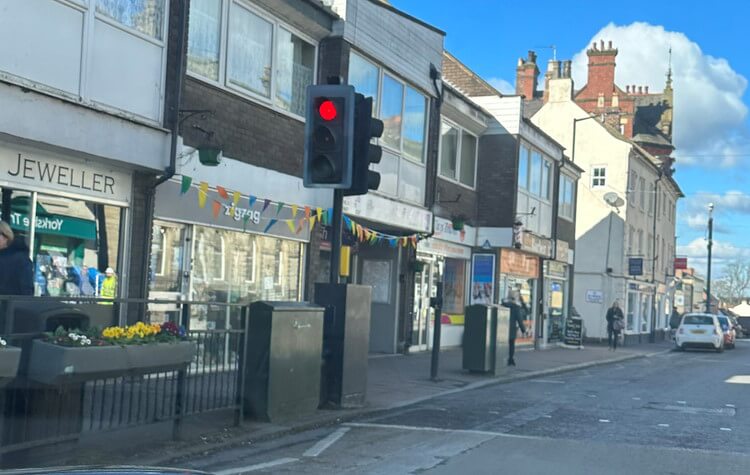
Streets throughout the UK can have traffic lights whether that’s in city centres, suburbs, more rural areas and elsewhere, and living close to them can affect the sale of your home.
If you own a leasehold or freehold house or flat that’s located close by to a set of traffic lights, then there are several potential negative aspects that buyers might highlight when considering whether to make an offer on your property. Depending on the severity of these problems, it might take you longer to sell this type of home than one not located by traffic lights.
The first major concern that buyers might have is about air pollution from the vehicles that will be waiting at traffic lights 24 hours a day, seven days a week. If you live on a particularly busy street, this can mean a lot of constant traffic and a spike in emissions from those vehicles affecting your property and nearby homes from cars as they wait in place at the traffic lights.
Pollution linked to emissions from cars, buses, trucks and other vehicles in the UK routinely exceeds amounts that the World Health Organization says are safe for people to be exposed to on a daily basis, according to recent press reports by Euractiv.
If a potential buyer has asthma or another health issue that might be exacerbated by elevated vehicle pollution, this could be enough to make them lose interest in your property.
Another reason that some buyers may not want to make an offer on a home near traffic lights is the noise on the road that pass by. When traffic lights are red, that creates the potential for a long line of traffic to build up outside your property, and this can result in an increase in noise that you can hear inside your home including running engines, passengers talking and radios playing.
Privacy can be a third factor that might make some prospective buyers view your home less favourably. If the house or flat looks out on to the street where the traffic lights are located, drivers could be able to see into your property whilst their vehicles are not moving. This could be a significant concern for buyers who would not be comfortable living in that situation.
However, just because these issues can sometimes result in it taking a long time to sell a property near traffic lights doesn’t meant that’s always the case. Indeed, later in this guide you’ll learn how you can still get a speedy and competitive offer for your property without having to make any changes to it, simply by contacting a quick buyer such as LDN Properties.
Are there any benefits of having a property by traffic lights?
Don’t be concerned that owning a property near to traffic lights is always going to be seen by buyers as a negative thing, because there could potentially be some benefits associated with trying to sell this type of home.
One reason why some buyers might still be interested in your home even if it’s by traffic lights is if the location is an enviable one, where properties are in high demand. For example, if your property is close to traffic lights because it’s on a busy street in a popular city, buyers might say that their desire to live in your area outweighs their concerns with the traffic lights.
You could also find some buyers that have no problem with living in a home that is situated so close to traffic lights, for instance people who have owned that type of property before. If they were fine with such a living situation in the past then your home’s proximity to traffic lights is unlikely to be a factor that would result in them not wanting to make an offer.
Whilst the potential pros of owning a flat or house situated near traffic lights are not as many or as prominent as the negative aspects outlined in the previous section of this guide, you shouldn’t be worried that your home will not sell just because of where it’s located.
Deciding whether to sell your house or flat as is near traffic lights
As part of your preparation for selling your home near traffic lights (discussed at length by Citizens Advice), you will have to decide whether to invest time and money into some methods for reducing the negative impacts of the nearby busy road, or sell the property "as is" in its current state.
The primary work that you might be able to have done on your home is installing various mitigation that can reduce the impact that noise and pollution are having on the property.
This can include installing double glazed windows inside the home to reduce how much of the traffic you can hear inside, or planting trees in any green space outside because these have the potential to reduce the level of traffic that you are able to hear inside the property.
Mitigation measures might not solve the noise problem entirely, but having them in place may make some buyers view your house or flat as more valuable. Without these measures, some buyers could reduce their offer price by the amount of money that they think it would cost them to pursue the same work if they ultimately decide to purchase your property.
But a significant drawback of pursuing any kind of work on a home near traffic lights before trying to sell it that it could take at least several months to complete, and that is far from ideal if one of your main priorities with selling is trying to find a buyer as quickly as feasible.
Many people will not have the funds, time or effort available to pursue any pollution mitigation efforts at their properties, but that doesn’t mean they have to settle for an unfavourable sale.
If you need to sell your home as is near traffic lights without making any changes to it, you could consider contacting LDN Properties or another legitimate quick home buying company. They are highly experienced with making speedy and competitive offers to buy almost any type of freehold or leasehold property, and they will give you an honest price for your home even if it’s near traffic lights.
Will Capital Gains Tax apply to the sale of your property?
When you successfully sell your leasehold or freehold house or flat that’s located close to traffic lights, one issue to review is whether you might have to pay Capital Gains Tax on the proceeds from the property sale. Read more on this subject in the UK Government article on how to sell a home. Understanding your potential liability for paying this tax is an important part of the budgeting process when selling any type of residential or commercial property.
Capital Gains Tax is a levy that the UK government might charge on the gain, or profit, that someone makes when they sell a tangible asset such as a home, artwork, car and more.
You should consult with a financial professional about some options that might be available to either eliminate or reduce the amount of Capital Gains Tax that you have to pay on the sale of your property.
Different ways to sell a property near traffic lights
A crucial decision that you’ll have to make when selling your home near traffic lights is which method you would like to use to find a buyer. Generally there are four choices; selling at an auction, using an estate agent, selling to a quick property buyer or selling on your own.
The specifics of each method are detailed below and you’ll find that all four have their own unique advantages whilst some of the choices also have rather noticeable disadvantages, for example requiring that you pay fees or taking over a year to find a buyer.
In order to identify the method of selling that is most suitable for your situation, you should write down a budget for the sale of your property that includes important information such as how much you are willing to pay in commission to sell and how long you can wait to find a buyer. Compare these details against the specifics of the four approaches outlined below and that should help you to find the method that best pairs with your needs and wants.
Selling at an auction
Auctioning your property (discussed at length by the Homeowners Alliance) can be considered a gamble, because there is no certainty about whether your home will even sell, and if it does sell, how much the final sale price might be.
The auctioneer will ask you to select a reserve price, which is the lowest value at which you agree your home can sell. If someone places a bid at this price then that is deemed a binding legal agreement to purchase your property and they can sue to enforce it in the event you try to back out of the sale. That’s why it’s vital to choose a reserve price that will produce a profit for you even after you pay the auctioneer whatever commission they plan to charge.
Generally, auctioneers will make you pay commission at a rate of 2.5 percent of the final sale price of your property. This fee will be deducted right away from the sale proceeds after the auction, so you need to budget for this additional cost as part of the selling process.
Auctioneers charge fees for the work that they will do with selling your home, which includes crafting and advertising a listing that describes the property and features photographs of the interior and exterior, along with hosting the auction and overseeing completion of a sale. The benefit of having an auctioneer do all this work is that you won’t have to put in much effort.
You might be able to negotiate a lower commission rate with the auctioneer or have the winning high bidder pay some of your costs, so ask individual companies if this may be possible.
This is often not the speediest way to sell a home near traffic lights because the average timeline with a property auction is often at least many months. There will be a delay of many weeks between when you first list your property for sale and when the auction happens, and then if your home does sell, the winning high bidder has an average of 28 days to sign all of their legal paperwork and complete the other mandatory steps needed in order to finalise the purchase.
It is possible that some auctioneers might be open to reducing the amount of time that the buyer has to complete these tasks, so you should ask individual auctioneers about this option.
Using an estate agent
Another way to sell your home is through an estate agent, who will handle most of the work including creating and marketing a listing for the property, organising viewings where they take people on a tour of the home, and fielding any serious offers from prospective buyers.
For doing all of this work, estate agents will usually charge commission based on your property’s final sale price. This will add to your selling expenses, because the commission will be immediately taken out of the resulting sale proceeds. If you are trying to keep costs low when selling then you should look at some other options.
Selling using an estate agent can also be one of the slowest choices, and you should be prepared to wait more than a full year before you get a serious offer that leads to exchanging contracts.
Selling to a quick property buyer
A third method for selling your flat or house by traffic lights is contacting a quick property buyer. These companies, such as LDN Properties, have the funds available to buy almost any age, condition, shape, size or type of property immediately. They don’t have to wait for many weeks or months to initially get approved for a mortgage to cover the cost of the purchase.
As a result, quick property buyers can typically complete the purchase of a home in a handful of weeks, and that includes paying owners the proceeds and exchanging contracts. This makes using a quick property buyer often the swiftest method for selling a home.
Another benefit of selling to a quick property buyer is that the trustworthy companies will never make you pay any commission, which will help to reduce your selling expenses. Compare that to estate agents or auctioneers, who will charge you fees that will increase your costs.
Quick property buyers are also a good choice for people trying to sell potential “problem” properties that might have issues some buyers see as negative, for example a house or flat close to traffic lights. LDN Properties, for example, has been buying properties for more than 15 years and in addition to purchasing homes near traffic lights it also has experience with hotels, student properties, blocks of flats, lock-up garages, property near the coast, flats with damp, dilapidated properties, houses with unregistered titles, flats with very short leases, and more situations. Even if you are selling a property with an extension or a house with a loft conversion, you can speak with LDN Properties.
Beware that some estate agents might quote you a potential sale price for your property that is far above what they honestly believe they’ll be able to get from a buyer. The reason that they do this is to secure your business, so that they can profit from the commission that they will be able to charge you in the event that they are able to find a buyer for the property.
You can avoid falling for this trick in a few simple steps, starting by contacting several estate agents and asking them for free quotes about the potential sale price they think is feasible for your property. Next, visit home sales websites such as Rightmove and Zoopla and write down the price of houses or flats that are similar to yours and in the same neighbourhood. Finally, calculate the average of all these prices and that should produce a value that provides a more realistic estimate of the price that buyers might be willing to pay for your home.
Selling on your own
Alternatively, you might be interested in selling your home near traffic lights without any help. This can be a very time-consuming process that will require a lot of effort and possibly money on your part, and is not something you can simply try to do in your spare time.
You will have the sole responsibility for every aspect of the selling process, from the initial creation and advertising of a listing through to organising viewings and fielding offers. This approach to selling is usually only recommend for people who have experience with selling properties, or that have a qualified friend or family member willing to help for free.
The sheer amount of work involved means that selling on your own can often take more than an entire year, which makes it usually one of the slowest methods for selling a property.
Perhaps the only major benefit of selling this is that you won’t have to pay an auctioneer or estate agent any commission for finding a buyer. But this saving could easily be eliminated by the other costs you’ll face when selling this way, such as paying to advertise the listing.
If one of your main goals when finding a buyer is not having to pay any commission, you should instead consider selling your property to a quick buyer like LDN Properties. These companies promise to never charge homeowners any fees when purchasing their flats or houses, but unlike selling on your own the entire process should only take a few short weeks. That means you would not only avoid paying fees but you would also secure a much speedier sale.
Top queries and answers about selling a property near traffic lights
When homeowners are thinking of selling their home quickly, often a few questions need answering, ranging from the types of property that can be sold quickly through to selling property with a right of way through the garden. Here are a number of questions we’re asked when selling property near traffic lights:
Your top questions when selling a property near traffic lights
Some buyers may look less favourably on a house or flat located near traffic lights because they have concerns about the noise from vehicles waiting or the air pollution coming from those cars, buses and more. These concerns can be enough to cause some potential buyers to lose interest in buying your property, so you should be prepared for such a situation.
Yes, sometimes a property that is located close to traffic lights will be located in a popular area where many buyers are competing to purchase houses or flats, for example a bustling city centre. If that’s the case with your property then some buyers might be willing to overlook the fact that you home is near traffic lights because the location is more important.
You are not required to pay for installing any mitigation measures, such as double glazing or planting trees, before trying to sell your house or flat located near to traffic lights. And you can still get a fast and fair offer for the property as is by selling to a quick buyer. But if you want to pursue such work then it might result in some buyers viewing the home more favourably.
The quickest option is to get in touch with a fast buying company like LDN Properties, because their average timeline for completing the purchase of any type of home is just a few short weeks, and that covers the time it takes to exchange contracts and pay you the proceeds. By contrast, all other options for selling a home will typically take several months at least.
It’s possible that you won’t have to pay any commission, depending on the method of selling that you choose. If you sell to a quick property buyer or without a third party’s help then you won’t have to pay any fees. But if you sell your house or flat using an estate agent or auctioneer then you’ll have to pay them fees that will be deducted from the eventual sale proceeds.
It’s possible, and if you are required to pay this tax then it will typically be charged based on the amount of profit that you made on the sale compared to the original price that you paid to buy the house or flat. Make sure to consult with a professional tax advisor before making any decisions.
Ask individual quick home buying companies if they are registered with a third-party entity called The Property Ombudsman (TPO), because this organisation writes regulations to shield owners against scams in the quick buying industry and all TPO members must follow those rules, which should give you extra peace of mind when selling your home near traffic lights.